2026 Hanfu Travel Wardrobe: Packing Essentials & Destination Tips
The 2026 Heritage Travel Boom: Why Hanfu is Leading the Way
As global heritage tourism reaches unprecedented heights in 2026, traveling with traditional garments has evolved from a niche hobby into a mainstream cultural movement. The Hanfu travel wardrobe is no longer just about packing a single ceremonial dress for a photoshoot; it is about integrating traditional Chinese aesthetics into a functional, globe-trotting lifestyle. Whether you are attending a cultural festival in Kyoto, exploring the historical water towns of Jiangnan, or navigating the bustling streets of modern Seoul, curating a destination-specific Hanfu wardrobe requires strategic planning, specialized packing techniques, and an understanding of modern textile care.
In 2026, the intersection of traditional craftsmanship and modern travel technology has given rise to wrinkle-resistant weaves, smart luggage compartments designed specifically for voluminous skirts, and portable garment care devices. This comprehensive guide will walk you through building the ultimate Hanfu travel wardrobe, mastering the art of wrinkle-free packing, and navigating transit with elegance and ease.
Building Your Climate-Specific Hanfu Destination Wardrobe
The foundation of a successful travel wardrobe lies in climate adaptation. Traditional Chinese clothing is incredibly diverse, offering distinct silhouettes and fabric weights suited for every environment. When planning your 2026 itinerary, select your Hanfu styles based on the destination's weather patterns and the physical demands of your trip.
Warm Weather Destinations: Song Dynasty Elegance
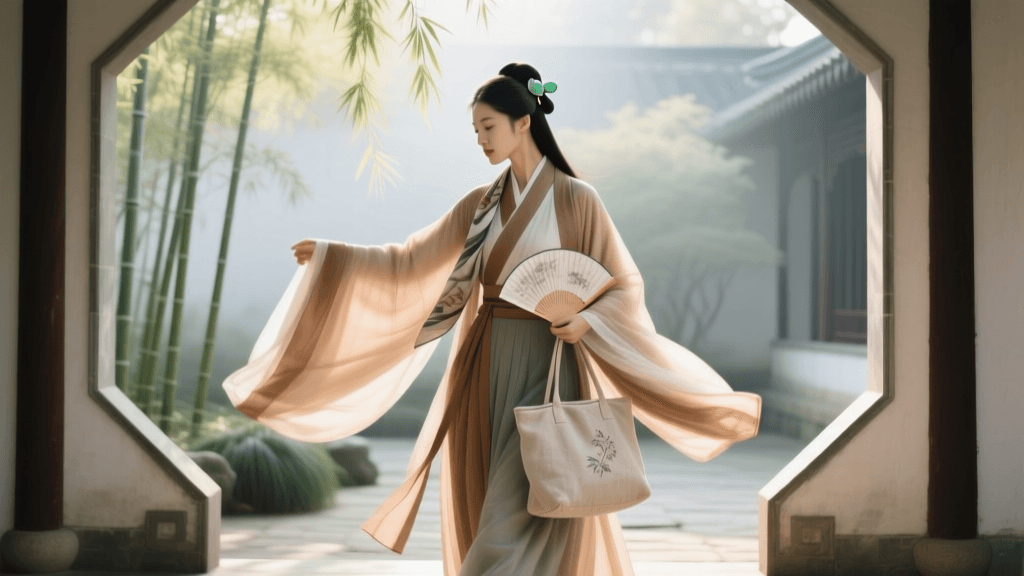
For tropical or summer destinations like Bali, Hangzhou, or Singapore, breathability and sun protection are paramount. The Song Dynasty Beizi (a lightweight, open-front jacket) paired with a pleated Baidi skirt is the ultimate warm-weather travel combination. In 2026, look for Beizi crafted from ramie-linen blends or Xiangyunsha (gambiered Canton gauze). Xiangyunsha is naturally sweat-resistant, quick-drying, and possesses a unique crisp texture that resists wrinkling even after hours of sitting in transit. According to textile conservation experts at the Metropolitan Museum of Art, historical silk and gauze weaves were specifically engineered for the humid summers of southern China, making them historically and practically authentic for modern tropical travel.
Cold Weather Destinations: Ming Dynasty Warmth
Traveling to Harbin, Hokkaido, or European heritage sites in the autumn and winter requires the structural warmth of the Ming Dynasty Aoqun. The Ao (a lined, cross-collared top with curved sleeves) provides excellent core insulation, while the heavy, pleated Mamianqun (horse-face skirt) allows for the discreet layering of modern thermal leggings underneath without disrupting the traditional silhouette. For 2026 winter travel, seek out Mamianqun woven with wool-blend threads or lined with eco-friendly synthetic fleece that mimics the weight of traditional silk wadding without the bulk.
| Destination Climate | Recommended Hanfu Style | Ideal 2026 Fabrics | Travel Advantage |
|---|---|---|---|
| Tropical / Humid | Song Beizi & Baidi Skirt | Xiangyunsha, Ramie-Linen | Quick-drying, UV protection, sweat-resistant |
| Mild / Spring | Tang Qixiong Ruqun | Cotton-Silk Blends, Chiffon | Lightweight, easy to roll, vibrant eco-dyes |
| Cold / Winter | Ming Aoqun & Pifeng | Wool-Blend Brocade, Fleece-Lined | Core insulation, allows hidden thermal layers |
Master the Wrinkle-Free Hanfu Packing Technique
The most daunting aspect of traveling with Hanfu is managing the sheer volume of fabric and preventing deep creases in delicate brocades and silks. The traditional folding method used for closet storage is disastrous for suitcases. Instead, adopt the "Core-Roll and Tissue Buffer" method, widely recommended by professional costume transporters in 2026.
- The Tissue Buffer: Lay the garment flat and place unbuffered, acid-free archival tissue paper over the embroidered or metallic-thread sections. This prevents friction and snags during transit.
- The Core-Roll: Instead of folding the sleeves and hem inward (which creates hard creases), roll the garment loosely around a soft cylindrical core, such as a rolled-up microfiber towel or a specialized inflatable packing tube.
- Skirt Pleat Preservation: For Mamianqun and Baidi skirts, never roll them against the pleat. Fold them along their natural pleat lines, place a piece of stiff cardstock at the hem to maintain the weight, and lay them flat at the very bottom of your suitcase, or use a dedicated portable garment folder.
By minimizing hard folds, you ensure that your garments require only a light steaming upon arrival, rather than hours of intensive ironing.
Must-Have Hanfu Travel Accessories for 2026
To maintain a flawless appearance on the road, your packing list must extend beyond the garments themselves. The 2026 market offers several innovative accessories tailored specifically for traditional dress enthusiasts.
- Philips STH3020 Foldable Travel Steamer: A compact, dual-voltage steamer that heats up in 30 seconds. It is essential for reviving crushed silk and linen blends in hotel rooms without risking scorch marks from traditional flat irons.
- Magnetic Skirt Clips & Anti-Slip Bands: Modern Hanfu iterations often feature hidden magnetic closures, but bringing spare silicone anti-slip waistbands ensures your heavy Mamianqun stays securely in place during long days of walking and climbing temple stairs.
- Modular Hairpin Organizers: Traditional updos require numerous U-pins, decorative buyao (step-pins), and combs. A hard-shell, velvet-lined jewelry roll with individual elastic loops prevents your metal hairpins from tangling or piercing through your luggage.
- Portable Lint & Pet Hair Rollers: Eco-friendly natural dyes and dark wool-blend winter Aoqun are magnets for dust and lint. A miniature, washable lint roller is a lifesaver for quick touch-ups before photography sessions.
Footwear and Hem Protection: The Unsung Heroes of Travel
A frequently overlooked aspect of the Hanfu travel wardrobe is footwear and hem management. Traditional cloth shoes, while historically accurate and incredibly comfortable for indoor settings, lack the arch support and waterproofing necessary for navigating cobblestone streets, hiking up mountain temples, or enduring sudden rainstorms. In 2026, many heritage brands have introduced "hybrid travel shoes" featuring traditional cloud-motif embroidery on the upper, but built upon modern, shock-absorbing EVA foam soles with slip-resistant rubber treads. These shoes provide the aesthetic continuity required for Hanfu while offering the ergonomic support of a high-end walking sneaker.
Additionally, protecting the hem of your Mamianqun or Baidi skirt is crucial when traveling. Mud, puddles, and dusty paths can quickly ruin delicate silk borders. Pack a small, discreet bottle of fabric waterproofing spray (tested beforehand on a scrap piece of fabric) to apply to the bottom two inches of your skirt before a day of outdoor exploration. This invisible barrier prevents moisture wicking and makes it significantly easier to wipe away dirt with a damp cloth at the end of the day.
Navigating Airport Security and Transit
Wearing Hanfu during transit is a beautiful way to showcase cultural heritage, but it requires navigating modern security protocols. Airport security scanners are highly sensitive to the metallic elements often found in traditional Hanfu accessories. According to the Transportation Security Administration (TSA), travelers should be prepared to remove large metallic hairpieces, ornate metal belts, and heavy brooches before passing through the body scanner to avoid secondary pat-downs and delays.
If you choose to travel in full Hanfu, opt for a "transit-friendly" version of your outfit. Swap metallic buyao for carved wood or jade hairpins, and use fabric ties instead of metal-clasp belts. Furthermore, when utilizing ride-sharing services or navigating crowded train stations, utilize a "skirt lift" technique—gathering the front and back panels of your Mamianqun gracefully to prevent the delicate hem embroidery from dragging on wet or dirty transit floors.
Caring for Eco-Dyed Hanfu on the Road
The 2026 resurgence of natural, eco-friendly dyeing methods—such as indigo, madder root, and pomegranate rind—has produced breathtaking, historically accurate colors. However, natural dyes are more susceptible to fading from harsh hotel laundry detergents and prolonged UV exposure. If you must wash your Hanfu while traveling, never use the hotel's standard laundry service. Instead, carry a small bottle of pH-neutral, plant-based detergent designed for delicate silks. Hand-wash the garment in cool water in your hotel sink, gently press out the water using a dry microfiber towel (never wring the fabric), and lay it flat on a clean, dry towel away from direct sunlight to dry. By respecting the organic nature of these traditional dyes, you preserve the vibrant heritage of your garments for years to come.
"Traveling with Hanfu in 2026 is not merely about wearing a costume; it is an act of living history. Proper packing and care ensure that these garments remain as resilient and adaptable as the culture they represent." — Dr. Lin Wei, Textile Historian and Cultural Heritage Consultant.
With the right destination wardrobe, smart packing techniques, and modern travel accessories, your Hanfu can accompany you to the farthest corners of the globe, turning every journey into a walking exhibition of Asian tradition.