How to Style Traditional Haori Jackets With Modern Wardrobes 2026
The Renaissance of the Haori in 2026 Fashion
In the landscape of 2026 fashion, the boundary between heritage garments and contemporary streetwear has completely dissolved. As the global fashion industry leans heavily into circularity, sustainable sourcing, and cultural appreciation, traditional Asian garments are no longer reserved for ceremonial occasions. Among the most versatile and striking of these pieces is the Japanese haori. Originally worn as a formal jacket over a kimono, the haori has emerged as a cornerstone of the 'neo-traditional' wardrobe, offering a masterclass in silhouette, drape, and artisanal textile beauty.
Mixing traditional Asian pieces with modern wardrobes requires more than just throwing a vintage jacket over a t-shirt. It demands an understanding of proportion, fabric weight, and color theory. According to the Metropolitan Museum of Art, the haori evolved from practical battlefield wear into a canvas for exquisite dyeing and weaving techniques during the Edo period. Today, integrating these historical masterpieces into a modern 2026 capsule wardrobe allows you to wear a piece of living history while maintaining a sharp, contemporary edge.
Anatomy of the Haori: What Makes It Unique?
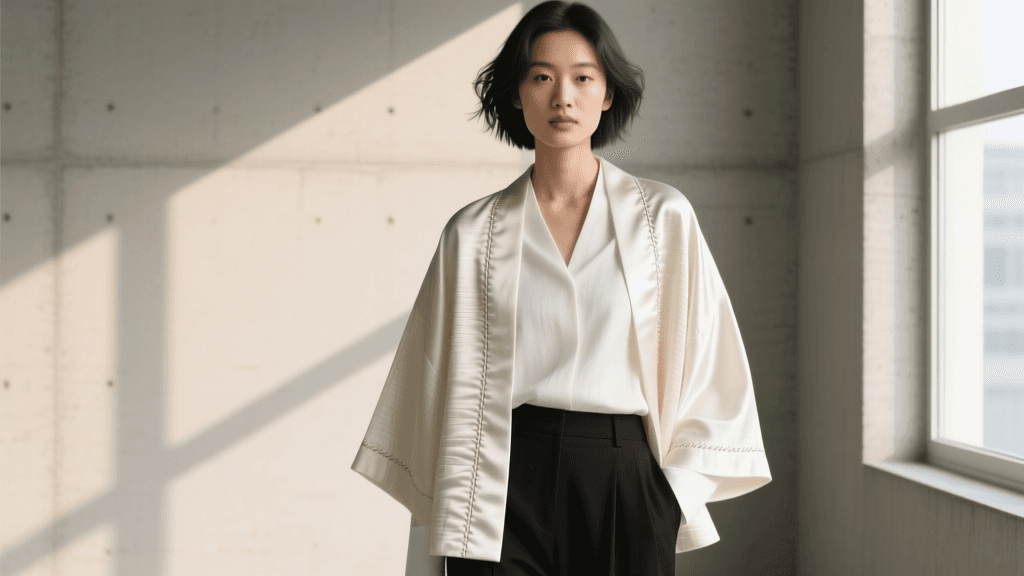
Before styling the haori, it is crucial to understand its construction. Unlike the kimono, which wraps tightly across the body and is secured with an obi (sash), the haori is designed to be worn open. It falls straight down from the shoulders, featuring a seamless drape that creates a striking, column-like silhouette. The front panels do not overlap, and the jacket is traditionally secured at the chest using a haori himo—a braided silk cord.
In 2026, modern stylists are reimagining the haori himo. While traditional braided silk cords remain popular for formal looks, contemporary interpretations often swap these ties for minimalist leather cords, delicate gold chains, or even leave the jacket entirely unfastened to allow the inner lining (hakkake) to peek through as a subtle flash of color and pattern.
Three 2026 Styling Frameworks for the Modern Haori
1. The Corporate Minimalist
The modern office in 2026 embraces fluid tailoring and relaxed elegance. A subdued, dark-toned tsumugi (pongee silk) haori is the perfect alternative to a standard blazer. Tsumugi silk has a matte finish and a slightly nubby texture that reads as highly sophisticated and understated.
- The Base: A crisp, oversized white poplin button-down shirt paired with high-waisted, wide-leg wool trousers in charcoal or navy.
- The Layer: A hip-length, solid-colored tsumugi haori worn open.
- The Accessories: Swap the traditional silk tie for a thin, matte black leather cord. Finish with structured leather loafers and a minimalist geometric tote bag.
2. Elevated Streetwear
Streetwear in 2026 is defined by high-low contrasts and bold artisanal statements. Vintage haori featuring vibrant yuzen (resist-dyeing) patterns or intricate family crests (kamon) serve as the ultimate statement piece against a backdrop of utilitarian basics.
- The Base: A heavyweight, vintage-wash graphic hoodie or a thick blank cotton tee, paired with relaxed-fit denim or technical cargo pants.
- The Layer: A mid-thigh length vintage silk haori with bold, contrasting patterns (such as cranes, waves, or geometric Edo-period motifs).
- The Accessories: Leave the haori completely unfastened to showcase the hoodie underneath. Complete the look with chunky technical sneakers and a crossbody utility bag.
3. Evening Elegance and Transitional Layering
For evening events or transitional spring and autumn weather, a lightweight ro (summer gauze) or sha silk haori provides an ethereal, flowing layer that modern outerwear simply cannot replicate.
- The Base: A bias-cut silk slip dress in a neutral tone (champagne, olive, or black) or a tailored linen co-ord set.
- The Layer: A calf-length, semi-sheer ro silk haori. The sheer nature of the fabric allows the dress beneath to remain visible while adding a spectral, floating quality to your movement.
- The Accessories: Delicate strappy sandals, subtle gold jewelry, and a traditional haori himo tied in a neat bow at the collarbone to cinch the silhouette slightly.
Mastering Proportions: The Haori Length Guide
The most common mistake when integrating traditional Asian jackets into Western clothing is ignoring proportion. Because the haori lacks a defined waistline, the length of the jacket dictates the rest of your outfit. Use the table below to balance your silhouette.
| Haori Length | Ideal Modern Bottoms | Vibe & Occasion | Footwear Pairing |
|---|---|---|---|
| Short (Hip-level) | High-waisted wide-leg trousers, A-line midi skirts | Corporate Minimalist, Smart Casual | Leather loafers, pointed-toe flats |
| Medium (Mid-thigh) | Straight-leg denim, tailored cargo pants, tailored shorts | Elevated Streetwear, Weekend Casual | Chunky sneakers, Chelsea boots |
| Long (Calf-level) | Slip dresses, linen co-ord sets, slim-fit trousers | Evening Elegance, Transitional Layering | Strappy sandals, minimalist mules |
Sourcing Authentic Pieces in the 2026 Circular Economy
The push for sustainable fashion in 2026 has made vintage and upcycled Asian garments more accessible and desirable than ever. When shopping for a haori, you are generally choosing between vintage antique pieces and modern artisanal reproductions.
Vintage haori (dating from the mid-20th century) are widely available through specialized online curators, Japanese vintage exporters, and global circular fashion platforms. In 2026, a standard vintage silk haori in good condition typically ranges from $60 to $180. Pieces featuring rare dyeing techniques or pristine, hand-painted linings can command prices upwards of $400.
For those seeking new, ethically made pieces, supporting traditional craftsmen is paramount. Techniques like Yuki-tsumugi silk weaving are protected and celebrated for their immense cultural value. As noted by UNESCO's Intangible Cultural Heritage registry, these meticulous hand-weaving methods produce textiles of unparalleled durability and beauty. Modern artisanal haori sourced directly from Kyoto or Kanazawa workshops will generally start around $800 and can exceed $2,500, representing a true investment in wearable art.
Care and Maintenance for Vintage Silks
Integrating heritage garments into a daily wardrobe requires modern care strategies. The days of relying solely on harsh chemical dry cleaning for delicate silks are behind us. In 2026, the standard for preserving vintage Asian textiles at home involves advanced garment care technology.
Home ozone sanitizing cabinets and steam-refreshing closets (such as the latest models from LG and Samsung) are now essential tools for the neo-traditional wardrobe. These devices use gentle steam and ozone to eliminate odors, kill bacteria, and relax wrinkles from silk haori without the chemical degradation caused by traditional dry cleaning solvents. For localized stains, consulting a specialist in antique textile conservation is always recommended over attempting home spot treatments.
Furthermore, proper storage is critical. The Victoria and Albert Museum recommends storing silk garments flat or loosely rolled in acid-free tissue paper to prevent stress on the shoulder seams and to avoid permanent creasing. Never hang a heavy, vintage silk haori on a wire hanger for extended periods, as the weight of the fabric will distort the shoulders and damage the delicate fibers over time.
Conclusion: Wearing History with Intention
Mixing traditional Asian pieces like the haori with modern wardrobes is an exercise in cultural appreciation and sartorial innovation. By understanding the garment's history, respecting its construction, and thoughtfully balancing proportions, you can create looks that are entirely unique. In 2026, the most stylish wardrobes are those that tell a story—bridging the gap between centuries-old artisanal techniques and the dynamic, fast-paced reality of modern life. Whether draped over a tailored suit for the office or thrown over a hoodie for a weekend in the city, the haori remains a timeless testament to the enduring power of Japanese design.