Handcrafted Geta And Zori: 2026 Artisan Buyer Guide
The Renaissance of Traditional Japanese Footwear in 2026
In 2026, the global fashion landscape has experienced a profound shift toward slow fashion, biodegradable materials, and heritage craftsmanship. At the forefront of this movement is the revival of traditional Japanese footwear. Far from being mere historical relics, handcrafted geta (wooden clogs) and zori (woven sandals) are experiencing a massive renaissance among modern consumers who value sustainability, ergonomic design, and cultural authenticity. According to the Japan National Tourism Organization, interest in regional artisan workshops and heritage craft tourism has reached record highs this year, driving a new generation of buyers to seek out authentic, hand-woven footwear.
This comprehensive guide explores the intricate craft of Japanese footwear, the sustainable materials driving the 2026 market, and everything you need to know to purchase, wear, and care for authentic geta and zori today.
Deconstructing the Craft: Geta, Zori, and Waraji
To appreciate the craftsmanship, one must first understand the distinct categories of traditional Japanese footwear. While Western shoes are designed to encase the foot entirely, Japanese footwear is designed to support the sole while allowing the foot to breathe and interact with the environment.
Geta: The Wooden Clog
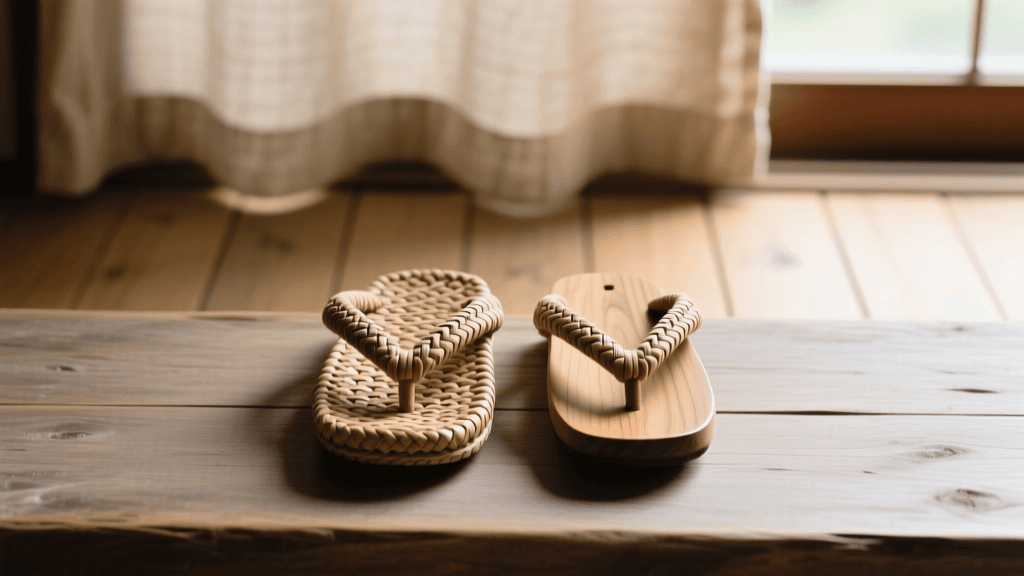
Geta are characterized by their wooden base, known as the dai. The dai is typically carved from a single piece of kiri (paulownia) wood, prized for its lightweight nature, resistance to moisture, and beautiful pale grain. Beneath the dai are the ha (teeth), which elevate the wearer above the ground. Historically, this kept expensive silk kimonos clean from mud and snow. Today, the elevated silhouette offers a unique posture-correcting benefit, forcing the wearer to engage their core and calf muscles. The foot is secured by the hanao, a Y-shaped thong that passes between the first and second toes.
Zori: The Elegant Flat Sandal
Unlike geta, zori are flat and lack wooden teeth. They are the more formal of the two, often worn with high-quality kimono and hakama. The soles of traditional zori are woven from igusa (rush grass), bamboo sheaths, or wisteria vines, while formal versions feature soles wrapped in silk brocade or tatami-omote (woven rush). In 2026, igusa zori are highly sought after for their natural antimicrobial properties and their ability to absorb moisture, making them incredibly comfortable during humid summers.
Waraji: The Straw Sandal
Waraji are the oldest form of Japanese footwear, woven entirely from rice straw. Historically worn by samurai, monks, and commoners for long-distance travel, they are tied securely around the ankle. While rarely worn in daily modern life, waraji are still crafted for festivals, historical reenactments, and by mountain ascetics. The Tokyo National Museum frequently highlights waraji in its textile and costume exhibitions, showcasing the incredible tensile strength of hand-twisted straw.
The Artisan Process: Carving, Weaving, and Knotting
The creation of authentic geta and zori is a multi-disciplinary craft that often involves three distinct artisans: the woodcarver, the weaver, and the hanao-suge (thong-tier).
Woodcarving and Lacquering
For premium geta, the paulownia wood is harvested, dried for several years to stabilize the moisture content, and then carved. In 2026, master carvers in Fukuyama City (Hiroshima Prefecture) continue to use traditional hand planes to shape the dai, ensuring the arch perfectly matches the natural contour of the human foot. Some high-end models are finished with urushi (natural lacquer) or perilla oil to waterproof the wood and deepen the grain's color over time.
Weaving the Igusa
The weaving of igusa rush for zori soles requires immense precision. Artisans in Kumamoto and Okayama prefectures harvest the rush grass in early summer, dye it using natural, eco-friendly botanical dyes—a major trend in 2026—and weave it tightly over a core of recycled cotton or hemp. The tightness of the weave dictates the sandal's durability and price point.
The Hanao-Suge Technique
The most critical step in footwear assembly is attaching the hanao. The artisan drills three holes into the sole (one at the front, two at the heel). Using specialized metal hooks and immense finger strength, the hanao is pulled through the sole and knotted from the bottom. A poorly tied hanao will slip or break; a masterfully tied one will last for years and can be adjusted for tension as the fabric stretches.
2026 Market Trends: Sustainability and Customization
The 2026 market for traditional Japanese footwear is defined by a fusion of ancient techniques and modern ergonomic science. Many boutique ateliers in Kyoto and Tokyo now offer 3D foot-scanning services. This technology maps the customer's arch height, pressure points, and toe splay, allowing the woodcarver to customize the curve of the geta dai for unparalleled comfort. Despite this technological integration, the weaving and knotting remain strictly manual, preserving the soul of the craft.
Furthermore, sustainability is a primary driver. Artisans are increasingly utilizing upcycled silk from decommissioned kimono to create one-of-a-kind hanao straps, and natural indigo and persimmon tannin (kakishibu) dyes are replacing synthetic colorants, appealing to eco-conscious global buyers.
2026 Buyer’s Guide: Sizing, Pricing, and Authenticity
Buying traditional Japanese footwear requires a complete paradigm shift regarding sizing. In Western footwear, the shoe should enclose the foot entirely. In Japanese footwear, the heel must slightly overhang the back edge of the sandal. Ideally, your heel should extend 1 to 2 centimeters beyond the back of the geta or zori. This overhang prevents the back of your heel from striking the wooden base or woven edge while walking, which would cause blisters and damage the footwear.
2026 Pricing and Material Comparison
The cost of authentic, handcrafted footwear reflects the hours of skilled labor required. Below is a comparison of what to expect in the 2026 market.
| Footwear Type | Primary Materials | 2026 Price Range (JPY) | Best Use Case |
|---|---|---|---|
| Standard Igusa Zori | Rush grass, cotton hanao | ¥8,000 - ¥15,000 | Casual summer wear, yukata |
| Artisan Paulownia Geta | Kiri wood, silk hanao | ¥18,000 - ¥35,000 | Festivals, daily heritage wear |
| Lacquered Formal Geta | Urushi lacquer, brocade | ¥40,000 - ¥75,000 | Formal kimono, tea ceremonies |
| Silk Brocade Zori | Nishijin silk, tatami core | ¥50,000 - ¥120,000+ | Weddings, high-formal events |
Walking and Etiquette: Mastering the Geta Stride
Walking in geta requires a specific technique. Beginners often make the mistake of dragging the sandal or striking the ground heel-first, resulting in a clumsy, loud clacking. The correct method is to lift the sandal using your toes and the hanao, setting it down flat or slightly toe-first. This creates the signature, elegant "karankoron" sound that is deeply nostalgic in Japanese culture. Keep your steps shorter than you would in sneakers, and allow your hips to sway naturally to maintain balance on the elevated teeth.
Preservation and Care
Natural materials require mindful care. Igusa zori should be kept out of direct, prolonged sunlight to prevent the rush grass from becoming brittle. If your zori get wet, allow them to air dry in a well-ventilated, shaded area; never use a hairdryer or heater, as rapid drying will crack the woven core. For wooden geta, wiping the paulownia base with a dry, soft cloth after use will remove dirt and moisture. If the wood becomes stained, a light sanding with fine-grit sandpaper can restore its original pale beauty. The hanao can be replaced by a cobbler once the fabric frays, allowing the wooden or woven base to last a lifetime.
Conclusion
The resurgence of handcrafted geta and zori in 2026 is a testament to the timeless appeal of Japanese artisan craftsmanship. By choosing authentic, sustainably made footwear, consumers are not only investing in superior ergonomic design and natural materials but also actively participating in the preservation of a centuries-old cultural heritage. Whether you are attending a summer matsuri in a lightweight yukata or simply seeking a mindful, grounding footwear option for daily life, traditional Japanese footwear offers an unparalleled connection to history, nature, and art.