Kimono Travel Essentials 2026: Packing Guide & Where to Wear
The Renaissance of Mindful Kimono Travel in 2026
As global tourism continues to evolve in 2026, travelers are increasingly seeking authentic, slow-paced cultural immersions. As overtourism countermeasures reshape the Japanese hospitality landscape, visitors are pivoting toward deep cultural respect and sustainable practices. For enthusiasts of traditional Asian garments, this means a definitive shift away from chaotic, mass-market rental experiences toward bringing carefully curated, personal kimono travel kits. Whether you are attending a summer matsuri in Kyoto, participating in a traditional tea ceremony in Kanazawa, or simply enjoying a quiet morning in a Tokyo kissaten, understanding what to pack and where to wear your garments is essential for a respectful and seamless journey.
The Ultimate 2026 Kimono Packing Checklist
Packing a kimono requires a fundamental understanding of its layered architecture. Unlike Western garments, a kimono relies on a specific ecosystem of undergarments, ties, and accessories to achieve its iconic cylindrical silhouette. According to the Victoria and Albert Museum, the kimono is less about tailoring to the body and more about the art of wrapping, folding, and securing flat panels of fabric.
1. The Outer Garment: Choosing the Right Fabric
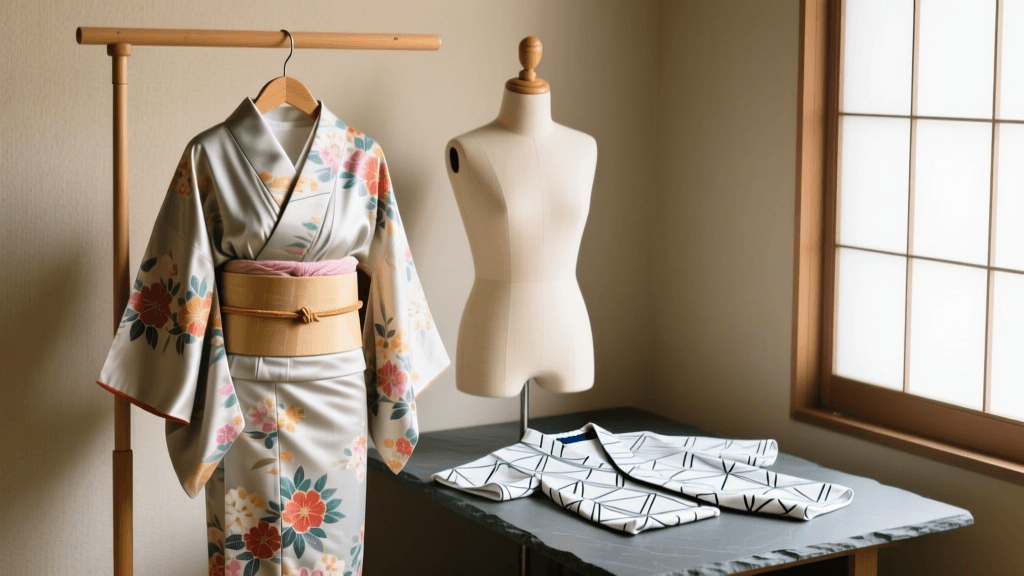
For travel, leave your heavy, vintage silks and delicate embroidered pieces at home. The humid summers and unpredictable rainy seasons of Japan demand practicality. In 2026, high-tech washable polyester blends and machine-washable silk-cotton hybrids dominate the travel market. A Komon (casual kimono with a repeating pattern) or a Yukata (unlined cotton summer robe) are your best options. Pack your garment rolled rather than folded to avoid hard creases that are nearly impossible to remove without a professional Japanese steamer.
2. The Foundation Layers
The secret to a comfortable kimono experience lies in the undergarments. You will need a Hadajuban (a thin, breathable undershirt) and a Susoyoke (an underskirt) to protect your outer garment from sweat and body oils. Over this, you wear the Nagajuban, an under-kimono that provides the crisp white collar (han-eri) visible at the neckline. Modern travel versions feature cool-touch synthetic meshes that wick moisture, a necessity given the rising summer temperatures recorded by the Japan National Tourism Organization (JNTO).
3. Ties, Belts, and the Obi
Ditch the traditional stiff silk Koshihimo (tying cords) for modern elastic mesh versions, which are gentler on the ribs during long days of walking. For the Obi (the wide outer sash), pack a lightweight Hanhaba Obi (half-width obi) for casual yukata wear, or a pre-tied Tsuke Obi if you are a beginner. A Datejime (wide under-belt) is crucial for smoothing the layers before the obi is applied.
4. Footwear and Accessories
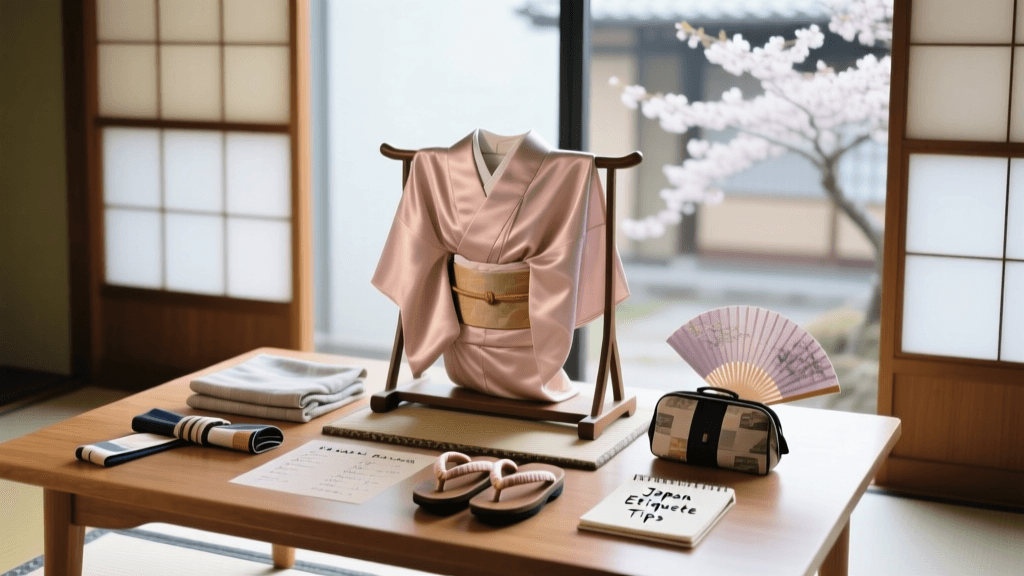
Split-toe Tabi socks are non-negotiable. Bring at least two pairs of stretch-cotton tabi, as they double as comfortable hotel slippers. For footwear, EVA-foam Zori or Geta sandals are significantly lighter than traditional wood and lacquer versions, making them ideal for navigating cobblestone streets. Finally, pack a Kinchaku (drawstring bag) to hold your phone and transit cards, as traditional kimono lack pockets.
5. The Furoshiki: Your Multi-Tool Wrapping Cloth
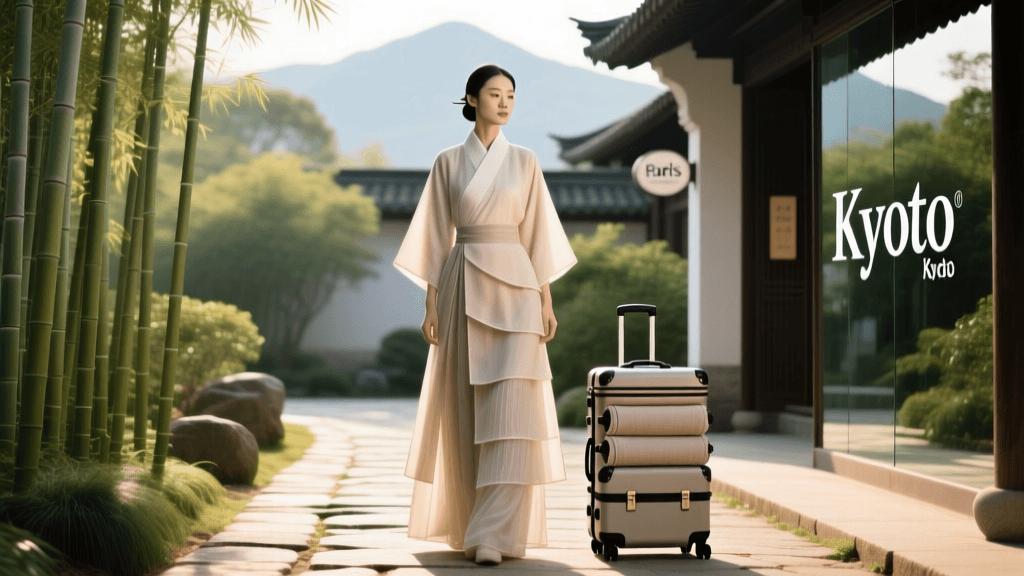
Never travel without a Furoshiki. This traditional square wrapping cloth is the ultimate travel hack for kimono enthusiasts. Use it to bundle your rolled garments, protecting them from dust and moisture in your suitcase. During your trip, it can be transformed into a makeshift tote bag for souvenirs, or laid out as a clean changing mat in public restrooms or park benches when you need to adjust your layers.
Kimono Travel Packing Matrix
| Item Category | Specific Garment | 2026 Travel Recommendation | Packing Method |
|---|---|---|---|
| Outerwear | Komon or Yukata | Washable poly-blend or Ro (sheer) silk | Loosely rolled in a furoshiki |
| Undergarments | Nagajuban & Hadajuban | Cool-touch moisture-wicking mesh | Folded flat at the bottom of the suitcase |
| Ties & Belts | Koshihimo & Datejime | Stretch-mesh elastic cords | Coiled inside shoes to save space |
| Sash | Hanhaba Obi | Woven cotton or lightweight brocade | Rolled tightly like a scroll |
| Footwear | Tabi & Zori | Stretch-cotton tabi, EVA-foam zori | Wear zori in transit, pack tabi |
Climate Adaptations: Beating the 2026 Heat
Japan's summers have grown increasingly intense, with urban heat island effects making cities like Kyoto and Tokyo feel exceptionally humid. To adapt, modern kimono enthusiasts in 2026 rely heavily on Ro and Sha fabrics—sheer, woven silks or poly-blends that allow for maximum airflow. Pairing these sheer garments with a lightweight, unlined Hitoe under-kimono ensures you remain cool while maintaining the opaque, modest layers required by traditional etiquette. Additionally, carrying a traditional folding fan (Sensu) is not just a stylish accessory; it is a practical necessity for generating a personal breeze while waiting for transit or walking between temples.
Where to Wear Your Kimono: Mindful Tourism Destinations
The landscape of where and how to wear a kimono in Japan has shifted significantly. As the Kyoto City Tourism Association continues to enforce strict mindful tourism ordinances in 2026, travelers must be aware of localized etiquette and restricted zones to ensure their presence is welcomed by local communities.
Kyoto: Navigating the Cultural Capital
Kyoto remains the premier destination for kimono wearers, but the days of unrestricted photography in the Gion district are over. Private streets in the geisha quarters are strictly off-limits to tourists to protect the privacy of local residents and working geiko. Instead, plan your kimono outings in the public, pedestrian-friendly zones of Higashiyama, particularly along the preserved streets of Ninenzaka and Sannenzaka. The bamboo groves of Arashiyama are also permissible, though arriving before 8:00 AM is highly recommended to avoid the midday crowds and capture the best natural light.
Tokyo: Blending Tradition with Modernity
In Tokyo, the contrast between Edo-period garments and neon-lit skyscrapers creates stunning visual narratives. Asakusa, home to the Senso-ji Temple, is a classic choice. However, for a more localized and less crowded experience in 2026, head to the Yanaka Ginza district. This 'shitamachi' (old downtown) neighborhood retains a nostalgic, mid-century charm that perfectly complements the casual elegance of a cotton yukata or a vintage meisen kimono.
Kanazawa: The Samurai and Artisan Hub
Often dubbed 'Little Kyoto,' Kanazawa offers a more relaxed environment for traditional garment enthusiasts. The Higashi Chaya district, with its wooden teahouses and gold-leaf artisan shops, provides a breathtaking backdrop. Kanazawa is also famous for its Kaga-yuzen dyeing technique; wearing a garment featuring this intricate, nature-inspired resist-dyeing style shows a deep appreciation for local craftsmanship and regional textile history.
Essential Etiquette for the 2026 Traveler
Wearing a kimono is an act of cultural participation, not merely a costume opportunity. To ensure you are dressing respectfully, adhere to these foundational rules:
- The Golden Rule of the Collar: Always wrap the left side of the kimono over the right side. Wrapping right-over-left is strictly reserved for dressing the deceased for burial and is considered highly inauspicious.
- Obi Knot Placement: For women, the obi knot should be tied at the back. Tying it at the front is historically associated with courtesans and is considered inappropriate for daily or temple wear.
- Mind the Hemline: When walking, your hemline should be straight and parallel to the ground. Avoid hiking up the back of the kimono, which disrupts the elegant, columnar silhouette.
- Sleeve Management: When eating or drinking tea, gently hold the outer sleeves together behind your wrists with one hand to prevent them from dipping into food or water.
- Footwear Boundaries: Always remove your zori or geta before stepping onto tatami mats. Only your tabi socks should touch the woven rush flooring of traditional inns and tea rooms.
Renting vs. Packing: The 2026 Verdict
While packing your own kimono offers unparalleled comfort and authenticity, the rental industry in Japan has also evolved. In 2026, premium rental boutiques now offer private, in-room dressing services and high-end, authenticated vintage silks that were previously unavailable to short-term tourists. If you are short on luggage space, booking a premium dressing experience is a viable alternative. However, for travelers who wish to explore rural areas, attend local summer festivals, or simply enjoy a quiet morning coffee in their traditional attire, bringing a personalized, washable travel kit remains the ultimate choice.
Conclusion
Packing a kimono for your Japanese travels in 2026 is a commitment to slow, respectful tourism. By selecting the right modern fabrics, understanding the layered architecture of the garment, and navigating the country's cultural hubs with mindfulness, you transform your journey into a living bridge between past and present. Whether strolling through the cedar-scented paths of Kanazawa or navigating the vibrant alleys of Tokyo, your carefully packed kimono will serve as both a personal sanctuary and a profound gesture of cultural appreciation.