Romanian Ia Blouse Revival: 2026 Styling & Sourcing Guide
The Renaissance of the Romanian Ia in 2026
The European folk dress landscape in 2026 is defined by a conscious, highly curated return to heritage textiles. Among the most celebrated garments leading this revival is the Romanian Ia (traditional blouse), specifically the Altita variant. Once confined to museum archives and rural festivals, the Ia has been reclaimed by contemporary fashion enthusiasts, sustainable style advocates, and textile preservationists. This surge in popularity is not merely a fleeting trend; it is a deeply rooted cultural renaissance. Following its celebrated recognition on the UNESCO Intangible Cultural Heritage list, the global appreciation for the intricate shoulder-embroidered shirt has culminated in a massive 2026 revival, bridging the gap between ancestral craftsmanship and modern capsule wardrobes.
Unlike the mass-produced, culturally appropriated 'peasant blouses' of the early 2000s, the 2026 styling movement demands authenticity. Consumers are prioritizing hand-loomed hemp, organic cotton, and natural silk threads, seeking out artisan cooperatives that preserve regional motifs. In this comprehensive guide, we explore the anatomy of the Altita, how to seamlessly integrate it into a modern 2026 wardrobe, and where to ethically source these masterpieces.
Anatomy of the Altita: Decoding the Embroidery
To style the Ia correctly, one must first understand its architectural brilliance. The traditional shirt is not merely a garment; it is a canvas of cosmological symbols, with every stitch serving a protective or narrative purpose. The National Museum of the Romanian Peasant in Bucharest categorizes the authentic Altita blouse into four distinct structural zones, each requiring specific embroidery techniques.
| Component | Location | Design Function & 2026 Styling Note |
|---|---|---|
| Altita | Shoulder | The most densely embroidered section, acting as 'armor' for the wearer. In 2026 styling, this heavy shoulder detail pairs best with minimalist, structured lower halves to balance the silhouette. |
| Incret | Neckline / Collar | The gathered section below the neck. Often features geometric 'sun' or 'diamond' motifs. Look for authentic hand-gathered smocking rather than machine-elasticated cuffs. |
| Rauri | Sleeves | Translates to 'rivers.' These vertical bands flow down the arm. Wide, dramatic Rauri sleeves are currently dominating avant-garde streetwear pairings. |
| Piept | Chest / Bodice | Usually features complementary, slightly less dense patterns than the Altita. Provides a visual anchor when the blouse is tucked into high-waisted trousers. |
Regional Variations to Watch in 2026
As the folk dress revival matures, collectors and stylists are moving beyond generic 'Romanian blouse' searches to specify regional origins. The 2026 market is heavily focused on three distinct regional styles:
- Oas (Maramures Region): Characterized by stark, high-contrast geometric patterns, typically utilizing deep black and vibrant red threads on raw white hemp. Perfect for a striking, monochromatic modern office look.
- Vrancea: Famous for its 'horn' and floral motifs, often incorporating metallic gold or silver thread interwoven with burgundy and forest green. This variation is highly sought after for evening and gala styling.
- Arges: Features delicate, intricate blackwork (black thread on white cotton) with subtle, botanical inspirations. The understated elegance of the Arges Ia makes it the premier choice for minimalist, smart-casual layering.
Contemporary Styling: Integrating Folk Dress into Modern Wardrobes
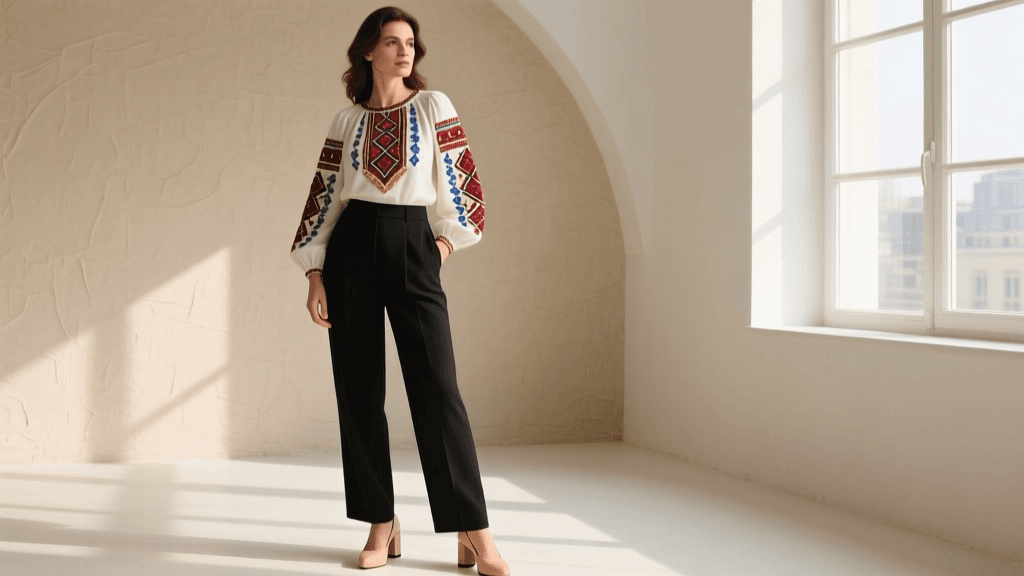
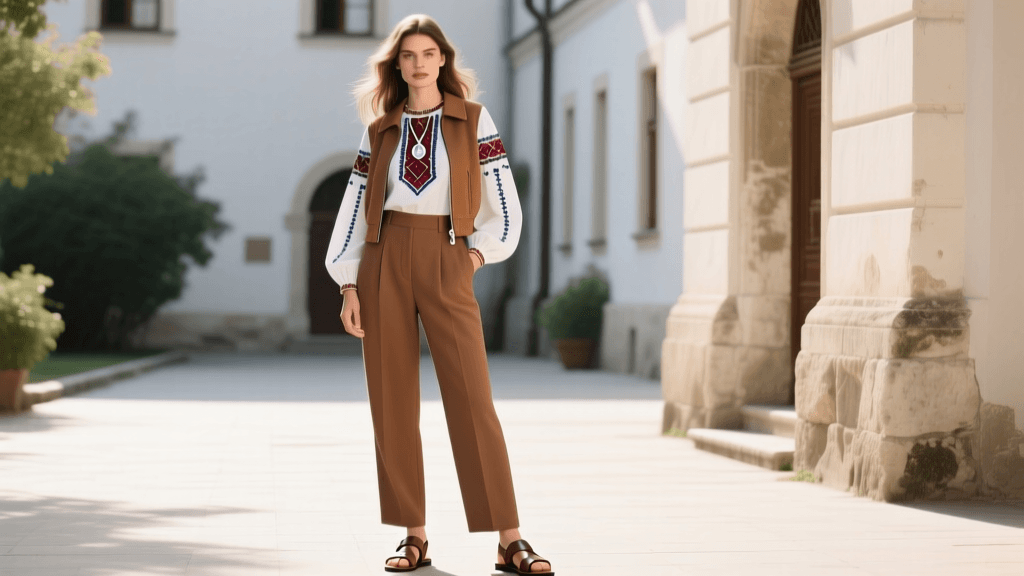
The key to wearing European folk dress in 2026 without looking like you are wearing a costume lies in juxtaposition. The voluminous, heavily embroidered nature of the Ia requires grounding with tailored, contemporary, and often structured pieces.
1. The Modern Office (Smart Casual)
For a professional environment, opt for an Arges blackwork Ia with a modest neckline and a tailored fit through the bodice. Pair it with high-waisted, wide-leg charcoal wool trousers. The drape of the wool contrasts beautifully with the crispness of the hand-loomed cotton blouse. Tuck the blouse in completely, allowing the Piept (chest) embroidery to peek above the waistband. Finish with a structured leather tote and minimalist loafers. Ensure the sleeve length hits precisely at the wrist bone—excess fabric can look sloppy in a corporate setting.
2. Avant-Garde Evening Wear
Evening styling in 2026 embraces drama and heritage. Select a Vrancea blouse featuring metallic thread accents. Pair this with a sleek, floor-length bias-cut silk skirt in a deep, complementary jewel tone (such as emerald or oxblood). The fluidity of the silk skirt mirrors the 'rivers' (Rauri) on the sleeves, creating a cohesive, flowing silhouette. Leave the blouse untucked but belted with a thin, modern metallic chain belt to define the waist without crushing the hand-gathered Incret neckline.
3. Elevated Streetwear
The intersection of heritage and streetwear is where the Ia truly shines this year. Take a voluminous Oas blouse with dramatic balloon sleeves and layer it over a fitted, ribbed merino wool turtleneck (ideal for transitional autumn weather). Pair with raw, selvedge denim jeans and chunky, architectural leather boots. The ruggedness of the raw denim honors the peasant roots of the garment, while the modern footwear updates the aesthetic for the urban landscape.
'To wear the Ia is to wear the memory of the earth. It is not a garment of the past, but a living textile that breathes with the generation that carries it.' — Contemporary European Textile Conservation Manifesto, 2025.
Ethical Sourcing and 2026 Market Pricing
With the surge in demand, the market has unfortunately seen an influx of fast-fashion knockoffs. Organizations like Fashion Revolution continue to campaign aggressively against cultural plagiarism, urging consumers to trace the supply chain of their folk garments. An authentic, hand-embroidered Altita takes anywhere from 40 to 120 hours to complete by a skilled artisan. If a blouse is priced under $100, it is almost certainly machine-made in a mass-production facility, often stripping the original cultural context and exploiting labor.
| Sourcing Channel | Price Range (USD) | Authenticity & Ethical Impact |
|---|---|---|
| Direct from Rural Artisans | $350 - $600 | Highest ethical impact. 100% of profits support the maker. Requires networking through verified cooperatives or social media artisan groups. Lead times of 2-4 months. |
| Curated Heritage Boutiques | $450 - $850 | High authenticity. Boutiques act as fair-trade middlemen, ensuring artisans are paid upfront. Excellent for immediate purchase and verified regional tagging. |
| Vintage / Antique (Pre-1980) | $200 - $1,200+ | Museum-quality pieces. Sourced from estate sales or specialized dealers. Requires careful inspection for textile degradation or moth damage. Highly sustainable. |
| Fast-Fashion 'Boho' Brands | $40 - $90 | Avoid. Machine-embroidered, culturally appropriated, and often made from synthetic blends that do not allow the skin to breathe. |
Textile Care and Archival Preservation
Owning an authentic Ia is an investment in wearable art. The hand-spun hemp and cotton fibers, along with naturally dyed silk threads, require meticulous care to survive the decades.
- Washing: Never machine wash an authentic Altita. Hand-wash in cool water (maximum 30°C / 86°F) using a neutral pH detergent specifically formulated for delicate natural fibers. Do not wring or twist the fabric; instead, press the water out gently between two clean, dry towels.
- Drying: Lay the garment flat on a drying rack away from direct sunlight, which can fade natural botanical dyes (especially the deep reds and yellows derived from madder root and weld).
- Ironing: Iron the blouse while it is still slightly damp. Always iron on the reverse side using a pressing cloth to protect the raised embroidery. The 3D texture of the Altita shoulder piece should never be flattened by a hot iron.
- Storage: Store the Ia flat in an acid-free archival box lined with unbleached muslin. If hanging is necessary, use a padded hanger to prevent stress on the heavy shoulder seams, and cover with a breathable cotton garment bag.
Conclusion
The 2026 revival of the Romanian Ia is a testament to the enduring power of European folk dress. By understanding the profound symbolism of the Altita, Incret, Rauri, and Piept, and by committing to ethical sourcing and proper textile conservation, modern dressers can honor the ancestral artisans who first spun these stories into thread. Whether styled with sharp tailoring for the boardroom or flowing silk for the evening, the Ia remains a masterclass in sustainable, meaningful fashion.