2026 Hanbok Streetwear Guide: Styling Modern Jeogori Daily
The Renaissance of Everyday Hanbok in 2026
In 2026, the global fashion landscape has fully embraced the 'new traditional' movement, with the Korean hanbok leading the charge in everyday streetwear and smart-casual wardrobes. No longer reserved strictly for lunar new year celebrations or weddings, contemporary iterations of traditional Asian garments are being reimagined for daily life. According to cultural reports highlighted by Korea.net (Official Portal of the Republic of Korea), the modernization of the hanbok has been a key cultural export strategy over the last few years, culminating in the ubiquitous presence of the modern jeogori (the traditional upper garment) in international fashion capitals from Seoul to Paris.
Mixing traditional Asian pieces with modern wardrobes requires an understanding of proportion, fabric weight, and historical context. The contemporary jeogori has been structurally modified to sit seamlessly alongside Western basics like raw denim and wide-leg wool trousers. This guide will break down exactly how to style, source, and care for a modern jeogori in 2026, transforming your daily wardrobe into a masterclass of cross-cultural sartorial elegance.
Deconstructing the Modern Jeogori
To successfully integrate the jeogori into a modern wardrobe, one must first understand how the 2026 silhouette differs from its historical predecessors. Historically, as documented in the textile archives of the Victoria and Albert Museum's Asian Collections, the jeogori was often voluminous, featuring wide sleeves and a hemline that fluctuated in length depending on the dynasty and social class. Today's ready-to-wear adaptations prioritize mobility and layering.
Key Structural Modifications for 2026
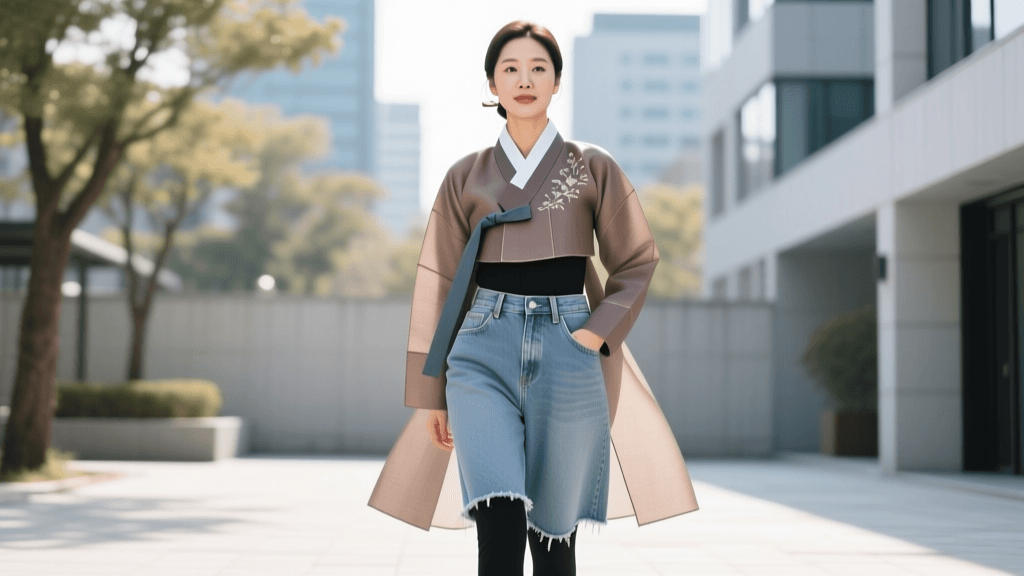
- The Hemline: Modern casual jeogori are typically cropped to exactly 45 to 50 centimeters from the shoulder seam. This deliberate cropping ensures the garment sits at the natural waist or slightly above, preventing it from swallowing the torso when paired with high-waisted modern bottoms.
- The Sleeves: The sleeve width has been reduced from the historical 50-centimeter flare to a manageable 22 to 25 centimeters. This prevents the fabric from dragging in food or catching on door handles during a busy workday.
- The Dongjeong (Collar): The traditional stiff white paper collar has been replaced with removable, washable cotton or silk-blend bands that snap or velcro into place, maintaining the crisp V-neckline without the maintenance hassle.
- Fabric Innovations: While traditional silk is still used for formal wear, 2026's everyday jeogori utilize matte crepe, washable silk blends, and structured linen. These fabrics offer the drape of traditional textiles but withstand the rigors of modern commuting.
Contemporary ready-to-wear jeogori from Seoul-based designers like Danha, Tchai Kim, and Leesle typically range from $120 to $280 USD in 2026, making them accessible investment pieces for the modern wardrobe.
Core Styling Formulas: Jeogori Meets Western Basics
The secret to mixing traditional Asian pieces with modern clothing lies in contrast. You want to juxtapose the delicate, structured elegance of the jeogori with the utilitarian, relaxed nature of contemporary Western garments.
1. The Denim Contrast (Casual Streetwear)
Pairing a jeogori with denim is the most popular entry point into hanbok fusion styling. However, the cut and wash of the denim are critical. Avoid skinny jeans, which create a top-heavy silhouette due to the volume of the jeogori's sleeves and the goreum (ties).
- The Bottom: Opt for high-waisted, straight-leg or wide-leg raw denim. The stiff structure of raw denim grounds the flowing nature of the jeogori. A mid-to-dark indigo wash provides a rich color contrast against pastel or jewel-toned tops.
- The Footwear: Chunky leather loafers or minimalist retro sneakers (such as the New Balance 990v6 or Veja Campo) bridge the gap between traditional elegance and modern streetwear.
- The Layering Trick: In cooler months, wear a fitted, ribbed turtleneck underneath the jeogori. This adds warmth without disrupting the V-neckline created by the overlapping collar.
2. The Tailored Office Look (Smart Casual)
For the modern workplace, the jeogori can replace the standard silk blouse or blazer. The key here is fabric coherence.
- The Bottom: High-waisted, wide-leg wool trousers with a front pleat. The drape of the wool mimics the flow of a traditional chima (skirt) while maintaining corporate professionalism.
- The Color Palette: Stick to monochromatic or tonal pairings. A charcoal grey matte crepe jeogori paired with black wool trousers creates a sleek, authoritative silhouette.
- The Accessories: Swap the traditional pouch for a structured, minimalist leather tote. Keep jewelry understated—small pearl studs or a single delicate gold chain work best.
The 2026 Fabric and Color Pairing Matrix
Use the following table as a quick reference guide when building your hanbok fusion outfits this year.
| Jeogori Style | Fabric | Best Modern Bottom | Footwear Match | Occasion |
|---|---|---|---|---|
| Cropped (45cm) | Matte Crepe | High-waisted Raw Denim | Chunky Loafers | Weekend Streetwear |
| Standard (55cm) | Washable Silk | Wide-leg Wool Trousers | Pointed-toe Flats | Office / Smart Casual |
| Sheer Organza | Silk Organza | Tailored Linen Shorts | Strappy Sandals | Summer Gallery Dates |
| Oversized (60cm) | Quilted Cotton | Pleated Midi Skirt | Ankle Boots | Autumn Cafe Hopping |
Mastering the Modern Goreum Knot
The goreum (the long ribbons used to tie the jeogori closed) is the most distinctive feature of the garment. Historically, the knot was tied tightly and featured a specific, stiff bow shape. In 2026 streetwear, the approach to the goreum is much more relaxed and expressive.
Pro-Tip: If your modern jeogori comes with excessively long goreum that drag past your knees, do not cut them. Instead, wrap the excess ribbon around your waist like a subtle belt before tying the bow, or tie a loose, elongated slip-knot that allows the ribbons to flow down the side of your hip like a sash.
To tie the standard modern fusion knot: Cross the left ribbon over the right, pull it through to create a base knot. Then, form a small loop with the top ribbon and wrap the bottom ribbon around it, pulling through gently. Let the ends hang asymmetrically—one slightly longer than the other—to break up the symmetry and add a relaxed, avant-garde touch to your outfit.
Care and Maintenance for Hybrid Wardrobes
Traditional hanbok requires specialized dry cleaning, but the 2026 everyday jeogori is designed for modern maintenance. However, to preserve the structural integrity of the collar and the vibrancy of the dyes, follow these strict care guidelines:
- Washing: Always hand wash in cold water (below 20°C) using a pH-neutral silk detergent. Never machine wash, even on a delicate cycle, as the agitation can warp the hidden stitching that gives the collar its shape.
- Drying: Never wring out the fabric. Gently press the water out between two clean, dry towels, then lay the garment completely flat on a drying rack away from direct sunlight to prevent the rich jewel tones from fading.
- Ironing: Use a low-heat steam iron. Always place a cotton pressing cloth between the iron and the jeogori, especially if the garment features any metallic thread embroidery or synthetic blend fibers, which can melt or scorch instantly.
- Storage: Hang the jeogori on a wide, padded hanger to support the shoulders. Do not use wire hangers, as they will create permanent dimples in the delicate crepe or silk fabrics.
Conclusion: A Living Tradition
Mixing traditional Asian pieces with modern wardrobes is not about wearing a costume; it is about participating in a living, breathing sartorial evolution. By pairing a thoughtfully tailored modern jeogori with everyday denim or structured trousers, you honor the craftsmanship of Korean textile history while asserting your own contemporary style identity. As we move through 2026, the boundaries between 'traditional' and 'modern' will continue to blur, proving that true elegance transcends time and geography.