Ming Dynasty Mamianqun: Court Origins to Modern Hanfu
The Imperial Roots of the Horse-Face Skirt
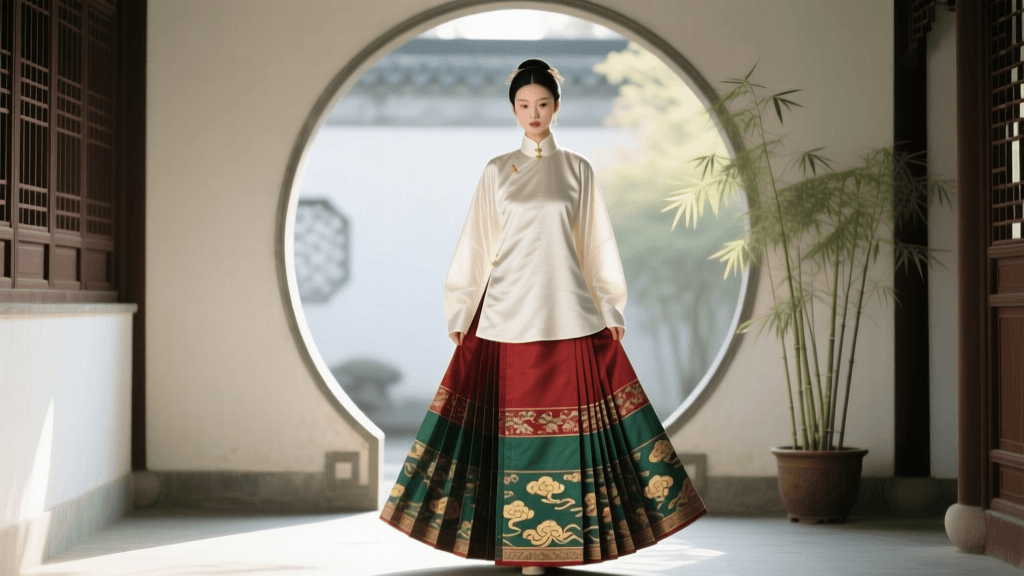
The mamianqun, literally translated as the 'horse-face skirt,' stands as one of the most iconic and enduring garments in the history of Chinese fashion. Originating in the Song Dynasty but reaching its absolute zenith during the Ming Dynasty (1368–1644), this intricately pleated skirt was a staple of court fashion and elite wardrobes. The Ming court, under the Hongwu Emperor, established strict sumptuary laws that dictated not only the silhouettes of court attire but also the specific motifs, colors, and fabrics permitted for different social ranks.
For noblewomen and wives of high-ranking officials, the mamianqun was often woven with opulent materials such as silk brocade, adorned with gold-leaf threads, and embroidered with auspicious symbols. According to textile archives preserved in institutions like the Victoria and Albert Museum, Ming Dynasty court textiles were masterpieces of the drawloom, featuring complex repeating patterns of phoenixes, peonies, and the elusive 'flying fish' (feiyu) or 'python' (mang) motifs that denoted imperial favor. The skirt was not merely a fashion statement; it was a wearable ledger of a family's status, wealth, and proximity to the imperial throne.
Structural Anatomy: Panels, Pleats, and Tension
To understand the genius of the mamianqun, one must examine its structural anatomy. Unlike Western skirts that rely on darts, zippers, or buttons, the mamianqun is a marvel of flat-pattern engineering and tension-based tailoring. It is constructed from two identical, overlapping panels of fabric.
- The 'Horse Face' (Mamian): The flat, unpleated sections at the front and back of the skirt. These panels serve as a canvas for the most elaborate embroidery and woven motifs, ensuring the design remains undistorted when the wearer walks.
- The Side Pleats: Located on the left and right hips, these deep, knife-like pleats allow for extraordinary freedom of movement. Historically, this design is believed to have been influenced by the equestrian needs of nomadic tribes, allowing women to ride horses or climb stairs without restriction.
- The Waistband (Yaotou): Typically made of a contrasting, sturdier fabric (often white cotton or linen) to reduce bulk and provide grip. Long, woven ties extend from the waistband to secure the skirt tightly around the waist through a specific wrapping and knotting technique.
Dynasty Evolution: Surviving the Qing Edicts
When the Manchu-led Qing Dynasty overthrew the Ming in 1644, the new rulers issued the brutal 'Tifa Yifu' edict, demanding that Han Chinese men adopt the Manchu queue hairstyle and court dress under penalty of death. However, a cultural loophole known as the 'ten from, ten not from' (shicong shibucong) emerged. One of these exemptions allowed Han women to continue wearing their traditional Ming-style clothing.
As a result, the mamianqun survived the dynastic transition. Throughout the Qing Dynasty, it evolved slightly—the pleats became finer, and the flat panels were often heavily decorated with woven ribbons and intricate embroidery borders (lan gan). By the late 19th and early 20th centuries, it remained the standard ceremonial skirt for Han brides and elite women, even as the Manchu qipao began to dominate urban fashion in the 1920s.
The Modern Hanfu Revival and Global Spotlight
For much of the mid-20th century, the mamianqun was relegated to museum archives and vintage trunks. However, the 21st-century Hanfu movement has resurrected it from obscurity. The skirt exploded into the global consciousness in 2022 when luxury fashion house Dior released a mid-length pleated skirt that bore a striking structural resemblance to the traditional mamianqun. As reported by the South China Morning Post, this sparked widespread debate over cultural appropriation, inadvertently fueling a massive surge in demand for authentic, historically accurate mamianqun skirts among young Chinese consumers and global fashion enthusiasts.
Today, the mamianqun is a cornerstone of the modern Hanfu wardrobe. It bridges the gap between historical reenactment and contemporary streetwear, frequently paired with modern turtlenecks, tailored blazers, or traditional Ming-style ao (jackets). As noted by cultural commentators at Sixth Tone, the Hanfu revival is driven by a generation seeking to reclaim and modernize their cultural heritage, turning ancient court fashion into a vibrant, living subculture.
Actionable Guide: Sizing, Purchasing, and Styling
If you are looking to purchase an authentic mamianqun, whether for a historical festival, a wedding, or daily fusion wear, understanding measurements and fabric weights is crucial. Modern Hanfu brands (such as Shisanyu, Zhongling, or independent Taobao artisans) typically size skirts based on waist measurements and total hem width.
Sizing and Hem Width Chart
The 'hem width' dictates the volume of the skirt. A wider hem allows for deeper pleats and a more dramatic swirl, but requires a larger waist to prevent the front panels from overlapping excessively.
| Waist Size (Inches) | Recommended Hem Width | Pleat Count (Per Side) | Best Fabric Weight |
|---|---|---|---|
| 24 - 28 in | 3 meters (approx. 3.3 yards) | 4 to 5 pleats | Light Jacquard / Chiffon |
| 29 - 34 in | 4.5 meters (approx. 5 yards) | 6 to 7 pleats | Mid-weight Silk Blend |
| 35+ in | 6 meters (approx. 6.5 yards) | 8+ pleats | Heavy Brocade / Woven Gold |
Purchasing Advice: Costs and Timing
- Mass Market (Polyester/Jacquard): $30 – $60 USD. Ideal for beginners and daily wear. These are machine-washable and hold pleats well due to synthetic heat-setting.
- Mid-Tier (Silk Blends, Woven Metallic Threads): $80 – $150 USD. The sweet spot for quality. Look for 'zhi jin' (woven gold) techniques where the metallic pattern is integrated into the loom rather than printed.
- High-End / Custom (Pure Silk, Song Brocade): $200 – $500+ USD. Reserved for collectors and brides. These require professional tailoring and meticulous care.
- Timing: If ordering from Chinese indie brands via platforms like Taobao or Superbuy, place your orders 1.5 to 2 months before major events like Lunar New Year or the Hanfu Culture Week (usually April/May). Many skirts are produced in small, made-to-order batches (pre-sale) and take 30-45 days to manufacture.
How to Measure and Tie
Measure your natural waist (the narrowest part of your torso) or where you prefer the skirt to sit (many modern wearers prefer the high hip for a longer torso illusion). For length, standard modern skirts are 100-105cm, grazing the mid-calf or ankle. To tie the skirt: wrap the left side over your body, bring the right string around to the front, wrap the right side over the left, and tie both sets of strings securely at the side or back. Always ensure the flat 'horse face' panels are perfectly centered on your front and back.
Care and Maintenance
Proper care ensures the longevity of your mamianqun, especially if it features delicate metallic threads or silk.
- Washing: Synthetic jacquards can be hand-washed in cold water with a mild, pH-neutral detergent. Never wring or twist the fabric; gently press out the water and hang to dry in the shade. Pure silk or heavy brocade must be dry-cleaned.
- Pleat Maintenance: Over time, side pleats may lose their sharpness. Use a steam iron on a low setting, folding the pleats manually and pressing them with a protective cotton cloth between the iron and the skirt.
- Storage: Do not hang heavy brocade skirts by the waist ties for long periods, as the weight of the fabric will stretch the waistband. Fold the skirt along its natural pleat lines and store it flat in a breathable cotton garment bag with cedar blocks to deter moths.
From the imperial courts of the Ming Dynasty to the bustling streets of modern metropolises, the mamianqun remains a testament to the enduring elegance and structural brilliance of traditional Asian garment engineering.