Su, Shu, and Yue Embroidery: A Guide to Chinese Silk Arts
The Renaissance of Chinese Silk: Beyond the Surface
The modern Hanfu revival has brought traditional Chinese garments back into the global spotlight, but the true soul of these garments lies in their intricate surface decorations. While machine embroidery has made traditional aesthetics accessible, the pinnacle of Chinese textile art remains in the hand-embroidered masterpieces of the 'Big Three' regional styles: Su Xiu (Suzhou), Shu Xiu (Sichuan), and Yue Xiu (Cantonese). Understanding these distinct techniques is essential for collectors, hanfu enthusiasts, and textile historians alike. According to the Metropolitan Museum of Art, the evolution of Chinese silk craftsmanship is deeply intertwined with regional geography, local flora, and centuries of refined artistic philosophy.
Su Xiu (Suzhou Embroidery): The Pinnacle of Delicate Refinement
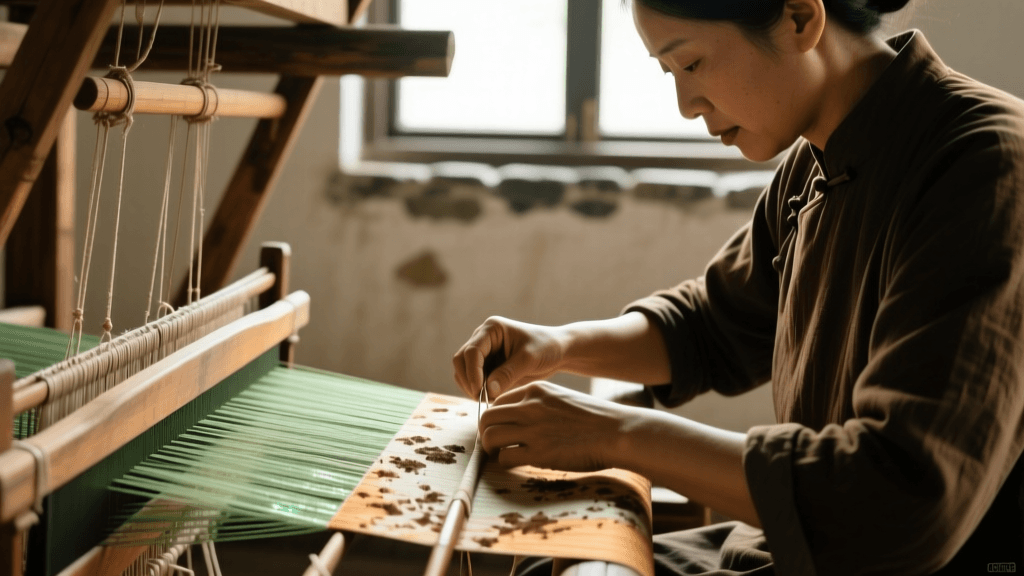
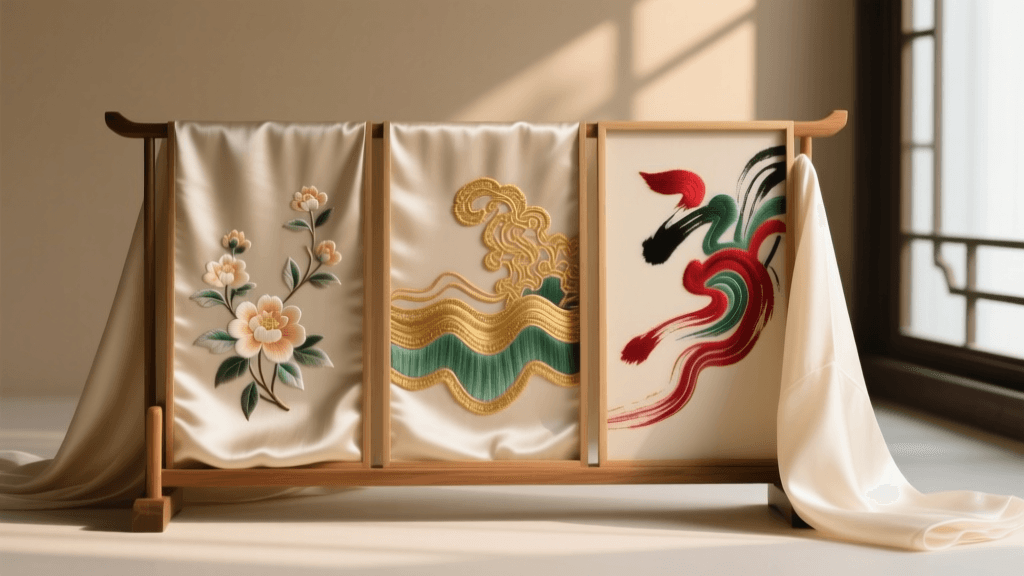
Originating from the Jiangsu province, Su Xiu is globally celebrated for its meticulous refinement, delicate color palettes, and lifelike realism. The defining characteristic of Suzhou embroidery is the artisan's ability to split a single silk thread into incredibly fine fractions—often 1/16th, 1/32nd, or even 1/48th of the original strand. This microscopic precision allows for the creation of 'double-sided embroidery' (shuangmian xiu), where the front and back of the silk canvas display identical, flawless images with all knots and thread ends hidden within the stitches.
Actionable Identification Tip: When inspecting a purported Su Xiu piece, examine the transition of colors. Artisans use a technique called 'qiangzhen' (interlocking stitches) to blend colors seamlessly without harsh lines. If you are purchasing a high-end mamianqun (horse-face skirt) featuring koi fish or peonies, look for the subtle, almost painted gradient in the petals and scales, which is a hallmark of authentic Suzhou craftsmanship.
Shu Xiu (Sichuan Embroidery): Bold Colors and Satin Mastery
Shu Xiu hails from the Sichuan province and is historically renowned for its practical durability and vibrant, contrasting colors. Unlike the delicate, painting-like quality of Su Xiu, Shu Xiu relies heavily on the 'yunzhen' (halo) effect, achieved through masterful satin stitches and chevron patterns. The silk used in Sichuan is traditionally thicker and more tightly twisted, making the resulting embroidery highly resistant to wear and tear.
Historically, Shu Xiu was favored for everyday garments, quilt covers, and official court robes due to its robust nature. The motifs often feature local Sichuan elements, such as pandas, lotus flowers, and carp. Practical Advice for Hanfu Wearers: If you are looking for an embroidered Ruqun or Banbi (half-sleeve jacket) for daily wear or outdoor festivals, Shu Xiu is your best investment. The dense satin stitches protect the underlying silk from friction, and the vibrant dyes hold up exceptionally well against sunlight compared to the more delicate pastel dyes of Suzhou silk.
Yue Xiu (Cantonese Embroidery): Vibrant Threads and 3D Padding
Yue Xiu, originating from the Guangdong region (historically Canton), is the most flamboyant and structurally complex of the three. It is heavily influenced by Lingnan folk art and is famous for its extensive use of gold and silver threads, as well as its unique 3D padding technique. Artisans use cotton, wool, or even horsehair to build a raised underlay before stitching over it with silk or metallic threads, creating a dramatic bas-relief effect.
The motifs are deeply auspicious, frequently featuring dragons, phoenixes, lychees, and peacocks. Yue Xiu is the traditional choice for bridal Qungua (wedding jackets) and highly formal ceremonial garments. The extensive use of metallic couching ('ding' technique) means these garments are heavy, opulent, and catch the light beautifully. According to the UNESCO Intangible Cultural Heritage listings, the broader sericulture and silk craftsmanship of China, which encompasses these regional variations, represents a vital transmission of ancestral knowledge and community identity.
Comparative Guide: Su, Shu, and Yue Embroidery
To help you make informed decisions when commissioning or purchasing traditional garments, refer to the comparison chart below:
| Feature | Su Xiu (Suzhou) | Shu Xiu (Sichuan) | Yue Xiu (Cantonese) |
|---|---|---|---|
| Primary Technique | Thread splitting, double-sided stitching | Satin stitch, chevron, halo blending | 3D padding, gold/silver couching |
| Visual Texture | Flat, smooth, painterly | Dense, textured, vibrant | Raised, sculptural, highly reflective |
| Common Motifs | Cats, koi, peonies, swallows | Pandas, lotus, carp, tigers | Dragons, phoenixes, lychees |
| Best Garment Use | Formal event Hanfu, display pieces | Daily wear Hanfu, outerwear | Bridal Qungua, ceremonial robes |
| Custom Timeline | 4 to 8 months | 2 to 4 months | 3 to 6 months |
Traditional Dyeing: Prepping the Silk Canvas
Embroidery is only as brilliant as the canvas it rests upon. Traditional Chinese embroidery relies on natural plant dyes, which require specific mordanting processes to ensure colorfastness. The University of Washington's Silk Road Project highlights how ancient trade routes not only moved finished textiles but also disseminated complex dyeing technologies across Asia.
- Gardenia Yellow (Zhi Zi): Used for imperial and bright yellows. The silk must be mordanted with alum. Actionable tip: When washing gardenia-dyed silk, use a pH-neutral detergent, as alkaline soaps will shift the color to a dull brown.
- Indigo Blue (Lan Cao): Achieved through vat dyeing. Indigo bonds mechanically to the fiber rather than chemically. To set the dye on a newly purchased indigo hanfu, soak it in cold water with a cup of white vinegar for 15 minutes before the first wear.
- Madder Red (Qian Cao): Produces deep, earthy reds. It requires a tin or alum mordant. Madder-dyed silks are highly sensitive to prolonged UV exposure; always store these garments away from direct sunlight to prevent the red from fading to a pale orange.
Actionable Guide: Sourcing, Costing, and Caring for Your Wardrobe
Building a wardrobe of authentic, hand-embroidered Hanfu requires patience and a realistic budget. Here is what you need to know before making a purchase:
Cost Expectations
Authentic hand-embroidery is a luxury investment. A machine-embroidered mamianqun may cost between $80 and $150. However, a skirt featuring genuine, hand-stitched Su Xiu panels will start around $1,500 and can easily exceed $8,000 for master-level artisan work. Shu Xiu offers a middle ground, with high-quality hand-stitched daily garments ranging from $400 to $1,200.
Care and Maintenance
Never machine wash or wring hand-embroidered silk. The tension will permanently distort the silk canvas and cause the dense embroidery threads to pucker.
For Su Xiu and Yue Xiu, professional dry cleaning specializing in historic textiles is the only safe option. For Shu Xiu, gentle hand-washing in cold water with a silk-specific detergent is acceptable for minor soil. Always dry embroidered garments flat on a mesh rack, reshaping the seams while damp. Store them flat in acid-free tissue paper; hanging heavy Yue Xiu garments can cause the padded embroidery to pull and tear the silk foundation over time.
Conclusion
Whether you are drawn to the whisper-thin elegance of Suzhou silk, the robust vibrancy of Sichuan satin stitches, or the sculptural opulence of Cantonese goldwork, understanding these regional techniques transforms how you wear and appreciate traditional Asian garments. By investing in authentic craftsmanship and caring for these textiles properly, you become an active participant in preserving a living, breathing heritage.