Xiangyunsha Silk: China's Mud-Dyed Intangible Heritage
The Magic of Mud and Sun: What is Xiangyunsha?
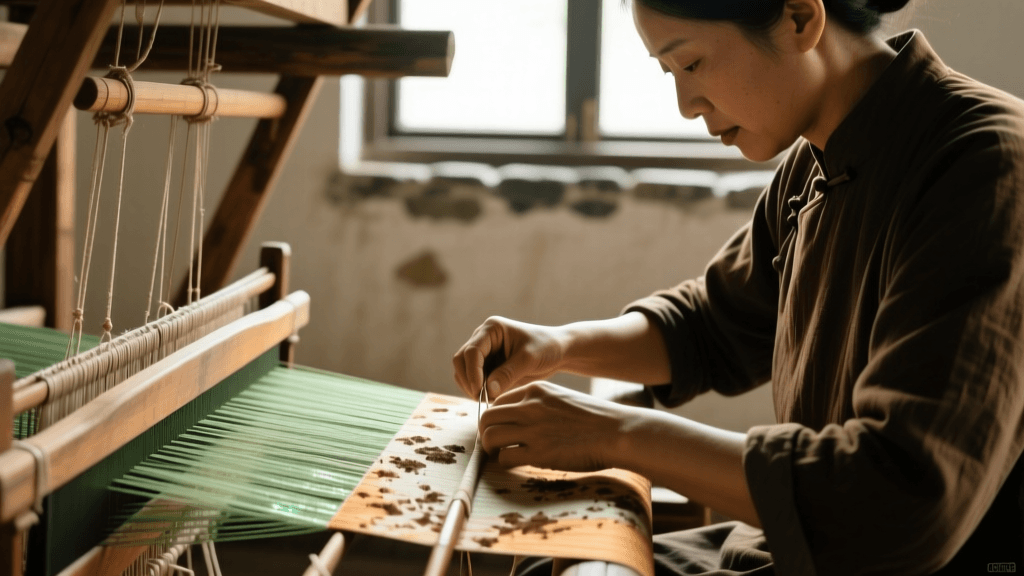
Xiangyunsha, historically known as gambiered Guangdong gauze, is not merely a fabric; it is a living testament to the harmony between human ingenuity and the natural environment. Originating in the Shunde district of Foshan in Guangdong province, this extraordinary textile has been revered for centuries as 'soft gold' in the realm of Chinese traditional crafts. Unlike standard silk weaving, which relies primarily on the loom, the creation of Xiangyunsha is an alchemical process that requires specific botanical extracts, iron-rich river mud, and the relentless subtropical sun.
As a recognized National Intangible Cultural Heritage of China, Xiangyunsha represents a pinnacle of artisanal dedication. The preservation of such crafts is part of a broader global effort documented by frameworks like the UNESCO Intangible Cultural Heritage initiative, which emphasizes the safeguarding of traditional craftsmanship and the knowledge passed down through generations of artisans. Today, this unique textile is experiencing a massive resurgence, particularly within the Hanfu revival movement, where enthusiasts seek historically grounded, breathable, and luxurious fabrics for their traditional garments.
The Alchemy of Earth and Botanicals
The secret to Xiangyunsha lies in its highly localized raw materials. The primary dye is extracted from the Dioscorea cirrhosa tuber, locally known as 'Shoulang'. This plant is rich in tannins and produces a deep, reddish-brown sap. However, the true magic occurs when this botanical dye interacts with the specific mud of the Pearl River Delta. The riverbeds in Shunde contain high concentrations of iron ions. When the tannin-soaked silk is coated in this mud, a chemical reaction occurs, transforming the fabric's surface into a lustrous, deep black while leaving the reverse side a rich, earthy brown.
This profound connection to the earth echoes the broader history of Chinese textile production. As noted by the Metropolitan Museum of Art, the evolution of Chinese silk from a closely guarded imperial secret to a globally traded luxury good highlights the immense cultural weight and regional specialization these textiles carry. Xiangyunsha is a perfect example of terroir in textiles—it simply cannot be authentically replicated outside its specific geographic and climatic origin.
The 13-Step Intangible Heritage Process
Creating authentic Xiangyunsha is a grueling, time-sensitive endeavor that can only be performed during specific months of the year (typically from March to November) when the sunlight is intense and the humidity is balanced. The process involves up to 30 iterations of dyeing and drying, condensed into 13 core procedural steps:
- Preparation: The raw mulberry silk gauze is cut to precise measurements and prepared for dyeing.
- Initial Dyeing: The silk is soaked in the extracted Shoulang tuber juice.
- Sun-Baking: The fabric is laid flat on grass under the intense sun to dry and oxidize.
- Repetition: The soaking and sun-baking process is repeated dozens of times over several days until the silk reaches a deep, saturated reddish-brown.
- Mud Collection: Artisans harvest iron-rich silt from specific, unpolluted sections of the local riverbeds before dawn.
- Mud Application: The mud is evenly smeared onto one side of the dried, dyed silk.
- Chemical Reaction: The fabric is left in the shade to allow the tannins and iron to bind, creating the signature black coating.
- Washing: The excess mud is meticulously washed away in the river, revealing the lustrous finish.
- Final Sun-Drying: The fabric is dried one last time to set the colors.
- Sealing the Color: The fabric is boiled in specific herbal baths to lock in the dye and soften the fibers.
- Stretching: Artisans manually stretch the fabric to ensure an even texture and width.
- Conditioning: The silk is left in a dark, humid room to 'rest' and allow the fibers to stabilize.
- Final Inspection: Master artisans inspect every inch for color consistency and structural integrity.
Comparison Chart: Xiangyunsha vs. Other Heritage Silks
Understanding how Xiangyunsha compares to other traditional Chinese fabrics is crucial for collectors and Hanfu enthusiasts. Below is a structured comparison to help you make informed purchasing decisions.
| Feature | Xiangyunsha (Mud-Dyed Gauze) | Song Brocade (Songjin) | Standard Mulberry Silk |
|---|---|---|---|
| Base Material | 100% Mulberry Silk Gauze | Silk and Cotton/Blends | 100% Mulberry Silk |
| Dyeing Method | Botanical Tannin + Iron Mud | Yarn-dyed, Complex Weaving | Chemical or Standard Dyes |
| Texture / Hand-feel | Crisp, Rustling, Lustrous, Cool | Heavy, Soft, Patterned, Matte | Smooth, Drapey, Soft |
| Breathability | Exceptional (Ideal for Humid Heat) | Moderate (Better for Autumn/Winter) | High |
| Price Range (USD/m) | $80 - $250+ | $100 - $300+ | $15 - $40 |
| Primary Hanfu Use | Summer Beizi, Mamian Skirts, Shirts | Winter Jackets, Ceremonial Collars | Inner Layers, Pleated Skirts |
Practical Guide: Identifying Authentic Xiangyunsha
Due to its high market value and labor-intensive production, the market is unfortunately flooded with counterfeit Xiangyunsha. Mass-produced fakes often use standard silk coated with chemical black dyes and synthetic resins to mimic the crisp texture. Here is how you can authenticate genuine artisan pieces:
1. The Two-Tone Rule
Authentic Xiangyunsha is distinctly two-toned. The side coated in mud will be a deep, shimmering black (or sometimes dark burgundy, depending on the exact tuber concentration), while the reverse side remains a matte, earthy reddish-brown. If both sides are pitch black, it is a chemical dye fake.
2. The Auditory 'Crackle'
Genuine Xiangyunsha has a unique structural stiffness that produces a distinct rustling or 'crackling' sound when the fabric is rubbed between the fingers or when the wearer walks. This is why it is sometimes associated with the sound of wind through clouds. Fakes coated in resin may feel stiff but lack this specific acoustic resonance.
3. The Olfactory Test
Real Xiangyunsha carries a very faint, natural scent of earth, dried herbs, and river mud. It should never smell of harsh chemicals, petroleum, or synthetic perfume. Over time and with washing, this earthy scent gently fades but never turns foul.
4. The Water Test
Because the mud-dyeing process alters the surface tension of the silk, authentic Xiangyunsha is naturally water-resistant. If you place a drop of water on the black side, it should bead up slightly rather than instantly absorbing into the fibers.
Buying, Pricing, and Sourcing Artisan Pieces
Investing in Xiangyunsha is an investment in wearable heritage. When budgeting for custom Hanfu or raw fabric, expect to pay a premium for authenticity. Raw, unpatterned Xiangyunsha typically starts around $80 to $120 USD per meter. Pieces featuring jacquard-woven patterns (where the base silk gauze is woven with motifs before the mud-dyeing process) or those that have been aged for several years can easily exceed $250 USD per meter.
For the most reliable sourcing, look to established heritage workshops in Foshan, Guangdong. If purchasing online via platforms like Taobao or Tmall, only buy from stores that display the official 'National Intangible Cultural Heritage' certification badges and provide detailed video proof of their mud-dyeing process. Institutions like the China National Silk Museum frequently collaborate with certified artisans and can serve as a benchmark for identifying legitimate heritage brands and exhibitions.
Hanfu Styling Applications
Because of its crisp drape and exceptional cooling properties, Xiangyunsha is the ultimate fabric for summer Hanfu. It is highly favored for Beizi (open-front jackets), Song-style trousers, and lightweight Mamian (horse-face) skirts. The fabric's stiffness holds pleats incredibly well, making it a favorite among pleated skirt makers. However, because it lacks elasticity, it is rarely used for form-fitting garments or inner layers that require direct skin friction.
Care and Maintenance Instructions
Caring for Xiangyunsha requires a departure from standard silk care. The mud-dye coating is durable but can be damaged by alkaline substances and excessive heat. Follow these strict guidelines to ensure your garment lasts for decades:
- Washing: Hand wash only in cold water (strictly below 30°C or 86°F). Never use a washing machine, as the agitation can cause the crisp coating to crack unevenly.
- Detergent: Use only a pH-neutral, silk-specific detergent. Avoid standard laundry detergents, bleach, or alkaline soaps, which will strip the botanical tannins and ruin the black finish.
- Soaking: Do not soak the fabric for more than 3 to 5 minutes. Prolonged water exposure weakens the mud-dye bond.
- Drying: Never wring or twist Xiangyunsha. Gently press the water out between two clean, dry towels. Hang to dry exclusively in the shade. Direct sunlight will cause the black mud-dye to fade and the fibers to become brittle.
- Ironing: If ironing is necessary, use the lowest heat setting and always place a damp cotton cloth between the iron and the silk. Steam is preferred over direct contact.
- Storage: Store in a cool, dry, and dark place. Use breathable cotton garment bags. Avoid wire hangers, which can leave permanent rust marks or indentations on the crisp fabric; opt for padded wooden hangers instead.
By understanding the profound history, the meticulous 13-step creation process, and the precise care requirements of Xiangyunsha, enthusiasts and collectors can fully appreciate and preserve one of China's most remarkable intangible heritage crafts. Wearing Xiangyunsha is not just a fashion statement; it is an act of cultural preservation, wrapping the wearer in centuries of earth, water, and artisanal mastery.