2026 Modern Hanbok Guide: Styling Jeogori With Denim
The Evolution of the Modern Hanbok in 2026
The global fashion landscape in 2026 has fully embraced the integration of heritage garments into daily wardrobes, with the Korean hanbok leading a particularly vibrant renaissance. No longer reserved solely for the Chuseok holiday or traditional weddings, the hanbok has been deconstructed, reimagined, and seamlessly woven into contemporary streetwear and smart-casual office attire. At the heart of this movement is the jeogori, the traditional upper garment of the hanbok ensemble. By mixing the structural elegance of the jeogori with modern staples like raw selvedge denim and tailored wool trousers, fashion enthusiasts are creating a hybrid aesthetic that honors Asian traditions while pushing the boundaries of modern style.
As noted by the Encyclopedia Britannica, the traditional hanbok is celebrated for its vibrant colors and clean, flowing lines that lack straight structural seams. However, the 2026 interpretation of the jeogori adapts these historical elements for modern mobility and layering. Contemporary K-fashion brands such as Danha, Tchai Kim, and Leesle have pioneered the "daily hanbok" movement, offering pieces that retain the signature curved sleeves (baerae) and crisp collars (git) while utilizing washable matte cottons, Tencel blends, and relaxed silhouettes. In 2026, a high-quality, ready-to-wear modern jeogori typically ranges from $180 to $350 USD, making it an accessible investment piece for a versatile wardrobe.
Mastering Proportions: The 45cm Rule
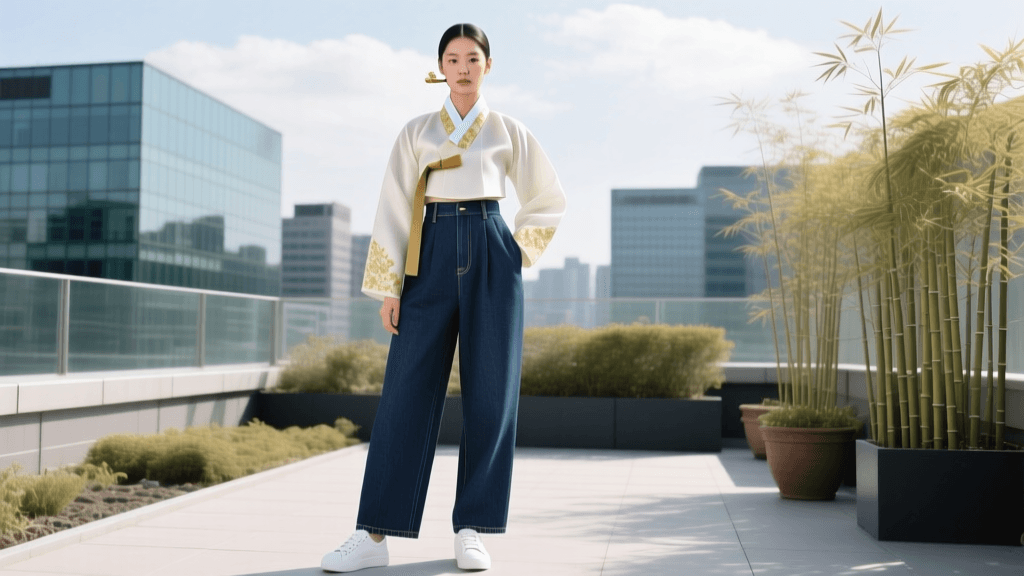
The most critical factor in successfully mixing a traditional jeogori with modern bottoms is proportion. Historically, women's jeogori lengths fluctuated significantly, but the modern daily iteration heavily favors a cropped silhouette to avoid overwhelming the frame when paired with high-waisted contemporary trousers.
- The Ideal Length: Look for a jeogori that measures between 40cm and 50cm from the base of the neck to the hem. A 45cm length is the 2026 sweet spot, as it hits precisely at the natural waistline.
- The Rise of the Bottoms: To prevent awkward midriff exposure and maintain a sleek silhouette, pair your cropped jeogori with high-waisted denim or trousers featuring an 11-inch to 12-inch front rise.
- Volume Balancing: The traditional jeogori features voluminous sleeves. To balance this top-heavy volume, your lower half should feature either a straight, tailored line or a structured wide-leg cut. Avoid skinny jeans, which can make the outfit look top-heavy and dated in the current 2026 fashion climate.
Denim Pairings: Streetwear and Casual Outings
Denim provides the perfect rugged counterpoint to the delicate, refined fabrics of a modern jeogori. The contrast between heritage silk or ramie and utilitarian cotton twill creates a visually striking outfit suitable for gallery openings, casual Fridays, or weekend street style.
The Barrel Jean Trend
The dominant denim silhouette of 2026 is the "barrel" or "horseshoe" jean. These jeans feature a high waist, a slight bowing at the knee, and a tapered ankle. Pairing a structured, cotton-blend jeogori in a muted sage or ivory tone with a medium-wash barrel jean creates an avant-garde, architectural look. Tuck a fitted, ribbed turtleneck underneath the jeogori during cooler months to add warmth without disrupting the garment's natural drape.
Raw Selvedge and Wide-Leg Cuts
For a more relaxed, vintage-inspired aesthetic, opt for heavy-weight (14oz to 16oz) raw selvedge denim in a wide-leg, floor-sweeping cut. The stiffness of the raw denim mirrors the structural integrity of the hanbok's traditional chima (skirt). When styling this look, leave the traditional goreum (the long ribbon tie) untied and let it hang loosely down the front, or opt for a modernized jeogori that replaces the goreum with hidden magnetic snaps for a cleaner, minimalist finish.
Tailored Trousers for the Smart-Casual Office
The modern workplace in 2026 continues to favor elevated comfort and expressive personal style. The jeogori translates beautifully into office wear when paired with tailored, pleated wool trousers.
Choose trousers with a single or double reverse pleat to echo the volume and movement of the hanbok. A deep charcoal or navy wool trouser pairs exceptionally well with a jeogori in a subtle, tone-on-tone jacquard fabric. The git (collar) of the jeogori frames the face much like a structured blazer lapel, providing a professional yet culturally rich alternative to the standard corporate suit jacket. Complete this look with a sleek leather belt and pointed-toe loafers to anchor the traditional top in contemporary menswear or womenswear tailoring.
Traditional vs. Modern Hanbok Elements (2026 Guide)
To help you navigate the shopping landscape and understand the design shifts, refer to the comparison table below detailing how traditional elements have been adapted for modern wardrobes.
| Garment Element | Traditional Approach | 2026 Modern Wardrobe Integration |
|---|---|---|
| Jeogori Length | Long, covering the hips and waist | Cropped (40-50cm), hitting at the natural waist |
| Goreum (Ties) | Long, flowing silk ribbons requiring complex knotting | Shortened, stylized, or replaced by hidden magnetic clasps |
| Baerae (Sleeves) | Highly curved, voluminous, restrictive for desk work | Slightly tapered at the wrist, retaining the curved underarm |
| Fabrics | Pure silk, stiff ramie, dry-clean only | Washable silk blends, Tencel, matte cotton, cupro |
| Colors | High contrast, dictated by Obangsaek (five cardinal colors) | Muted earth tones, monochromatic palettes, pastel washes |
Accessorizing the Hybrid Look
Accessories are the bridge that connects your traditional top with your modern bottoms. The Victoria and Albert Museum highlights the importance of intricate adornments in Korean dress, and this translates perfectly to modern styling.
- The Modern Norigae: The norigae is a traditional pendant worn on the goreum or waistband. In 2026, designers are creating minimalist, geometric norigae crafted from brushed brass and matte ceramics. Clip a modern norigae onto the belt loop of your denim or the waistband of your tailored trousers to add a subtle, swinging kinetic element to your outfit.
- Footwear: Avoid traditional hwa (silk shoes) when wearing denim. Instead, lean into the contrast with chunky, lug-sole leather boots or sleek, minimalist Mary Jane shoes. The visual weight of a chunky boot grounds the airy, flowing nature of the jeogori's sleeves.
- Headwear: While the traditional gat (bamboo hat) is largely ceremonial, modern milliners are producing wide-brimmed felt fedoras and structured bucket hats that mimic the gat's distinctive silhouette, providing excellent sun protection and a cohesive thematic link to the hanbok.
Fabric Care and Maintenance
One of the primary reasons heritage garments are often relegated to the back of the closet is the burden of maintenance. Fortunately, the 2026 iteration of the daily hanbok prioritizes ease of care. When shopping for a jeogori to pair with casual denim, always check the care label for machine-washable cupro or Tencel blends.
If you invest in a pure ramie or silk-blend jeogori for office wear, hand-washing in cold water with a pH-neutral detergent is recommended. Never wring the fabric; instead, roll it in a clean towel to absorb excess moisture and lay it flat to dry. The natural stiffness of ramie will often require a quick steam to reactivate its crisp, structural qualities before heading to the office. By treating your modern jeogori with the same care you would afford a high-end designer blouse, you ensure the garment maintains its architectural shape for years to come.
Conclusion
Mixing traditional Asian pieces with modern wardrobes is not about wearing a costume; it is about engaging in a sartorial dialogue between the past and the present. The 2026 modern hanbok movement proves that the jeogori is not a relic of history, but a dynamic, living garment capable of elevating a simple pair of denim jeans or a classic wool trouser. By paying close attention to proportions, embracing contemporary fabrics, and thoughtfully selecting accessories, you can seamlessly integrate the rich heritage of Korean dress into your everyday life, creating a personal style that is both globally relevant and deeply rooted in Asian tradition.