Kimono Travel Guide 2026: Packing, Transport & On-The-Go Tips
The Renaissance of Kimono Travel in 2026
As global interest in sustainable, heritage fashion continues to surge in 2026, more enthusiasts and collectors are bringing their personal kimono collections to Japan. Whether you are attending a formal tea ceremony in Kyoto, participating in a summer festival in Tokyo, or simply enjoying a private photoshoot in Kanazawa, traveling with traditional Japanese garments requires meticulous planning. Silk, delicate linings, and intricate obi belts are highly susceptible to humidity, friction, and improper folding. This comprehensive guide covers the essential techniques for packing, transporting, and maintaining your kimono wardrobe while on the move, ensuring your garments remain pristine from your home closet to the streets of Japan.
The Foundation: Mastering the Tatou (Traditional Folding)
Unlike Western garments that are often rolled or hung, kimono must be folded using a precise, standardized method known as tatou. This technique aligns the seams and distributes the weight of the fabric evenly, preventing permanent creases and protecting the delicate silk fibers. In 2026, while modern travel gear has evolved, the tatou remains the undisputed gold standard for kimono preservation.
Step-by-Step Tatou Folding
- Preparation: Lay the kimono face down on a clean, dry, and smooth surface. Ensure your hands are free of oils and lotions.
- The Sleeves (Sode): Fold the left sleeve back onto the body of the kimono, aligning the edge with the center seam. Repeat with the right sleeve, folding it inward so the edges meet neatly.
- The Body (Migoro): Fold the left side of the kimono body over the center seam. Then, fold the right side over the left, creating a long, narrow rectangle.
- The Collar (Eri): Fold the collar back neatly so it lies flat against the folded body, ensuring no sharp bends in the stiff collar core.
- The Length: Finally, fold the bottom hem up to meet the top collar edge. You should now have a compact, rectangular package.
Never use Western rolling methods or vacuum compression bags for silk kimono. Rolling creates circular stress fractures in the silk threads, and vacuum sealing traps moisture, which can lead to mold growth—a common issue when moving between air-conditioned hotel rooms and Japan's humid summers.
Choosing Your Armor: Wrapping and Protection
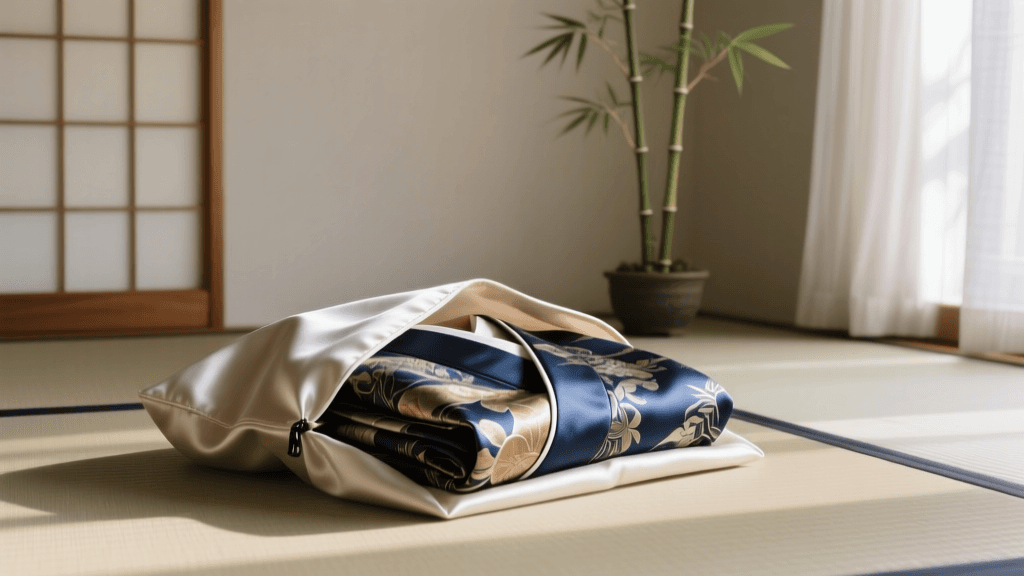
Once folded, the kimono must be wrapped to protect it from dust, light, and friction. Traditionally, this is done using a tatoushi, a specialized envelope made of thick, breathable paper.
For modern travelers in 2026, sourcing authentic washi paper tatoushi outside of Japan can be difficult. The best alternative is to use unbuffered, acid-free archival tissue paper. Wrap the folded kimono loosely in the tissue, then place it inside a breathable cotton or linen garment bag. Avoid plastic dry-cleaning bags entirely; plastic off-gasses chemicals that can yellow silk over time and traps ambient humidity. According to textile conservators at the Metropolitan Museum of Art's Textile Conservation Department, maintaining a stable microclimate around silk textiles is critical to preventing irreversible degradation and dye bleeding during transit.
Strategic Transport: Navigating Japan with Silk
Getting your garments from the airport to your ryokan or hotel requires strategic logistics. Japan's infrastructure is world-class, but navigating it with delicate, bulky traditional wear demands forethought.
The Shinkansen Dilemma
Traveling on the bullet train with a full kimono trousseau can be stressful. Overhead racks on the Shinkansen are designed for standard carry-ons and may not accommodate wide, rigid kimono suitcases without bending the garments inside. If you must bring your kimono onto the train, reserve the seats in the rearmost row of the carriage. These seats feature a dedicated gap between the seatback and the wall, perfect for sliding in a flat, rigid kimono carry-case. For detailed dimensions and reservation tips, the JR Pass luggage guide provides up-to-date diagrams of the oversized baggage areas available on the Tokaido and Sanyo lines.
Luggage Forwarding (Takuhaibin)
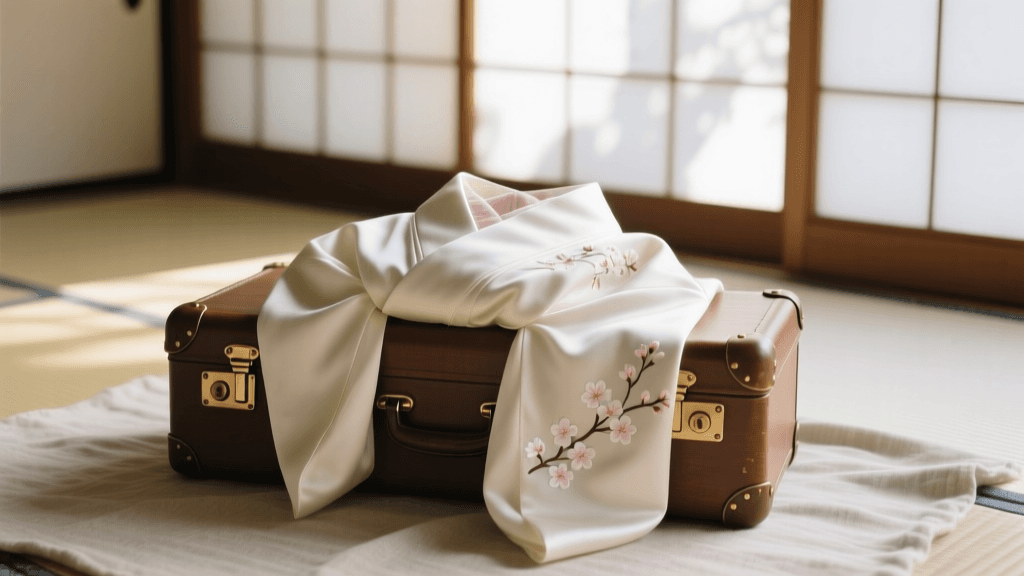
The most stress-free method for transporting heavy kimono wardrobes in 2026 is utilizing Japan's legendary Takuhaibin (luggage forwarding) services, such as Yamato Transport. You can ship your heavy, rigid kimono suitcase directly from the airport to your hotel, allowing you to travel to your accommodation unencumbered. The Japan National Tourism Organization (JNTO) highly recommends this service for travelers with specialized or fragile cargo. Ensure your kimono are packed in a hard-shell, crush-proof suitcase, and clearly label the box as 'Fragile / Silk Garments' in both English and Japanese.
The 2026 On-the-Go Emergency Kit
When you are dressed in kimono and exploring the historic streets of Higashiyama or attending a dinner in Ginza, you are entirely reliant on the garments wrapped around your body. A single snapped tie or spilled drop of matcha can ruin your day. Every kimono traveler must carry a compact, discreet emergency kit in their handbag.
- Spare Koshihimo: Pack at least two extra cotton koshihimo (waist ties). These are the structural foundation of your outfit, and if one snaps or loosens, you will need an immediate replacement.
- Safety Pins and Clips: Large, sturdy safety pins can secure a slipping datejime (under-belt) in a pinch.
- Blotting Paper and Chalk: For water or oil spills, immediately blot (never rub) the silk with oil-absorbing blotting paper. A small stick of white tailor's chalk can temporarily mask minor scuffs on lighter fabrics until you can seek professional cleaning.
- Collar Cover (Han-eri) Spare: The white collar cover absorbs sweat and makeup. Carry a spare snap-on or baste-on han-eri to swap out mid-day if you are attending multiple events.
- Footwear Blister Pads: Traditional zori and geta can cause severe blistering between the toes if you are not accustomed to them. Hydrocolloid blister pads are a lifesaver for long days of walking.
Comparison Chart: Kimono Transport Methods
Choosing how to move your garments depends on your itinerary, budget, and the volume of your collection. Below is a comparison of the most common transport methods utilized by kimono enthusiasts in 2026.
| Transport Method | Best For | Pros | Cons |
|---|---|---|---|
| Hard-Shell Carry-On | 1-2 Kimono, Obi | Total control, no risk of loss, flat packing | Heavy, takes up Shinkansen space |
| Takuhaibin (Forwarding) | Full Trousseau, Heavy Gear | Hands-free travel, door-to-door service | Requires 1-2 day lead time, packaging costs |
| Garment Bag (Carried) | Single Event, Synthetic Silk | Quick access, easy to hang in hotel | High risk of wrinkling, awkward on trains |
| Vacuum Compression | Cotton/Yukata ONLY | Saves massive amounts of space | Destroys silk fibers, ruins obi structure |
Hotel Care and Unpacking Etiquette
Upon arriving at your accommodation, resist the urge to leave your kimono packed away until the day of your event. Unpack your garments immediately. Hang the kimono on a specialized wide-shouldered kimono hanger (often available upon request at high-end ryokan) or lay them flat on a clean, dry bed. This allows the fabric to 'breathe' and releases any minor transit wrinkles naturally. Avoid using hotel steamers or irons directly on silk; the mineral content in tap water can leave permanent water spots on vintage textiles. If deep wrinkles persist, hang the garment in the bathroom while you take a hot shower, allowing the ambient steam to gently relax the fibers without direct contact.
Conclusion
Traveling with a kimono in 2026 is a rewarding endeavor that bridges the gap between historical appreciation and modern mobility. By respecting the traditional tatou folding methods, utilizing Japan's exceptional luggage forwarding networks, and carrying a well-prepared emergency kit, you can ensure your garments remain as flawless as the day they were woven. Embrace the journey, respect the textiles, and step confidently into the rich cultural tapestry of Japan.