Mix Mamianqun Skirts With Modern Tailoring: 2026 Guide
The Resurgence of the Mamianqun in 2026
The global fashion landscape of 2026 has fully embraced the 'Xin Zhong Shi' (New Chinese Style) movement, blurring the lines between historical garments and contemporary wardrobes. At the forefront of this sartorial revolution is the Mamianqun, commonly known in the West as the horse-face skirt. Originally popularized during the Ming and Qing dynasties, this iconic piece of Hanfu has transcended its ceremonial roots to become a staple in modern corporate offices and urban streetwear. According to cultural historians documented by Smithsonian Magazine, the Hanfu movement has evolved from a niche subculture into a mainstream fashion phenomenon, with younger generations actively integrating traditional silhouettes into their daily lives. Today, styling a Mamianqun is no longer about wearing a costume; it is about mastering proportion, texture, and heritage in a modern context.
Understanding the Structure: Why It Works with Modern Tailoring
To successfully mix a Mamianqun with contemporary pieces, one must first understand its unique architectural structure. Unlike Western gathered or pleated skirts, the Mamianqun is constructed from two overlapping panels of fabric. The front and back feature flat, unpleated sections (the 'horse faces'), while the sides are deeply pleated. This design was originally created to allow ease of movement for horseback riding, but in 2026, it provides a striking, structured silhouette that pairs beautifully with the sharp lines of modern tailoring.
The Overlap and Pleat Dynamics
The flat front and back panels act as a visual anchor, making the skirt incredibly forgiving and easy to style with cropped jackets or tucked-in blouses. When you walk, the side pleats fan out, revealing intricate woven patterns or contrasting lining fabrics. This dynamic movement adds a layer of sophistication that standard pencil skirts or A-line midi skirts simply cannot achieve. The structural integrity of the waistband also provides excellent core support, making it a comfortable option for long days in the office.
2026 Office Styling: Blending Ming Heritage with Corporate Chic
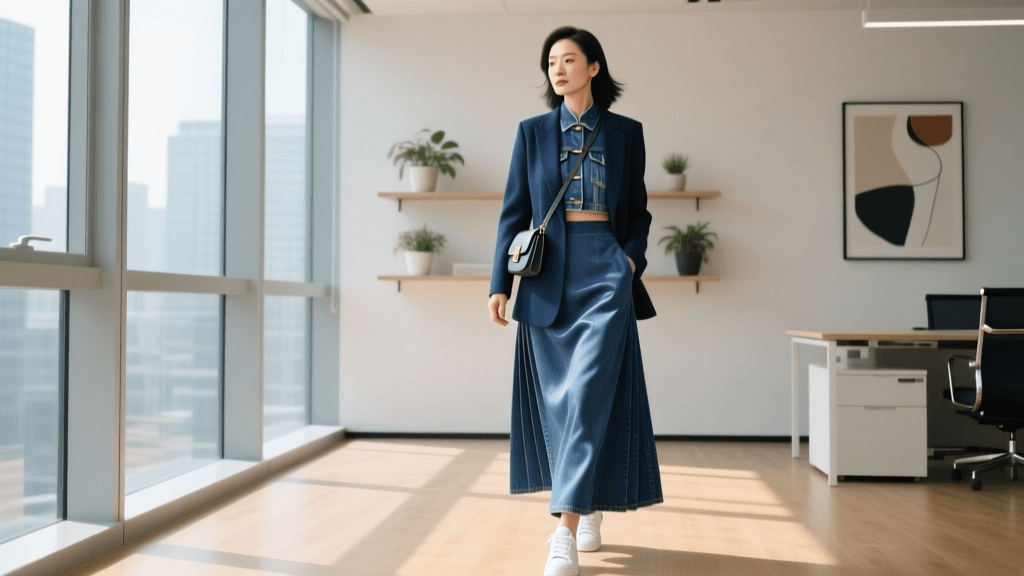
Integrating a traditional skirt into a professional environment requires a careful balance of modesty, structure, and modern aesthetics. The key to pulling off this look in a 2026 corporate setting is to treat the Mamianqun as a statement midi skirt, grounding it with minimalist, high-quality Western staples.
Look 1: The Modern Executive
For high-stakes meetings and formal office environments, opt for a Mamianqun crafted from a heavy, dark-toned jacquard fabric. Deep emerald, navy, or charcoal grey skirts with subtle, tone-on-tone woven motifs (such as clouds or bamboo) project authority without being overly flashy. Pair the skirt with a crisp, oversized white poplin button-down shirt, leaving the top two buttons undone for a relaxed yet polished vibe. Add a sharply tailored, single-breasted black blazer that hits exactly at the hip bone to highlight the skirt's flat front panel. Finish the look with pointed-toe leather ankle boots or sleek lug-sole loafers.
Look 2: The Creative Minimalist
Creative industries allow for more textural play. Choose a Mamianqun in a lighter, matte fabric like a Tencel-linen blend in oatmeal or soft sage. Tuck a fine-gauge, long-sleeved cashmere turtleneck into the waistband, ensuring the fabric is smooth to avoid adding bulk to the overlapping panels. Layer a long, unstructured duster coat over the shoulders. This look leans heavily into the 'quiet luxury' trend that continues to dominate 2026 runways, letting the intricate pleating of the skirt do all the talking.
Fabric Guide: Choosing the Right Mamianqun for Your Lifestyle
The fabric you choose will dictate the drape, formality, and care requirements of your skirt. The 2026 market offers a wide array of modern textile innovations blended with traditional weaving techniques.
| Fabric Type | Drape and Structure | Best Use Case | 2026 Average Price Range |
|---|---|---|---|
| Silk Jacquard | Heavy, structured, luminous | Formal Office, Evening Events | $180 - $350 |
| Tencel-Linen Blend | Breathable, soft, matte finish | Summer Daily Wear, Casual Office | $75 - $130 |
| Woven Organza | Sheer, voluminous, stiff | Streetwear, Layering, Parties | $90 - $160 |
| Cotton Twill | Durable, medium weight, casual | Travel, Weekend Errands | $60 - $100 |
As noted by textile experts at The Metropolitan Museum of Art, traditional Chinese weaving techniques like kesi (silk tapestry) and jacquard have historically been markers of social status. Today, modern jacquard looms allow for mass production of these stunning patterns, making the Mamianqun accessible to a global audience while maintaining a luxurious aesthetic.
Weekend Streetwear: Edgy Contrasts and Quiet Luxury
When the workweek ends, the Mamianqun transitions effortlessly into streetwear. The juxtaposition of ancient pleating with modern, gritty, or ultra-casual garments creates a visually arresting outfit that is highly favored by fashion influencers and street-style photographers.
The Grunge Contrast
Lean into the contrast of hard and soft by pairing a flowing, metallic-threaded Mamianqun with a distressed, oversized vintage leather moto jacket. Underneath the jacket, wear a simple, fitted graphic tee or a ribbed tank top. The heavy hardware of the leather jacket perfectly offsets the delicate movement of the skirt's pleats. Complete the outfit with chunky, lug-sole combat boots and layered silver necklaces. This look embraces the eclectic, genre-bending styling that defines 2026 urban fashion.
Soft Knits and Quiet Luxury
For a more relaxed weekend aesthetic, pair a solid-colored, matte Mamianqun with an oversized, slouchy mohair cardigan. Allow the cardigan to drape loosely over the skirt's waistband, creating a soft, elongated silhouette. Add a pair of retro-inspired suede sneakers and a structured leather crossbody bag. This outfit is perfect for museum visits, cafe hopping, or casual brunches, offering maximum comfort without sacrificing an ounce of style.
Sizing, Fit, and Securing the Skirt
One of the most common hurdles for newcomers to the Mamianqun is understanding the sizing and tying mechanism. Unlike Western skirts that rely on zippers and buttons, the traditional Mamianqun is secured entirely by fabric ties.
Navigating the Ties and Measurements
Mamianqun sizing is typically based on waist measurement and length. Because the skirt wraps and overlaps, there is a generous amount of adjustability. However, it is crucial to measure your natural waist (the narrowest part of your torso) accurately. When putting on the skirt, wrap the inner panel first, tying the strings securely on the opposite side. Then, wrap the outer panel over the front, ensuring the flat 'horse face' is perfectly centered, and tie the remaining strings. In 2026, many modern manufacturers have begun adding discreet interior snap buttons or hidden elasticized waistbands to help keep the heavy overlapping panels secure during windy days or active commutes.
Sourcing and Care in the Modern Era
When shopping for a Mamianqun, it is important to distinguish between authentic Hanfu brands and fast-fashion imitations. Authentic brands invest in proper loom widths, ensuring that the woven patterns align perfectly across the pleats and flat panels. Fast-fashion versions often cut corners, resulting in misaligned motifs and cheap, flimsy fabrics that tangle easily.
Washing and Storage
Care instructions vary wildly depending on the fabric. Silk jacquard and metallic-threaded skirts must be dry-cleaned to preserve the integrity of the weave and prevent the metallic threads from tarnishing. Tencel and cotton blends can usually be hand-washed in cold water with a mild, pH-neutral detergent. Never wring out a Mamianqun; instead, gently press out excess water and lay it flat to dry. When storing, avoid hanging the skirt by the ties, as the weight of the fabric can stretch the waistband over time. Instead, fold the skirt carefully along the pleat lines and store it in a breathable cotton garment bag to protect it from dust and moisture.
Conclusion
The Mamianqun is a masterclass in timeless design, proving that centuries-old garment construction can seamlessly integrate into the modern 2026 wardrobe. By understanding its unique structure, selecting the appropriate fabrics, and pairing it with contemporary tailoring, you can honor Asian sartorial traditions while forging a distinctly modern, personal style. Whether you are commanding a boardroom or navigating city streets, the horse-face skirt offers an unparalleled blend of heritage, elegance, and dynamic movement.