Mamianqun Styling Guide 2026: Mixing Hanfu Skirts With Modern Wear
The Resurgence of the Horse-Face Skirt in 2026
The Mamianqun, historically known as the 'horse-face skirt,' has transcended its origins as a traditional Ming Dynasty garment to become a cornerstone of contemporary Asian fashion. In 2026, the integration of traditional Hanfu elements into everyday wardrobes—often referred to as the 'New Chinese Style' or Xin Zhong Shi—has reached unprecedented sophistication. No longer confined to cultural festivals or historical reenactments, the Mamianqun is now a staple in global streetwear, high-fashion runways, and modern corporate offices. This guide explores how to seamlessly blend the structured elegance of the horse-face skirt with contemporary pieces, ensuring your wardrobe remains both culturally resonant and fiercely modern.
Understanding the Mamianqun Silhouette
To effectively style the Mamianqun, one must first understand its unique architectural construction. The skirt is characterized by its flat front and back panels (known as 'guang') and heavily pleated sides. This design allows for a fluid, sweeping motion when walking, while the flat panels provide a perfect canvas for intricate jacquard weaves, embroidery, and woven metallic threads. Historical context from the Metropolitan Museum of Art's Department of Asian Art highlights how the structural integrity of these pleats was a marvel of traditional tailoring, a feature that modern 2026 textile manufacturers have preserved using advanced heat-setting techniques and wrinkle-resistant poly-silk blends.
The 2026 'Xin Zhong Shi' Movement: Commuter Hanfu
The year 2026 has solidified the 'commuter Hanfu' trend. Modern consumers demand garments that bridge the gap between cultural heritage and urban practicality. Today's Mamianqun skirts frequently feature muted, versatile color palettes—think charcoal grays, deep navy blues, matte olives, and sepia tones—moving away from the highly saturated ceremonial reds and golds of the past. Furthermore, the introduction of vegan leather waistbands and adjustable side-ties has replaced traditional button-and-loop fasteners, making these skirts significantly more accessible and comfortable for a full day at the office or navigating city transit.
Office Ready: Pairing Mamianqun with Modern Tailoring
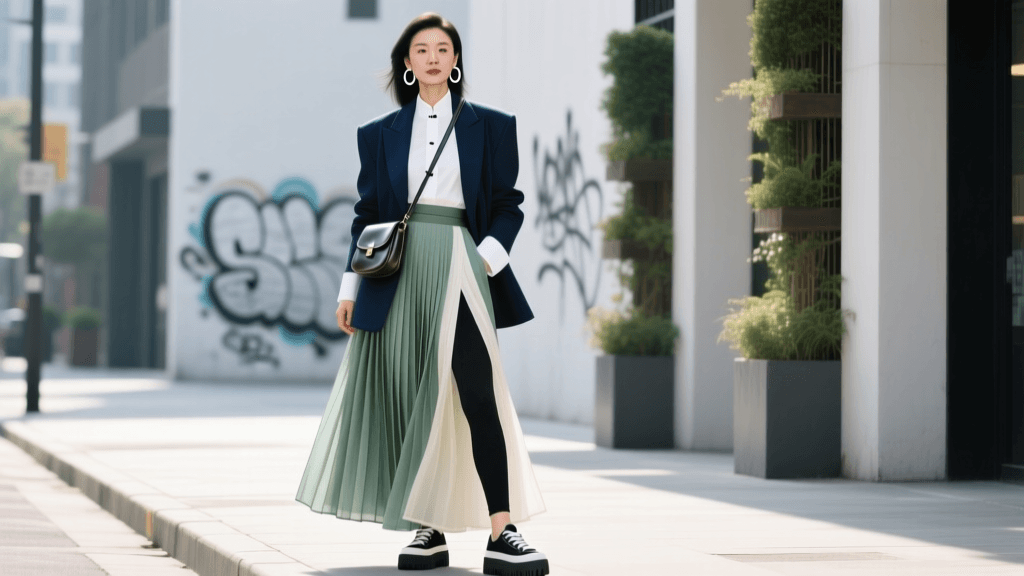
Integrating a Mamianqun into a corporate or business-casual wardrobe requires a careful balance of proportions. Because the skirt is voluminous and features intricate patterns, the top half should remain structured and relatively minimalist.
- The Structured Blazer: An oversized, boxy blazer in a neutral tone (such as camel or slate gray) provides a sharp, modern contrast to the flowing pleats of the skirt. Ensure the blazer hits just above the widest part of the skirt's pleats to maintain a flattering silhouette.
- The Half-Tuck Turtleneck: For colder months in 2026, a fitted, ribbed merino wool turtleneck half-tucked into the skirt's waistband elongates the torso and highlights the intricate waistband detailing.
- The Crisp Poplin Shirt: A classic white or light blue oversized button-down, worn unbuttoned at the collar and tucked in, offers a relaxed yet professional aesthetic perfect for creative industries.
Streetwear Edge: Casual and Urban Hanfu Styling
Streetwear styling embraces juxtaposition, mixing the historical gravity of the Mamianqun with the rebellious, relaxed nature of modern casualwear. The goal is to make the skirt look like an effortless, everyday item rather than a costume.
- Oversized Graphic Hoodies: Pairing a dark-wash denim or black jacquard Mamianqun with a heavyweight, cropped graphic hoodie creates a striking silhouette. The cropped nature of the hoodie ensures the high waistband of the skirt remains visible, preventing the outfit from looking overwhelming.
- Leather Moto Jackets: A cropped vegan leather biker jacket adds an immediate edge. The hardware and zippers of the jacket contrast beautifully with the delicate, traditional motifs woven into the skirt's flat panels.
- Knit Vests and Layering: Layering a chunky, distressed knit vest over a simple white baby-tee, combined with a mid-calf Mamianqun, captures the quintessential 2026 'grunge-heritage' aesthetic popularized in East Asian fashion capitals.
2026 Mamianqun Styling Matrix
To help you visualize these combinations, refer to the styling matrix below. This chart outlines the optimal pairings based on fabric, occasion, and modern garment integration.
| Occasion | Skirt Fabric & Color | Modern Top Pairing | Outerwear / Layering | Footwear |
|---|---|---|---|---|
| Corporate Office | Matte Poly-Jacquard (Navy/Silver) | Silk-blend Button-down (Tucked) | Tailored Wool Blazer (Camel) | Pointed-Toe Leather Loafers |
| Urban Streetwear | Cotton-Linen Blend (Black/Dark Grey) | Cropped Heavyweight Graphic Tee | Oversized Distressed Denim Jacket | Chunky Platform Sneakers |
| Cafe / Casual Day | Vegan Silk (Sage Green/Gold) | Fitted Ribbed Turtleneck (Cream) | Soft-Shoulder Cardigan | Velvet Mary Jane Flats |
| Evening / Gallery | Metallic Thread Brocade (Burgundy) | Asymmetrical One-Shoulder Bodysuit | Cropped Faux-Leather Moto Jacket | Heeled Combat Ankle Boots |
Footwear and Accessories for the Modern Era
The choice of footwear can completely alter the trajectory of a Mamianqun outfit. In 2026, the most popular footwear choices for Hanfu skirts lean heavily into modern hybrids. Chunky, lug-sole Mary Janes are a dominant trend, offering a subtle nod to school-uniform aesthetics while providing the comfort needed for all-day wear. For a more avant-garde approach, knee-high leather riding boots worn underneath the skirt's pleats provide warmth and a striking visual contrast when the pleats part during movement.
Accessories should remain modern to prevent the outfit from looking like a historical replica. Opt for minimalist geometric jewelry, structured leather handbags, and contemporary smartwatches. Avoid traditional hair sticks and jade pendants unless you are intentionally aiming for a full 'New Hanfu' ceremonial look; instead, secure your hair with sleek, modern claw clips or minimalist metal hair cuffs.
Care and Maintenance for Modern Jacquards
While traditional silk Mamianqun required meticulous, specialized dry-cleaning, the 2026 iterations are designed for modern lifestyles. Most contemporary skirts are crafted from advanced synthetic blends or treated natural fibers that allow for easier maintenance. However, preserving the sharp, heat-set pleats is paramount.
- Washing: Always use a mesh laundry bag and wash on a delicate, cold-water cycle with a pH-neutral detergent. Avoid fabric softeners, which can degrade the metallic threads often woven into the jacquard patterns.
- Drying: Never tumble dry. Hang the skirt by the waistband in a shaded, well-ventilated area. The weight of the wet fabric will naturally pull the pleats downward, helping them retain their shape.
- Ironing and Steaming: Avoid direct contact with an iron, as high heat can melt synthetic fibers or scorch vegan silk. Use a high-pressure garment steamer, directing the steam parallel to the pleats. For stubborn wrinkles on the flat 'guang' panels, use a pressing cloth on a low-heat setting.
- Storage: Store the skirt hanging in a breathable garment bag. Do not fold it, as this will create permanent creases across the intricate woven motifs and disrupt the side pleats.
Conclusion: Embracing Cultural Fluidity
The styling of the Mamianqun in 2026 represents a beautiful evolution in global fashion—a testament to the idea that traditional garments are not static relics, but living, breathing elements of personal expression. By understanding the skirt's architectural roots and applying modern styling principles, you can create outfits that honor Asian heritage while firmly planting your wardrobe in the contemporary zeitgeist. Whether you are pairing a muted jacquard skirt with a sharp blazer for a boardroom presentation or throwing on a vintage leather jacket for a weekend street-style shoot, the Mamianqun proves that true style is timeless, adaptable, and endlessly creative. For further reading on the historical evolution of Asian textiles and pleating techniques, the archives available through the Victoria and Albert Museum's Asian collections remain an invaluable resource for understanding the craftsmanship that inspires today's modern designs.