Oda Nobunaga's Fashion Legacy: Jinbaori and Tsujigahana
The Sartorial Warlord: How Oda Nobunaga Shaped Japanese Fashion
When discussing the unification of Japan during the tumultuous Sengoku (Warring States) period, historians often focus on military tactics and political maneuvering. However, Oda Nobunaga (1534–1582), the first of the three great unifiers, was also a master of psychological warfare through sartorial expression. Nobunaga understood that clothing was a powerful tool for projecting authority, instilling fear in enemies, and rewarding loyal retainers. His fashion legacy fundamentally shifted Japanese textile arts, moving the culture away from the subdued, courtly aesthetics of the Heian period toward the bold, highly decorative styles that would eventually birth the modern kimono.
Nobunaga’s wardrobe was legendary for its extravagance and innovation. He frequently incorporated imported nanban (foreign) textiles brought by Portuguese and Dutch traders, blending European velvets and brocades with traditional Japanese silk weaving. Furthermore, as noted by the Victoria and Albert Museum, the evolution of the kosode (the precursor to the modern kimono) during this era was heavily influenced by the patronage of military elites who demanded increasingly complex surface designs to signify their rank and power on and off the battlefield.
The Jinbaori: From Battlefield Armor to Ceremonial Couture
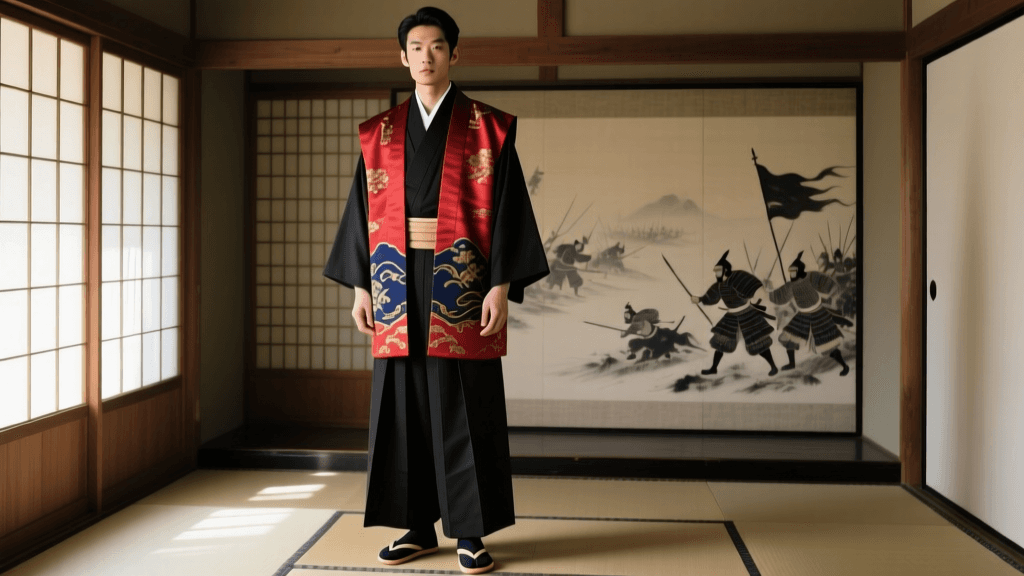
Perhaps the most iconic garment associated with Nobunaga and his contemporaries is the jinbaori. Originally designed as a sleeveless vest worn over a samurai’s armor (gusoku), the jinbaori served both practical and symbolic purposes. On the battlefield, it protected the armor from the elements and displayed the wearer’s clan crest (mon) and personal motifs, ensuring visibility amidst the chaos of combat.
Nobunaga elevated the jinbaori from a mere military necessity to a piece of high art. He commissioned garments woven with gold and silver threads (kinran and ginran), featuring bold, asymmetrical designs and striking color contrasts. One of his most famous surviving jinbaori features a striking tiger motif, symbolizing martial prowess and courage. Today, the jinbaori remains a vital part of traditional Japanese ceremonial dress, often worn by grooms during Shinto wedding ceremonies or by participants in historical festivals (matsuri).
Tsujigahana: The Phantom Dyeing Technique of the Sengoku Period
While the jinbaori represented Nobunaga’s public, martial persona, his private garments showcased a deep appreciation for tsujigahana, a highly complex and labor-intensive dyeing technique that peaked during the late Muromachi and Sengoku periods. Tsujigahana translates roughly to 'flowers at the crossroads,' and it involves a meticulous combination of stitch-resist dyeing (shibori), ink painting (sumi-e), and gold leaf application.
According to The Metropolitan Museum of Art, the transition of decorative techniques on Japanese garments reflects the shifting social dynamics of the era, with military leaders favoring highly individualized, bespoke textile arts. Nobunaga’s tsujigahana kosode featured ethereal, almost surreal landscapes and delicate floral motifs that contrasted sharply with his ruthless battlefield reputation. Because the technique was incredibly time-consuming and required master artisans, it became a symbol of ultimate luxury. Tragically, the exact methods of classical tsujigahana were largely lost during the Edo period as faster techniques like Yuzen dyeing emerged, earning it the moniker 'the phantom dyeing technique.' Modern artisans have spent decades reverse-engineering the process to recreate these historical masterpieces.
Comparison Chart: Sengoku vs. Edo Period Samurai Fashion
To understand Nobunaga's impact, it is helpful to compare the fashion of his era (Sengoku/Azuchi-Momoyama) with the subsequent Edo period established by Tokugawa Ieyasu.
| Feature | Sengoku Period (Nobunaga Era) | Edo Period (Ieyasu Era) |
|---|---|---|
| Primary Outer Garment | Jinbaori (worn over armor) | Kamishimo (formal pleated hakama and kataginu) |
| Aesthetic Philosophy | Basara (extravagant, bold, individualistic) | Iki (subdued, refined, regulated by sumptuary laws) |
| Key Textile Technique | Tsujigahana, Nishijin-ori (gold brocade) | Yuzen dyeing, Komon (micro-patterns) |
| Color Palette | High contrast, vibrant reds, gold, black | Muted tones, indigo, subtle browns and grays |
| Social Function | Battlefield identification, psychological warfare | Courtly etiquette, civil administration, class distinction |
Practical Guide: Acquiring, Sizing, and Styling a Jinbaori Today
For collectors, practitioners of traditional Japanese martial arts (koryu), or enthusiasts looking to incorporate historical garments into their wardrobe, acquiring a jinbaori is a rewarding endeavor. Here is a practical guide to sourcing, sizing, and styling this iconic vest.
Sizing and Measurements
Unlike modern Western clothing, a jinbaori is not sized by chest or waist circumference. Because it is an open-front vest designed to layer over bulky armor or thick kimono, the fit is determined by two primary measurements:
- Katahaba (Shoulder Width): Measured from the edge of one shoulder to the other across the back. A standard adult male jinbaori typically ranges from 55 cm to 65 cm.
- Mitake (Back Length): Measured from the base of the collar down to the bottom hem. Traditional lengths usually fall between 85 cm and 105 cm, ending just below the waist or mid-thigh.
Actionable Tip: When purchasing antique jinbaori online, always request the exact katahaba and mitake in centimeters. Do not rely on generic 'one-size-fits-all' descriptions.
Cost Guide and Sourcing
The cost of a jinbaori varies wildly based on age, material, and condition:
- Modern Reproductions ($150 - $400): Made from synthetic blends or basic cotton/silk. Ideal for cosplay, theatrical performances, or casual festival wear. Available through specialized online retailers and Japanese festival supply shops.
- Antique Edo-Period Jinbaori ($800 - $3,500): Woven from authentic silk, often featuring family crests and traditional linings. These can be sourced from Japanese auction houses, specialized antique kimono dealers in Kyoto, or global auction platforms.
- Museum-Quality Sengoku/Momoyama Replicas ($5,000 - $15,000+): Custom-commissioned pieces using authentic Nishijin brocade and gold leaf. These are typically ordered directly from master weaving houses in Kyoto for serious collectors or museums.
Styling the Jinbaori in Modern Contexts
While traditionally worn over armor, the jinbaori can be adapted for modern formal and semi-formal wear:
- Over a Montsuki Hakama: For highly formal events, a solid black silk jinbaori bearing a single white family crest can be worn over a traditional montsuki (crested kimono) and hakama.
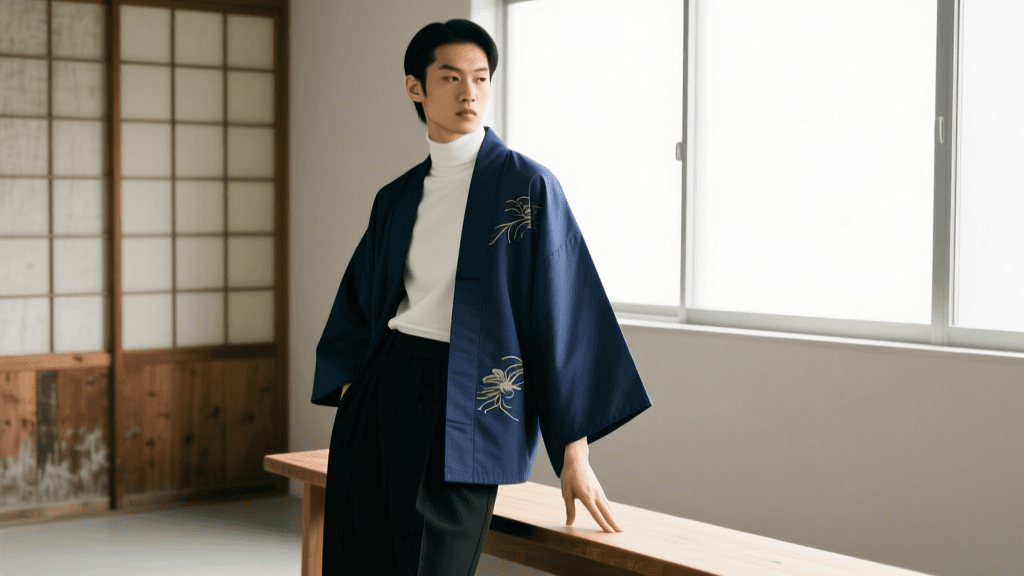
- Contemporary Fusion: Modern fashion enthusiasts often style shorter, unlined summer jinbaori over a crisp white button-down shirt and tailored trousers, using the garment as a striking, structured alternative to a Western blazer.
Care, Maintenance, and Storage
Proper care is essential to preserve the structural integrity and metallic threads of a historical or high-quality reproduction jinbaori.
- Cleaning: Never machine wash or attempt to hand-wash a silk or brocade jinbaori. The metallic threads (kinran) will tarnish and the stiff inner linings will warp. Always seek a dry cleaner who specializes in traditional Japanese garments (kimono arai).
- Airing Out: Twice a year, ideally during the dry, cool days of late autumn or early spring, remove your jinbaori from storage and let it air out in a shaded, well-ventilated room for 24 hours. This prevents mold and musty odors.
- Storage: Fold the jinbaori carefully along its original crease lines. Wrap it in acid-free tatou paper to protect the silk from moisture and acidity. Store it in a kiribako (paulownia wood box), which naturally regulates humidity and repels insects. Avoid plastic bins, which trap moisture and cause irreversible mildew damage.
Experiencing the Legacy: Where to View Historical Garments
To truly appreciate the scale and craftsmanship of Nobunaga’s fashion legacy, viewing these garments in person is invaluable. The Kyoto National Museum frequently rotates its textile exhibitions, often displaying surviving Sengoku-period kosode and military garments. Additionally, the Tokugawa Art Museum in Nagoya houses an extensive collection of armor and jinbaori belonging to the military elites who followed in Nobunaga’s wake, offering a masterclass in the intersection of Japanese martial history and haute couture.
By understanding the bold aesthetics of Oda Nobunaga, modern enthusiasts can appreciate that traditional Japanese clothing was never static. It was, and remains, a dynamic canvas for power, artistry, and personal expression.