Traditional Chinese Cloud Shoes & Boots: 2026 Style Guide
The Resurgence of Traditional Chinese Footwear in 2026
The Xin Zhongshi (New Chinese Style) movement has fully matured by 2026, transitioning from a fleeting social media trend into a permanent pillar of global and Asian wardrobes. While much attention has been paid to the Mamianqun (horse-face skirt) and the modernized Qipao, the foundation of any authentic traditional outfit lies in its footwear. Traditional Chinese footwear, particularly the iconic Yunxie (cloud shoes) and structured traditional boots, are experiencing a massive renaissance. Today's heritage brands and independent artisans are merging centuries-old craftsmanship with 2026's demand for ergonomic support, sustainable materials, and versatile daily styling.
Whether you are attending a traditional tea ceremony, navigating a modern urban commute, or curating a high-fashion editorial look, understanding the nuances of Chinese footwear is essential. This comprehensive guide explores the history, modern iterations, and practical styling techniques for traditional Chinese shoes and boots in 2026.
Understanding the Classics: Cloud Shoes and Traditional Boots
To properly style and care for these garments, one must first understand their historical and structural roots. As documented in The Metropolitan Museum of Art's Heilbrunn Timeline, traditional Chinese dress and accessories were deeply tied to social status, cosmology, and regional climates. Footwear was never merely functional; it was a canvas for intricate embroidery and cultural symbolism.
Yunxie (Cloud Shoes)
Originating prominently during the Ming and Qing dynasties, Yunxie are characterized by their upturned toe caps, which resemble the curling edges of auspicious clouds. The upper is traditionally crafted from silk or brocade, heavily embroidered with motifs like peonies, bats (symbolizing good fortune), or cranes. The most defining feature of the authentic cloud shoe is its sole: a multi-layered cotton sole, stitched together with hemp thread. This technique, recognized under the broader umbrella of crafts preserved on the UNESCO Intangible Cultural Heritage Lists, provides surprising breathability and a unique, grounded walking experience.
Traditional Xue (Boots)
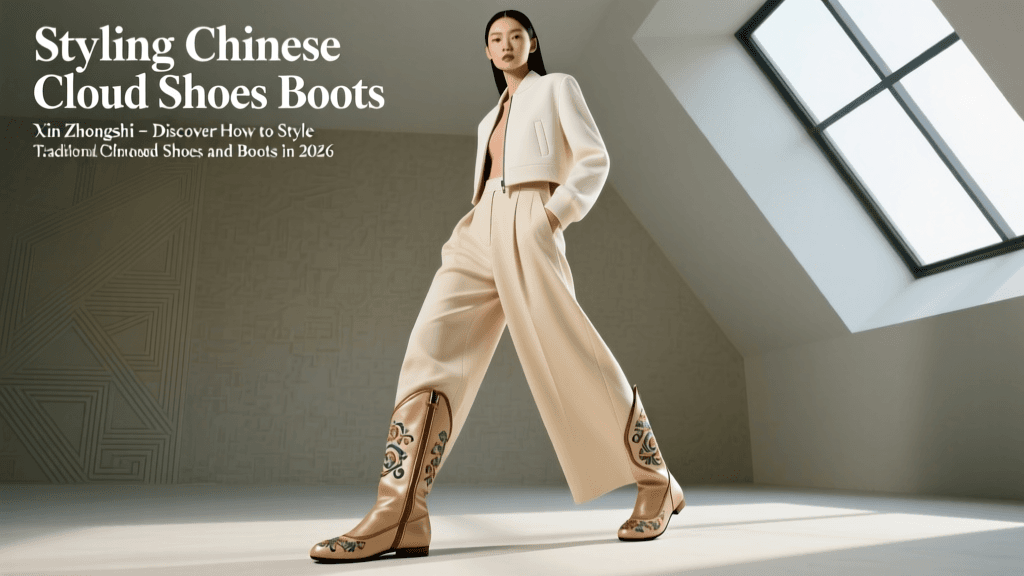
While cloud shoes dominated the southern and central regions, traditional boots (Xue) were born from the equestrian and nomadic influences of northern China. As highlighted in the Victoria and Albert Museum's Asian Collections, historical boots featured thick, rigid soles designed to protect the wearer from harsh terrain and cold climates. In 2026, modern interpretations of the Xue utilize vegan velvets, matte-finished faux suedes, and flexible rubber-foam hybrid soles, making them a staple for winter Xin Zhongshi layering.
2026 Footwear Comparison Chart
When shopping for traditional footwear this year, it is crucial to understand the differences between historical replicas and modern hybrids. The table below outlines the primary categories available from heritage makers in 2026.
| Footwear Type | Primary Materials (2026) | Sole Construction | Best Occasion | Avg. Price (USD) |
|---|---|---|---|---|
| Classic Yunxie (Cloud Shoes) | Mulberry Silk, Brocade | Hand-stitched Cotton | Festivals, Tea Ceremonies | $120 - $250 |
| Traditional Xue (Boots) | Vegan Velvet, Faux Suede | Layered Felt & Rubber | Winter, Outdoor Events | $180 - $350 |
| Xin Zhongshi Hybrids | Recycled Silk, Canvas | EVA Foam, Orthotic | Daily Commute, Office | $85 - $160 |
How to Style Traditional Footwear for Modern Wardrobes
Styling traditional footwear in 2026 is all about balance. The goal of the Xin Zhongshi aesthetic is not to wear a historical costume, but to integrate heritage elements into contemporary silhouettes.
Pairing Cloud Shoes with the Mamianqun
The most iconic pairing in 2026 remains the cloud shoe and the Mamianqun. To avoid looking like you are wearing a stage costume, opt for a horse-face skirt in a muted, solid color like celadon, slate grey, or deep indigo. Let the intricate embroidery of the cloud shoe serve as the focal point of the lower half. Ensure the hem of the skirt grazes the top of the shoe's vamp, allowing the upturned cloud toe to peek out elegantly with every step.
Styling Traditional Boots with Wide-Leg Trousers
For autumn and winter, traditional velvet boots pair beautifully with wide-leg, Song-dynasty-inspired linen or wool-blend trousers. The key to this look is proportion. Because the boots are visually heavy and structured, the trousers should have a high waist and a flowing drape. Tuck the trousers slightly into the boot shaft, or allow them to pool just over the ankle. Pair this with a modern, tailored Mao-collar jacket or a minimalist cashmere turtleneck for a sophisticated, East-meets-West ensemble.
The Hybrid Approach: Sneaker-Sole Cloud Shoes
For the daily commuter, 2026 has introduced the 'Sneaker-Sole Yunxie'. These feature the traditional silk upturned toe and embroidered vamp, but are mounted on a lightweight, shock-absorbing EVA foam sneaker sole. Style these with cropped, straight-leg denim or tailored culottes. They add a subtle cultural touch to a standard smart-casual office wardrobe without sacrificing the arch support needed for navigating subway systems and city streets.
Sizing, Fit, and Ergonomics
One of the most common challenges when purchasing traditional Chinese footwear is navigating the fit. Historical replicas are built on flat, narrow lasts that do not account for modern orthopedic needs.
- Sizing Conversion: Chinese footwear sizing in 2026 generally follows the standard European (EU) metric, but traditional handmade shoes often run a half-size small due to the lack of stretch in silk and brocade. Always measure your foot in centimeters and consult the artisan's specific size chart.
- Arch Support: Authentic hand-stitched cotton soles are entirely flat. If you require arch support, look for 2026 hybrid models that feature removable insoles, allowing you to insert your own custom orthotics.
- The Break-In Period: Unlike modern synthetic shoes, multi-layered cotton soles require a break-in period. Wear them indoors on carpet for 2-3 hours a day over a week to allow the hemp stitching to loosen and mold to the natural flex of your foot.
Care and Maintenance for Silk and Cotton Soles
Traditional materials require specialized care to ensure longevity, especially when exposed to modern urban environments.
Cleaning Silk and Brocade Uppers
Never machine wash or submerge silk cloud shoes. In 2026, heritage conservators recommend using a dry, soft-bristled brush to remove surface dust. For localized stains, use a microfiber cloth lightly dampened with distilled water and a drop of pH-neutral silk detergent. Blot gently—never rub—and allow the shoe to air dry away from direct sunlight, which can fade natural plant-based dyes.
Waterproofing Cotton Soles
The traditional cotton sole is highly breathable but vulnerable to moisture. If you plan to wear your cloud shoes outdoors, treat the bottom and sides of the sole with a modern, breathable nano-waterproofing spray designed for natural fibers. Reapply every four weeks if worn regularly.
Proper Storage
Store your traditional footwear in a climate-controlled environment. Insert cedar wood shoe trees to maintain the shape of the toe box and absorb ambient moisture. Keep them in breathable cotton dust bags, avoiding plastic bins which can trap humidity and lead to mildew on the silk threads.
Color Symbolism in 2026 Footwear
While modern fashion encourages wearing any color, understanding traditional color symbolism adds depth to your Xin Zhongshi styling.
- Vermilion Red: Traditionally reserved for brides and major festivals, red cloud shoes are now worn year-round as a bold statement piece against monochromatic black or white outfits.
- Celadon and Jade Green: Symbolizing harmony and nature, these muted greens are the most popular choices for everyday wear in 2026, pairing effortlessly with denim and neutral linens.
- Obsidian Black: Often used for traditional boots, black represents stability and is the preferred choice for formal or professional settings.
Sourcing Authentic Makers
As the demand for Xin Zhongshi footwear grows, so does the market for mass-produced, low-quality imitations. To support authentic craftsmanship, seek out heritage brands based in Beijing and Suzhou that explicitly detail their sole-stitching processes. Look for makers who highlight the 'thousand-layer sole' technique, ensuring that the cotton layers are genuinely hand-compressed and stitched, rather than glued. Many reputable artisans now operate global e-commerce storefronts, providing detailed video documentation of their weaving and stitching processes, ensuring that the footwear you purchase is a genuine piece of wearable cultural heritage.
Travel Packing Tips for Traditional Footwear
Traveling with delicate silk shoes and structured boots requires strategic packing. Always pack cloud shoes in rigid, cylindrical shoe cases to prevent the upturned toes from being crushed by heavier luggage items. For traditional boots, use boot shapers or roll up soft cotton t-shirts and stuff them into the shafts to prevent the vegan velvet or suede from creasing during transit. Upon arriving at your destination, unpack immediately and let the shoes breathe in a well-ventilated room to dissipate any travel odors and reset the fibers.
Conclusion
Traditional Chinese footwear is no longer relegated to museum displays or occasional holiday wear. In 2026, cloud shoes and traditional boots are dynamic, versatile components of the modern wardrobe. By understanding their rich history, selecting the right hybrid constructions for your lifestyle, and styling them with contemporary intention, you can honor centuries of Asian sartorial tradition while stepping confidently into the future of global fashion.