Modern Cheongsam Tops & Hanbok Skirts: 2026 Office Style
The global fashion landscape of 2026 has firmly moved past the fleeting 'quiet luxury' trend, settling instead into an era of 'Heritage Minimalism.' For professionals looking to infuse their daily wardrobes with cultural depth without resorting to costume-like aesthetics, traditional Asian garments offer a masterclass in structural elegance. Specifically, the modernized cheongsam (qipao) top and the reimagined Korean hanbok skirt (chima) have emerged as the ultimate power pieces for the contemporary office and streetwear capsule. By stripping away the ceremonial volume and focusing on architectural tailoring, these garments seamlessly integrate into a modern, minimalist wardrobe.
The Evolution of the Cheongsam Top in 2026
Historically, the qipao was a full-length, form-fitting dress that dominated Shanghai in the 1920s and 30s. As noted by The Metropolitan Museum of Art, the garment has always been a reflection of modernity and shifting social roles. In 2026, the cheongsam has been deconstructed. The full-length dress is now frequently separated into a standalone tunic or cropped top, designed specifically to be layered and paired with contemporary separates.
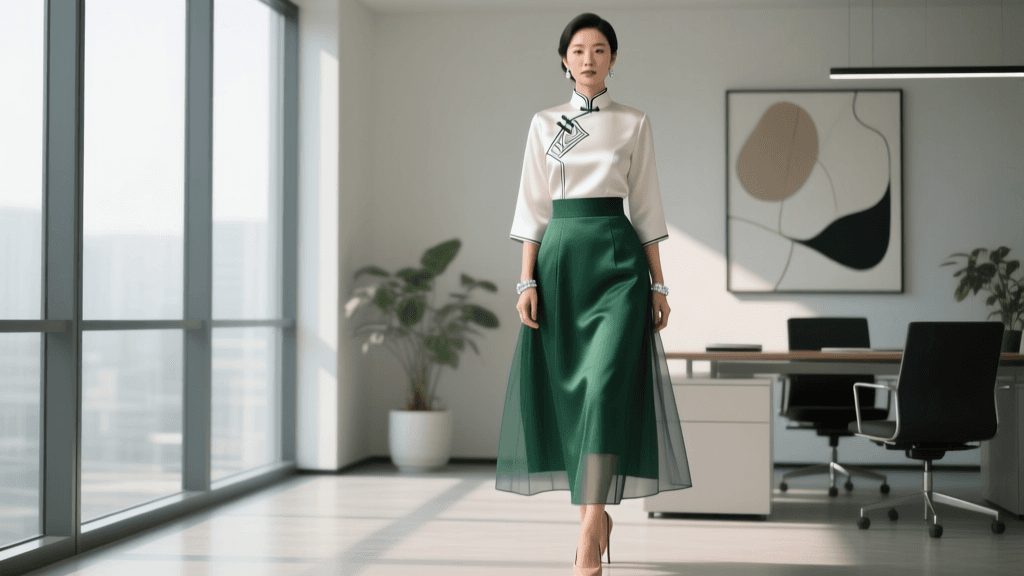
For office wear, the traditional 5cm-high stiff mandarin collar has been lowered to a more breathable, ergonomic 2.5cm. This subtle adjustment prevents the fabric from digging into the jawline during long hours at a desk while maintaining the garment's signature dignified silhouette. Furthermore, the traditional pankou (knotted frog buttons) are increasingly being replaced by hidden neodymium magnetic closures or minimalist asymmetric zippers. This eliminates the visual clutter of the knots, resulting in a sleek, uninterrupted neckline that aligns perfectly with 2026's minimalist sensibilities.
When styling a cheongsam top for the boardroom, fabric choice is paramount. Opt for a 19-momme mulberry silk crepe de chine or a matte recycled polyester blend. These materials offer a subtle drape without the high-shine finish that can make the garment look overly festive. Pair a slate-grey, elbow-sleeved cheongsam top with high-waisted, wide-leg wool trousers featuring a 32-inch inseam. The contrast between the structured, close-fitting top and the fluid, sweeping trousers creates a balanced, authoritative silhouette that commands respect in any professional setting.
Deconstructing the Hanbok Skirt (Chima) for Everyday Wear
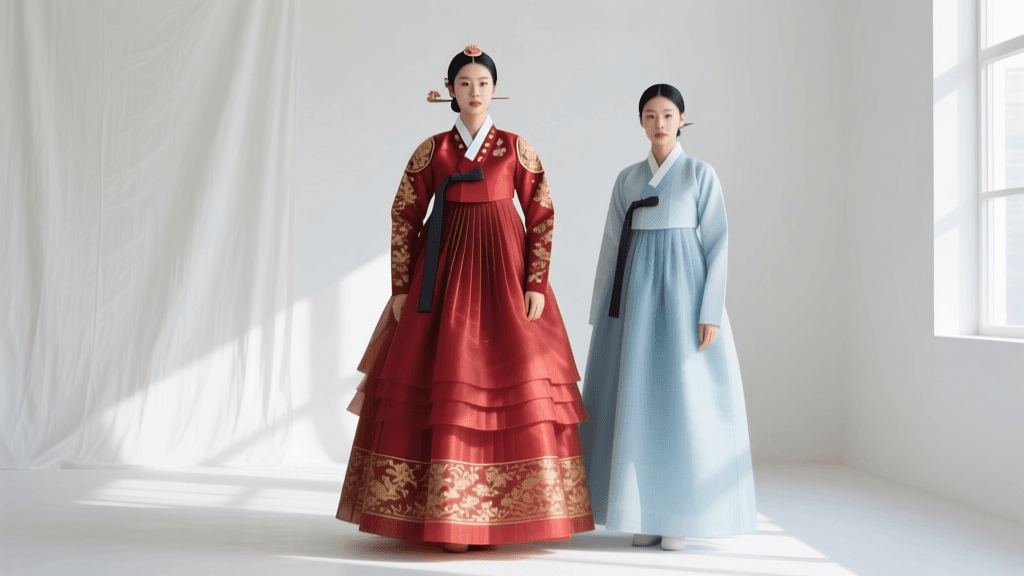
The traditional Korean hanbok is celebrated for its vibrant colors and voluminous, bell-shaped skirts. According to cultural archives documented by Korea.net, the chima (skirt) and jeogori (jacket) have been worn for centuries, with the skirt's volume historically denoting status and modesty. However, the sheer volume of a traditional chima is entirely impractical for navigating modern office spaces, public transit, or crowded city streets.
The 2026 iteration of the everyday chima solves this through architectural restraint. Designers have replaced the traditional under-bust empire waist with a structured 2-inch waistband that sits precisely at the natural waist. The skirt's silhouette has been shifted from a dramatic, floor-sweeping bell to a refined, calf-length A-line. This modification retains the graceful, sweeping motion of the hanbok while allowing for ease of movement. Hidden side-seam pockets are now a standard inclusion, adding a layer of modern utility that the original garments lacked.
To integrate a silk or structured cotton-linen chima into a professional capsule wardrobe, balance the skirt's inherent femininity with sharp, tailored outerwear. A fitted, ribbed merino wool turtleneck tucked into a deep 'Oolong Brown' chima creates a sophisticated base. Layer an oversized, structured blazer with strong, padded shoulders over the top. The juxtaposition of the blazer's rigid, masculine tailoring against the soft, flowing lines of the hanbok skirt is a defining look of 2026's gender-fluid power dressing.
2026 Heritage Capsule Wardrobe Matrix
Building a cohesive wardrobe requires understanding how traditional pieces interact with modern staples. Below is a strategic pairing guide for integrating these garments into your weekly rotation.
| Heritage Piece | Modern Pairing | Occasion | Est. Price Range (USD) |
|---|---|---|---|
| Matte Silk Cheongsam Top (Sleeveless) | High-waisted wide-leg crepe trousers | Client Meetings / Boardroom | $140 - $280 |
| Cropped Linen Cheongsam (Cap Sleeve) | Dark wash straight-leg denim & loafers | Creative Office / Friday Casual | $110 - $190 |
| A-Line Cotton-Linen Chima (Calf-length) | Fitted turtleneck & oversized blazer | Art Gallery Events / Evening Dinners | $180 - $350 |
| Pleated Silk Chima (Ankle-length) | Cashmere crewneck sweater (French tucked) | Weekend Streetwear / Travel | $220 - $450 |
Color Palettes and Textures Dominating 2026
While traditional ceremonial wear heavily relies on auspicious reds, brilliant golds, and jade greens, the 2026 everyday capsule demands a more muted, versatile palette. The focus this year is on 'heritage neutrals'—colors drawn from natural dyeing processes. 'Matcha Green,' 'Oolong Brown,' 'Indigo Slate,' and 'Digital Lavender' (a soft, dusty purple) are the dominant shades. These colors are inherently grounding and can be mixed and matched with standard wardrobe staples like black, navy, and camel without clashing.
Texture plays a critical role when color is subdued. A matte silk crepe de chine absorbs light, giving the cheongsam top a rich, velvety appearance that photographs beautifully under harsh office fluorescent lighting. For the hanbok skirt, a heavyweight linen-cotton blend provides the necessary structural integrity to hold the A-line shape without the need for stiff, uncomfortable crinolines or petticoats.
Sourcing Authentic Yet Modern Pieces
The market for modernized Asian traditional wear has matured significantly. In 2026, the most reliable way to acquire these pieces is through specialized contemporary heritage brands or bespoke tailors utilizing 3D body-scanning technology. Many modern ateliers based in Seoul, Shanghai, and Singapore now offer virtual consultations, allowing you to input your precise measurements and select your collar height, sleeve length, and fabric weight before the garment is cut. This ensures a flawless fit that honors the garment's structural origins while accommodating the realities of a modern, active lifestyle.
Footwear and Accessory Pairings for the Modern Silhouette
The wrong footwear can instantly relegate a modernized heritage piece back into the realm of costume. For the cheongsam top paired with wide-leg trousers, opt for a pointed-toe leather mule or a sleek, architectural loafer with a subtle metallic hardware detail. The pointed toe elongates the leg line, complementing the high-waisted trousers. Avoid traditional embroidered slippers entirely; they disrupt the contemporary narrative of the outfit.
When wearing the A-line chima, the hemline usually falls at the mid-calf. This draws the eye downward, making footwear a focal point. A pair of minimalist, square-toe ankle boots in matte leather or suede works exceptionally well in the autumn and winter months. For jewelry, adhere to the 'one statement piece' rule. A single, sculptural brass ear cuff or a heavy, unpolished silver signet ring provides just enough visual interest without competing with the intricate tailoring of the mandarin collar or the waistband of the skirt.
Essential Care for Mixed Heritage Textiles
Investing in high-quality silk and structured blends requires a commitment to proper textile conservation. The delicate nature of mulberry silk and natural dyes means that standard dry-cleaning chemicals can strip the fabric of its natural luster over time. According to the textile conservation guidelines outlined by the Metropolitan Museum of Art's conservation department, minimizing harsh chemical exposure is vital for the longevity of delicate fibers.
For your 2026 capsule pieces, invest in a high-quality, handheld garment steamer. Steaming not only removes wrinkles but also gently lifts the fibers, restoring the drape of the silk crepe de chine without the risk of scorching associated with traditional ironing. When storing the chima skirts, avoid wire hangers that can distort the structured waistband. Instead, use wide, velvet-padded hangers and store the skirts in breathable, unbleached cotton garment bags to protect the natural dyes from UV degradation and dust accumulation. By treating these garments with the same care as museum textiles, you ensure they remain a cornerstone of your wardrobe for decades to come.
Ultimately, mixing traditional Asian pieces with a modern wardrobe in 2026 is not about literal translation; it is about capturing the essence of the garment's architecture and recontextualizing it for the present day. By focusing on precise tailoring, muted palettes, and thoughtful pairings, the cheongsam top and the hanbok skirt transcend their ceremonial roots to become indispensable tools of modern sartorial expression.