Ceremonial vs Everyday Hanbok: 2026 Buyer's Style Guide
The 2026 Hanbok Renaissance: A Tale of Two Wardrobes
The traditional Korean garment, the hanbok, has experienced a massive global renaissance over the last decade. As we navigate the fashion landscape of 2026, the hanbok is no longer a monolithic category relegated to museum displays or annual holiday photos. Instead, it has distinctly bifurcated into two thriving markets: the ceremonial hanbok (myeongjeol and honrye) and the everyday hanbok (saenghwal hanbok). Understanding the structural, textile, and stylistic differences between these two categories is essential for anyone looking to invest in Korean traditional wear this year.
According to the Korean Culture and Information Service, the hanbok is characterized by its vibrant colors, simple lines, and lack of pockets, historically reflecting the social status and marital status of the wearer. Today, however, modern designers have reimagined these historical markers to suit contemporary lifestyles while preserving the garment's soul. Whether you are preparing for a traditional Korean wedding, attending a major cultural festival, or simply looking for a breathable, elegant outfit for the office, this 2026 guide will help you navigate the nuances of ceremonial versus everyday hanbok.
Ceremonial Hanbok: Preserving Heritage and Elegance
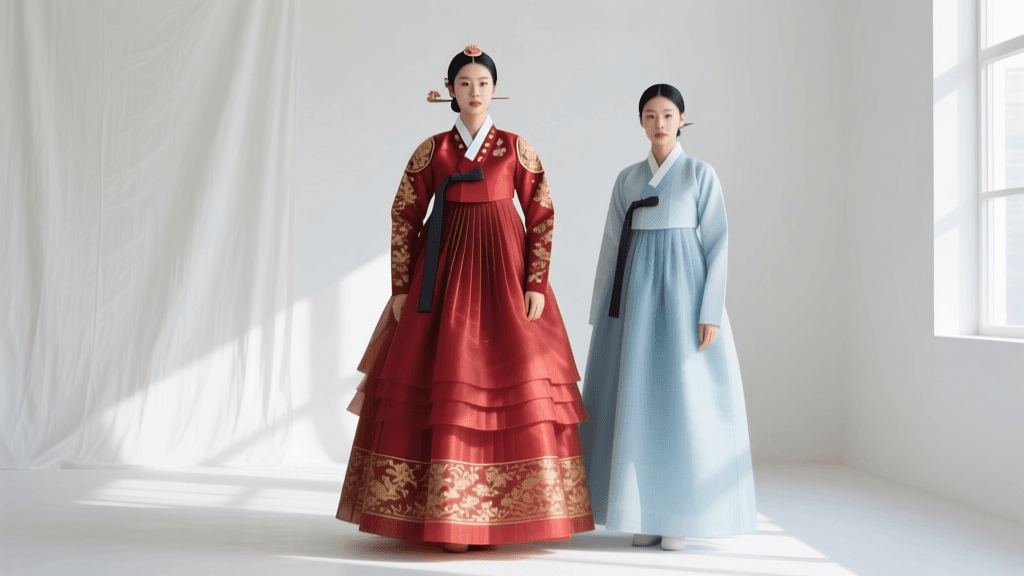
Ceremonial hanbok is designed for milestones, major holidays (like Seollal and Chuseok), and formal rites of passage. This category includes the lavish hwalot (bridal robes), the structured dangui (ceremonial jackets), and the highly formalized myeongjeol holiday attire. In 2026, the ceremonial market is defined by a return to artisanal craftsmanship and sustainable luxury.
Textiles and Embellishments
Authentic ceremonial hanbok relies on premium natural fibers. Heavyweight silks, finely woven ramie (mosi), and high-grade hemp are the standard. A major trend in 2026 is the use of lab-grown peace silk (ahimsa silk), which allows the silkworm to emerge from the cocoon before harvesting, catering to the eco-conscious luxury buyer. Embellishments are equally intricate. Traditional geumbak (gold leaf stamping) is still highly sought after for wedding attire, though modern artisans are now using ultra-lightweight, flexible gold-leaf polymers that prevent the stiff, cracking issues of the past.
Silhouette and Structure
The silhouette of a ceremonial hanbok is voluminous and rigid. The chima (skirt) is cut with an abundance of fabric—often 4 to 6 meters wide—creating a bell-like shape that hides the body's natural contours, in line with traditional Confucian modesty. The jeogori (jacket) is structurally reinforced with stiff inner collars (dongjeong) and wide, elaborately tied ribbons (goreum). Because of the sheer volume of fabric and the delicate nature of the embellishments, ceremonial hanbok requires specialized dressing, often necessitating the help of a professional dresser for weddings.
Everyday Saenghwal Hanbok: The Modern Uniform
Saenghwal hanbok translates directly to "living" or "everyday" hanbok. Pioneered by brands like Leesle and Tchaikim in the late 2010s, this category has completely matured by 2026 into a staple of East Asian streetwear and office attire. The saenghwal hanbok prioritizes mobility, ease of care, and integration with Western wardrobe staples.
Tech-Forward Fabrics
While traditional hanbok demands meticulous care, the 2026 saenghwal hanbok embraces textile innovation. Designers are heavily utilizing shape-memory cotton-linen blends and stain-resistant nano-coated polyesters. These fabrics mimic the drape and matte finish of traditional ramie and silk but can be thrown into a washing machine. Furthermore, UV-protective and moisture-wicking linings are now standard in summer collections, making the everyday hanbok a practical choice for humid climates.
Structural Adaptations
To accommodate modern commuting, the saenghwal hanbok features drastic structural shifts. The chima is typically shortened to midi or knee-length to prevent tripping on subway stairs. The traditional tie-waistband is frequently replaced with hidden elastic waistbands or discrete side-zippers. Crucially, 2026 everyday hanbok designs almost universally include deep, hidden side-seam pockets—a modern necessity that historical hanbok lacked. The jeogori is often simplified, sometimes merging with the silhouette of a modern wrap blouse or a cropped cardigan.
Feature Comparison: Ceremonial vs. Everyday Hanbok (2026)
When building your wardrobe or shopping for a specific event, use this comparison chart to understand the functional and financial differences between the two categories in the current market.
| Feature | Ceremonial Hanbok | Everyday (Saenghwal) Hanbok |
|---|---|---|
| Primary Fabrics | 100% Silk, Peace Silk, Fine Ramie | Cotton, Linen, Tech-Poly Blends |
| Skirt (Chima) Length | Floor-length, voluminous (4m+ width) | Midi, knee-length, or A-line mini |
| Waistband | Tie-front, structured high-waist | Elasticized, hidden zipper, or velcro |
| Pockets | None (requires separate pouch/jumeoni) | Hidden side-seam or patch pockets |
| Care Instructions | Dry clean only, specialized storage | Machine washable (delicate), air dry |
| 2026 Price Range (USD) | $400 - $3,500+ (Custom/Bridal) | $75 - $280 (Ready-to-wear) |
| Best Occasions | Weddings, Doljanchi, Chuseok, Seollal | Office, cafes, travel, casual dinners |
Practical Buying Guide: Measurements and Fit
Unlike Western clothing, which relies on standardized S/M/L sizing based on bust and hip measurements, hanbok fit is dictated by different proportions. When shopping online from Korean boutiques in 2026, you must have the following measurements ready:
- Chest/Bust (Gaseum): Measured around the fullest part. Crucial for the jeogori to ensure the front panels overlap correctly without gaping.
- Underbust/Ribcage: Essential for the chima waistband, as traditional skirts sit much higher than Western skirts, resting just below the bust or on the ribcage.
- Arm Length (Pall): Measured from the base of the neck, over the shoulder, down to the wrist. Hanbok sleeves are cut in a single continuous piece with the bodice, making this measurement vital for proper drape.
- Total Height (Ki): Used to determine the drop of the chima. For everyday hanbok, you can request custom hemming to ensure the skirt hits exactly at your mid-calf or ankle.
Pro Tip for 2026 Buyers: Many contemporary saenghwal brands now offer "hybrid sizing" that aligns with standard US/EU sizing charts. However, if you are ordering a ceremonial piece from a bespoke atelier in Bukchon (Seoul), always provide your exact centimeter measurements.
Styling and Care: Maximizing Your Investment
The way you style and maintain your hanbok will dictate its lifespan and visual impact. The Encyclopedia Britannica notes that the hanbok's beauty lies in its harmonious use of color and natural lines, a principle that applies to both modern and traditional styling.
Styling the Everyday Hanbok
The beauty of the saenghwal hanbok is its modularity. In 2026, the most popular styling technique is "half-hanbok" (ban-hanbok), where the wearer pairs a traditional chima with a modern Western top, such as a crisp white button-down shirt or a fitted turtleneck. Conversely, a traditional jeogori can be worn over high-waisted wide-leg trousers or denim jeans for a striking, avant-garde streetwear look. Footwear has also evolved; while traditional kkotsin (flower shoes) are reserved for ceremonies, everyday hanbok is routinely paired with white leather sneakers, loafers, or ankle boots.
Care and Maintenance Protocols
- Everyday Care: Wash saenghwal hanbok in cold water using a neutral pH detergent. Always place the garment in a mesh laundry bag to protect the goreum (ribbons) from tangling. Never tumble dry; hang in a shaded area to prevent UV fading of natural dyes.
- Ceremonial Care: Never wash ceremonial silk at home. After wearing, air the garment out in a well-ventilated, shaded room for 24 hours to remove moisture and odors before taking it to a dry cleaner who specializes in traditional textiles.
- Storage: Store ceremonial hanbok flat, wrapped in acid-free tissue paper or traditional cotton bojagi (wrapping cloths). Avoid wire hangers, which will permanently distort the shoulder lines of the jeogori. For long-term storage, use camphor wood boxes to naturally deter moths without the harsh chemicals of modern mothballs.
Final Thoughts
The hanbok in 2026 is a living, breathing garment. By understanding the distinct roles of the ceremonial and everyday variations, you can make informed purchasing decisions that respect Korean heritage while seamlessly integrating into your modern life. Whether you are investing in a bespoke silk bridal hwalot or picking up a machine-washable cotton saenghwal skirt for your daily commute, the hanbok offers a timeless elegance that continues to evolve with the times.