Hanfu for Family Ceremonies: 2026 Guide to Birth, Wedding & Rites
The 2026 Hanfu Revival in Family Milestones
As we navigate through 2026, the Hanfu movement has evolved far beyond a niche streetwear trend into a deeply embedded cultural practice for major life milestones. Families across the globe are increasingly opting for historically accurate, meticulously crafted traditional Chinese garments to mark birth, coming-of-age, weddings, and ancestral rites. This shift reflects a broader desire to reconnect with heritage, utilizing garments that carry centuries of philosophical and aesthetic weight.
Unlike everyday Hanfu, which often prioritizes convenience and modern fusion, ceremonial Hanfu demands strict adherence to historical silhouettes, specific color palettes, and auspicious motifs. According to UNESCO's Intangible Cultural Heritage registry, traditional sericulture and silk craftsmanship remain foundational to these garments, with 2026 seeing a massive surge in demand for sustainable, plant-dyed silks like Xiangyunsha and intricate Song brocades for ceremonial use.
Birth and Early Childhood: Zhuazhou and Auspicious Blessings
The earliest family ceremonies center around the birth and first years of a child. In traditional Chinese culture, the 'Hundred Days' (Bairi) and the First Birthday (Zhuazhou) are critical milestones. For the infant, comfort and auspicious symbolism take precedence over complex tailoring.
Infant Zhuazhou Attire
For a first birthday in 2026, parents are favoring soft, breathable organic silk and cotton blends. The infant typically wears a Hufu (tiger-head hat and shoes) paired with a soft, cross-collared Shan (inner shirt). The tiger motifs are believed to ward off evil spirits and bring courage. Modern artisan studios now offer hypoallergenic, naturally dyed cotton sets featuring subtle tiger and lotus embroidery, ensuring the garments are safe for sensitive infant skin while maintaining historical aesthetics.
Maternal Attire for Postpartum Ceremonies
Mothers participating in the Hundred Days banquet often wear the Song Dynasty-style Beizi (a long, straight, open-front coat). The Beizi is ideal for postpartum figures due to its forgiving, elegant drape and lack of restrictive waist tailoring. In 2026, pastel-toned Beizi featuring delicate pearl-and-cloud embroidery are highly sought after for daytime family gatherings.
Coming of Age: Guanli and Jili Traditions
The transition from childhood to adulthood is marked by the Guanli (capping ceremony for men, traditionally at age 20) and the Jili (hair-pinning ceremony for women, traditionally at age 15 or upon engagement). These ceremonies involve the ritualistic addition of garments, symbolizing the assumption of adult responsibilities.
The Three Additions (Sanjia)
Both ceremonies traditionally feature the 'Sanjia'—the addition of three distinct layers of clothing, each representing a deeper level of societal responsibility.
- First Addition: A simple, unlined Shenyi (deep robe) in plain white or light blue, representing the purity of youth.
- Second Addition: A darker, more structured robe, often a Yuanlingpao (round-collar robe) or a layered Ruqun, symbolizing the willingness to learn and serve.
- Third Addition: The formal ceremonial dress. For men, this includes the formal Bianfu and a scholar's cap. For women, it is a grand, heavily embroidered Daxiushan (large-sleeved shirt) paired with a sweeping Mamianqun (horse-face skirt).
In 2026, university student associations and cultural guilds frequently host mass Jili and Guanli ceremonies, driving a robust rental and custom-tailoring market for these specific three-tier garment sets.
Weddings: The Grandeur of Ming-Style Fengguan Xiapei
Traditional Chinese weddings have seen a monumental shift toward Ming Dynasty aesthetics, which remain the gold standard for Hanfu bridal wear in 2026. The Ming-style wedding ensemble is characterized by its opulence, structural rigidity, and profound symbolic weight.
The Bride's Trousseau: Diyī and Xiapei
The pinnacle of bridal Hanfu is the Fengguan Xiapei (Phoenix Crown and Cloud Scarf). While historically reserved for nobility, Ming Dynasty sumptuary laws famously allowed commoners to wear a variation of this on their wedding day.
- The Fengguan: A highly intricate headdress adorned with kingfisher feather replicas (now made using sustainable dyed goose feathers and velvet in 2026), pearls, and gold filigree.
- The Xiapei: A V-shaped, weighted cloud scarf that drapes over the shoulders and hangs down the front, anchoring the outfit and dictating the bride's posture.
- The Robe: Brides typically wear a red Yuanlingpao or a Diyī (a deep robe featuring pheasant and dragon motifs) with a pleated Mamianqun skirt underneath.
The structural evolution of these robes is well-documented in institutions like the Metropolitan Museum of Art's Heilbrunn Timeline of Art History, which notes the importance of rank badges and structural layering in conveying social and ceremonial status.
The Groom's Attire
The groom's attire must match the bride's grandeur. The standard 2026 groom's ensemble features a black or deep crimson Yuanlingpao with a Buzi (mandarin square) featuring a crane or qilin, symbolizing longevity and auspiciousness. This is paired with a Wusha Mao (black gauze cap) with wing-like extensions and a leather or silk ceremonial belt.
Ancestral Rites: Reverence in Shenyi and Somber Tones
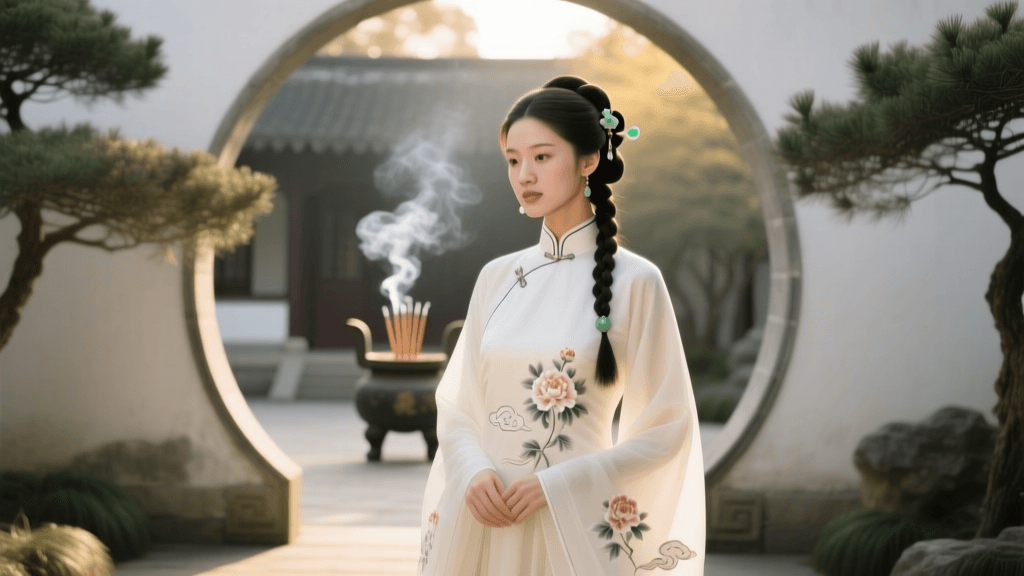
Ancestral worship (Jidian) and memorial services require an entirely different sartorial approach. The focus here is on humility, respect, and philosophical alignment with Confucian ideals of filial piety. Flashy embroidery, bright colors, and excessive accessories are strictly forbidden.
The Shenyi and Jiaoling Youren
The Shenyi (deep garment), which seamlessly connects the upper and lower pieces of the robe, is the standard for ancestral rites. The color palette is restricted to somber tones: stark white, charcoal, navy, or unbleached hemp.
The most critical rule is the Jiaoling Youren—the left side of the collar must cross over the right side. In traditional Chinese cosmology, reversing this (left over right) is reserved exclusively for the deceased or certain ethnic minorities in historical contexts. For those studying historical embroidery and textile rules, the Victoria and Albert Museum's extensive archives on Chinese textiles provide excellent visual references on how these collars were historically constructed and folded for mourning versus celebratory rites.
2026 Buyer’s Guide: Fabrics, Costs, and Layering
Purchasing ceremonial Hanfu in 2026 requires an understanding of fabric grades, artisan wait times, and proper layering. Below is a comparative guide to help families budget and plan for their specific ceremonies.
| Ceremony | Primary Garment | Key Fabric (2026 Trends) | Estimated Cost (USD) | Essential Layers |
|---|---|---|---|---|
| Zhuazhou (1st Bday) | Hufu / Tiger Motif Set | Organic Cotton / Soft Silk | $80 - $180 | Dou (bellyband), Shan (inner shirt) |
| Jili / Guanli (Coming of Age) | Shenyi / Daxiushan | Chiffon, Light Brocade | $250 - $600 | Zhongyi (inner layer), Waiyi (outer coat) |
| Wedding (Ming Style) | Fengguan Xiapei / Yuanlingpao | Xiangyunsha, Gold-leaf Brocade | $1,500 - $5,000+ | Zhongyi, Baoyi, Waiyi, Xiapei, Skirt |
| Ancestral Rites (Jidian) | Shenyi (Deep Robe) | Raw Silk, Hemp, Matte Crepe | $150 - $350 | Zhongyi, Shenyi |
Understanding the Layering System
Proper Hanfu layering is non-negotiable for ceremonial accuracy.
- Zhongyi (Inner Garment): Usually a white, cross-collared cotton or silk shirt that protects the outer layers from sweat and provides a crisp white edge at the collar and cuffs.
- Baoyi (Middle Layer): Worn in colder months or to add volume to the silhouette, particularly for wedding skirts.
- Waiyi (Outer Garment): The primary visual piece, featuring the heaviest embroidery and most expensive textiles.
Sourcing and Caring for Ceremonial Hanfu
In 2026, the market is split between high-volume commercial brands and bespoke artisan studios. For weddings and coming-of-age ceremonies, bespoke studios operating via WeChat and specialized Taobao storefronts are the preferred choice. These artisans require 45 to 90 days for custom weaving and hand-embroidery.
Care Instructions: Ceremonial silks, especially Xiangyunsha (which is dyed using yam juice and river mud), must never be machine washed or dry-cleaned with harsh chemicals. They require gentle spot-cleaning, airing out in shaded, well-ventilated areas, and storage in breathable cotton garment bags with natural camphor wood blocks to deter pests without damaging the delicate protein fibers of the silk.
By investing in historically accurate, high-quality Hanfu, families in 2026 are not merely buying clothes; they are weaving their personal milestones into the continuous, living tapestry of Asian cultural heritage.