2026 Hanfu Fabric Drape & Comfort Analysis: Best Textiles
The Evolution of Hanfu Textiles in 2026
The global Hanfu movement has matured significantly as we navigate through 2026. While early revivals focused heavily on visual accuracy and historical silhouettes, today’s enthusiasts and designers prioritize a sophisticated balance of structural drape, tactile texture, and all-day skin comfort. Modern textile engineering has introduced innovative weaves that honor ancient aesthetics while solving the practical challenges of wearing traditional garments in contemporary, fast-paced environments. Whether you are assembling a flowing Song dynasty Beizi or a heavily structured Ming dynasty Aoqun, understanding the physics of fabric drape and the nuances of skin friction is essential for achieving an authentic and comfortable look.
In this comprehensive analysis, we break down the top Hanfu fabrics dominating the 2026 market, evaluating their flexural rigidity, breathability, and suitability for specific historical styles. By the end of this guide, you will know exactly which textiles to select for your next bespoke or ready-to-wear Hanfu commission.
The Physics of Drape: Understanding Flexural Rigidity
Drape is not merely about how a fabric hangs; it is a measurable physical property defined by flexural rigidity and bending length. In textile engineering, the stiffness of a fabric dictates how it responds to gravity and body movement. According to the testing protocols outlined in the ASTM D1388 standard for fabric stiffness, a material's bending length determines its ability to hold a shape versus its ability to flow.
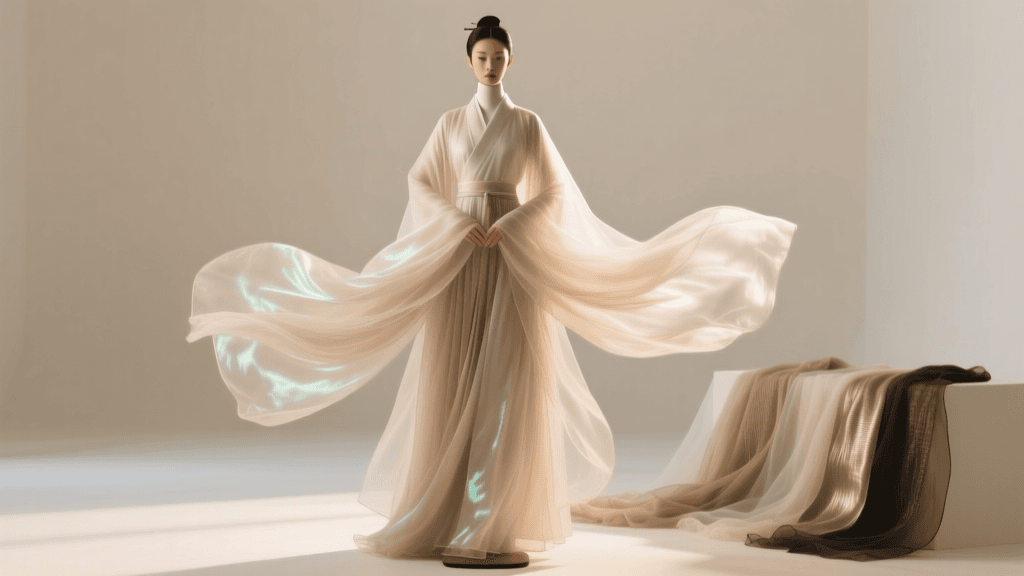
For Hanfu, this physics principle is paramount. Wide-sleeved garments like the Guangxiu require a low bending length (high fluidity) to achieve the ethereal, sweeping motion associated with Wei and Jin dynasty aesthetics. Conversely, the pleated panels of a Ming dynasty Mamianqun (horse-face skirt) require a higher flexural rigidity to maintain sharp, knife-edge pleats that do not collapse when the wearer sits or walks. In 2026, manufacturers are utilizing advanced digital drape simulation software to map these coefficients before weaving, ensuring that the final textile behaves exactly as historical tailoring demands.
Xiangyunsha: The Pinnacle of Textured Drape
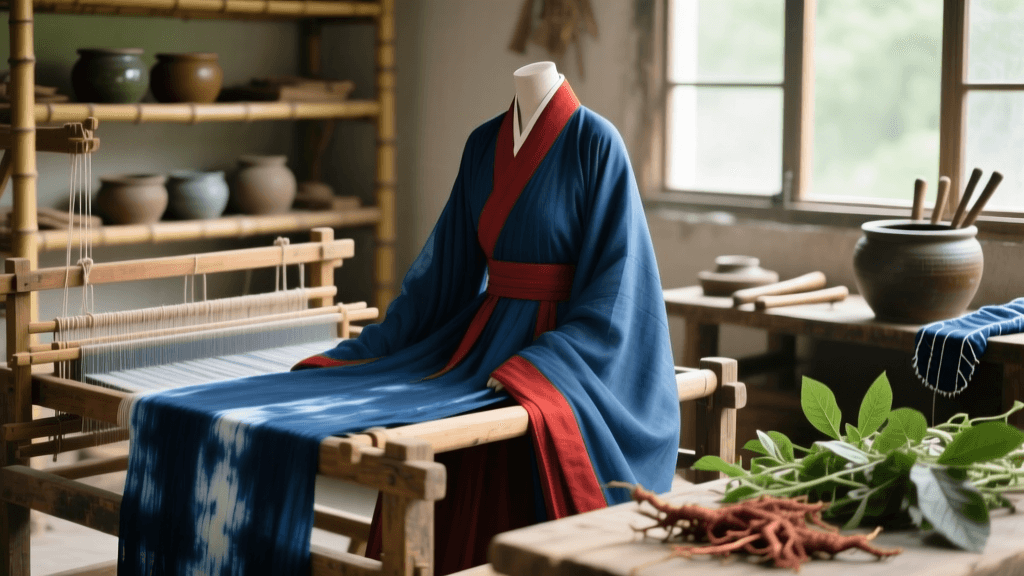
Xiangyunsha (gambiered Guangdong silk) remains the undisputed king of premium Hanfu textiles. Historically celebrated for its unique dual-toned finish and rustling acoustic profile, this fabric undergoes a labor-intensive dyeing process using the juice of the gambier plant and iron-rich river mud. As noted in the Metropolitan Museum of Art's archives on Chinese silk, the region's sericulture and dyeing techniques have been refined over centuries to produce textiles that are remarkably resilient yet lightweight.
In 2026, authentic Xiangyunsha features a distinct, slightly waxy texture on the black side and a warm, earthy matte finish on the brown side. Its drape is uniquely weighted; it does not cling to the body like modern chiffon, but rather pushes away from the skin, creating a sculptural, architectural silhouette. This makes it exceptionally comfortable in humid summer climates, as it prevents the fabric from sticking to the skin. However, its stiffness means it is best suited for structured outerwear, Beizi, and wide-leg trousers, rather than delicate inner layers. Expect to pay between 800 to 1,500 RMB per meter for certified, heritage-produced Xiangyunsha in the current 2026 market.
Cupro and Bamboo-Silk: The 2026 Comfort Revolution
For inner garments (Zhongyi) and lightweight summer Ruqun, pure silk has traditionally been the standard. However, the physical properties of silk, while luxurious, can sometimes trap heat if the weave is too dense. As detailed in educational resources on the physical properties of silk fibers, the protein structure of silk offers great moisture absorption, but modern blends have optimized this further for extreme comfort.
The breakout textile trend for Hanfu in 2026 is the Cupro (copper ammonia) and bamboo-silk blend. Cupro is a regenerated cellulose fiber that mimics the smooth, hypoallergenic surface of silk but offers superior moisture-wicking capabilities and a cooler touch. When blended with bamboo micro-fibers, the resulting fabric achieves a near-zero skin friction coefficient. This means it glides over the skin without pulling or chafing, a crucial factor for the multi-layered chest wrappers and inner collars of Tang and Song dynasty styles. Furthermore, Cupro possesses an exquisite, heavy drape that mimics high-momme silk crepe, allowing the skirts to pool beautifully around the ankles without the static cling associated with synthetic polyesters.
Structured Jacquard: Mastering the Ming Dynasty Silhouette
When replicating the opulent, layered looks of the Ming dynasty, structural integrity is non-negotiable. The Ao (jacket) and Mamianqun require fabrics that can support heavy metal thread embroidery and maintain rigid collars. In 2026, high-density woven jacquards, particularly those utilizing metallic yarns interwoven with matte cotton or rayon bases, are the industry standard.
Unlike printed fabrics, woven jacquards integrate the pattern directly into the textile structure, giving the fabric a raised, tactile texture that catches the light dynamically. The 2026 iterations of these jacquards have solved the historical issue of stiffness and scratchiness by utilizing fine-denier rayon warps. This provides the necessary flexural rigidity to keep the iconic Ming dynasty stand collars upright and the skirt pleats razor-sharp, while the rayon base ensures the garment remains breathable and comfortable against the skin.
Comprehensive 2026 Hanfu Fabric Comparison Chart
To help you select the ideal textile for your specific Hanfu project, we have compiled a data table comparing the top fabrics available in the 2026 market based on drape, comfort, and ideal application.
| Fabric Type | Weight (GSM / Momme) | Drape Coefficient | Skin Comfort & Breathability | Best Hanfu Application | 2026 Avg. Cost (per meter) |
|---|---|---|---|---|---|
| Authentic Xiangyunsha | 19-22 Momme | Moderate (Sculptural) | High (Cool, non-clinging) | Song Beizi, Outerwear, Trousers | 800 - 1,500 RMB |
| Cupro / Bamboo Blend | 120-150 GSM | High (Fluid, heavy) | Exceptional (Cool, wicking) | Zhongyi, Summer Ruqun, Inner layers | 80 - 150 RMB |
| Woven Metallic Jacquard | 200-280 GSM | Low (Highly structured) | Moderate (Best with lining) | Ming Aoqun, Mamianqun, Winter Ao | 120 - 300 RMB |
| Silk Chiffon (Georgette) | 8-12 Momme | Very High (Ethereal) | High (Lightweight, airy) | Wei/Jin Wide Sleeves, Pibo (wraps) | 150 - 250 RMB |
| Cotton-Linen Slub | 180-220 GSM | Low to Moderate (Crisp) | High (Breathable, textured) | Scholar robes, Daily casual Hanfu | 40 - 90 RMB |
Actionable Guide: Evaluating Drape and Comfort Online
Buying Hanfu online remains the primary method for most international and domestic enthusiasts in 2026. However, evaluating drape and texture through a screen requires a strategic approach. Here is how to ensure you are getting the right fabric:
- Request the 'Drop Test' Video: When commissioning custom pieces or buying from independent studios on Taobao or Etsy, ask the seller for a quick video of the fabric being dropped from a height of one meter. A high-drape fabric (like Cupro or silk chiffon) will billow and settle slowly, while a structured jacquard will fall straight down and hold its folded shape.
- Check the Lining Specifications: Comfort is heavily dictated by the lining. For 2026 Ming-style jackets, ensure the lining is listed as 'Bemberg' (a premium brand of Cupro) or pure mulberry silk. Avoid polyester linings, which will trap heat and generate static, ruining the drape of the outer skirt.
- Analyze the Weave Density: If a product description boasts about 'high-density' for a summer garment, be cautious. High density in synthetic blends destroys breathability. Look for terms like 'open weave', 'slub texture', or 'crepe twist' for warm-weather comfort.
- Verify the Momme or GSM: Never buy silk Hanfu without a momme weight listed. For durable, opaque skirts, you need at least 16 momme. For flowing, translucent outer layers, 8 to 10 momme is ideal. If the seller only provides GSM (grams per square meter), remember that 1 momme is approximately 4.3 GSM.
Conclusion
The Hanfu landscape in 2026 is a triumph of material science meeting historical reverence. By understanding the flexural rigidity of your textiles and prioritizing skin comfort through modern blends like Cupro and bamboo-silk, you can elevate your traditional wardrobe from a mere costume to a living, breathing extension of your personal style. Whether you are investing in the sculptural beauty of Xiangyunsha or the fluid grace of modern silk alternatives, choosing the right fabric ensures that your Hanfu moves, breathes, and flows exactly as the ancients intended.