Hakama and Samue: Traditional Uniforms for Budo and Tea
The Philosophy of Movement in Japanese Traditions
When engaging in traditional Japanese disciplines, the clothing you wear is never merely functional; it is a vital extension of the practice itself. Whether you are stepping onto the tatami mats of a dojo for martial arts (Budo) or entering the serene, dimly lit space of a tearoom for the tea ceremony (Chado), your uniform dictates your mindset. The garments act as a physical boundary between the mundane world and the sacred space of practice. In both Budo and Chado, the concepts of respect, mindfulness, and precise movement are deeply embedded in the cut, drape, and fabric of traditional uniforms like the hakama and the samue.
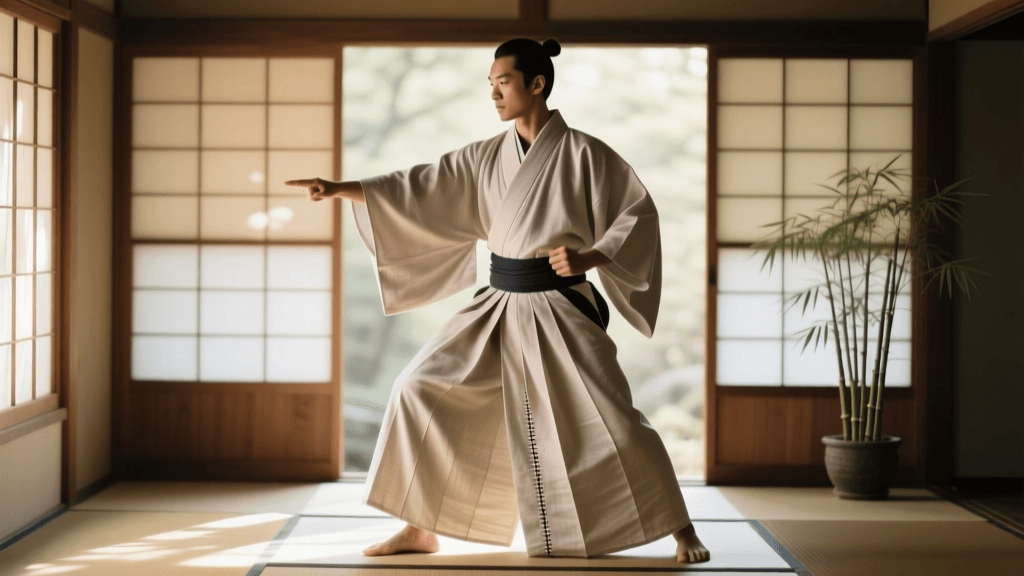
Understanding the nuances of these garments is essential for any serious practitioner. The way a hakama falls during an iaido draw, or the quiet rustle of a samue during tea preparation, speaks volumes about the wearer's dedication to the "Do" (the Way). This guide explores the intersection of martial arts and tea ceremony attire, offering actionable advice on selection, sizing, and maintenance for these iconic garments.
Understanding the Hakama: From Samurai Armor to Dojo and Tearoom
The hakama, a pleated, skirt-like trouser worn over a kimono or keikogi, has its roots in the Heian period (794–1185) as court attire. By the Edo period, it became the standard formal wear for the samurai class. Today, it is the defining garment for advanced practitioners of martial arts like Aikido, Kendo, and Iaido, as well as a formal staple in the tea ceremony.
The Symbolism of the Pleats
A traditional formal hakama features seven deep pleats: five in the front and two in the back. In martial arts philosophy, these pleats are often said to represent the seven virtues of Bushido (the way of the warrior): Jin (benevolence), Gi (justice), Rei (courtesy), Chi (wisdom), Shin (sincerity), Chu (loyalty), and Ko (filial piety). Wearing the hakama is a physical reminder of these ethical obligations.
Martial Arts Hakama (Budo)
In the realm of Budo, the hakama must withstand rigorous physical movement while maintaining its structural elegance. According to guidelines maintained by organizations like the International Kendo Federation, the hakama must project a sharp, dignified silhouette.
- Fabric Choices: Beginners often opt for Tetron (a polyester-rayon blend) because it is machine washable, resists wrinkles, and holds its pleats exceptionally well. Advanced practitioners and instructors frequently prefer heavy, indigo-dyed cotton (aizome) or silk. Indigo cotton is highly prized not only for its traditional aesthetic but also for its natural antibacterial and odor-resistant properties.
- The Koshiita: The rigid back piece, or koshiita, is crucial in martial arts hakama. It supports the lower back, enforces proper posture, and protects the spine during ukemi (breakfalls) in Aikido or Judo.
- Length and Fit: For Iaido and Kendo, the hakama should ideally reach the top of the instep when kneeling, ensuring the fabric does not drag on the floor and cause tripping during rapid footwork (suriashi).
Tea Ceremony Hakama (Chado)
The tea ceremony, governed by schools such as Urasenke and Omotesenke, requires attire that reflects the principles of wa, kei, sei, and jaku (harmony, respect, purity, and tranquility). The Urasenke Foundation emphasizes subdued elegance and seasonal awareness in all aspects of the ceremony, including clothing.
- Men's Attire: Male tea practitioners typically wear a formal kimono with a hakama. For highly formal occasions (chaji), a stiff, striped silk hakama known as a Sendai-hira is worn. The colors are strictly subdued—navy, charcoal, or dark brown—to avoid distracting from the tea utensils and the floral arrangement.
- Women's Attire: While women historically wore kimono without hakama for tea, modern female practitioners and teachers often wear a specialized, softer silk hakama or an andon-bakama (a lantern-style pleated skirt without a divided crotch) over their kimono to denote their rank or role as a host.
The Samue: The Ultimate Zen and Working Garment
While the hakama represents formality and rank, the samue represents the beauty of mindful labor. Originally developed for Zen Buddhist monks to wear during samu (physical temple work such as sweeping, chopping wood, and farming), the samue has evolved into a highly versatile traditional uniform.
"In the Zen tradition, samu (physical work) is not separate from zazen (seated meditation). The samue was designed to allow the body to move freely while maintaining a dignified, mindful posture, bridging the gap between labor and spiritual practice."
Anatomy of the Samue
The samue consists of two pieces: a wrap-style jacket (uwagi) that ties at the side, and loose-fitting trousers (zubon) that feature an elastic or drawstring waist and tied cuffs at the ankles. The ankle ties are a direct legacy of its monastic origins, preventing the fabric from catching on brush or dirt during outdoor work.
Samue in the Tea Ceremony
In the context of Chado, the samue is the undisputed king of preparation. Before the guests arrive, the host must clean the tearoom, prepare the charcoal fire, and arrange the garden. Wearing a formal silk kimono during this sweaty, physical labor is impractical. The samue allows the host to move freely, kneel comfortably, and work efficiently while remaining in traditional Japanese attire. It is typically worn in cotton or hemp, favoring earthy tones like indigo, charcoal, olive, and plum.
Seasonal Fabric Weights
When purchasing a samue, seasonality is paramount. Japanese traditional garments are deeply tied to the changing of the seasons.
- Spring/Autumn: Look for mid-weight wafu (Japanese cotton) or cotton-linen blends. These provide breathability while offering enough structure to look presentable if a guest arrives early.
- Summer: Opt for samue made from shijira-ori (a seersucker-like textured cotton) or pure hemp (asa). Hemp is highly valued in Japan for its exceptional cooling properties and rapid moisture-wicking capabilities.
- Winter: Heavyweight tsumugi (slub-textured cotton or silk blends) or quilted cotton samue provide necessary insulation for drafty traditional wooden tearooms.
Comparison Chart: Martial Arts vs. Tea Ceremony Attire
To help you select the appropriate garment for your specific practice, refer to the comparison table below. Understanding these distinctions ensures you show proper respect to the traditions and your instructors.
| Feature | Martial Arts (Budo) | Tea Ceremony (Chado) |
|---|---|---|
| Primary Garment | Heavyweight Keikogi and Hakama | Kimono, Formal Hakama, or Samue |
| Fabric Priority | Durability, sweat absorption, stiff pleats | Seasonal appropriateness, subdued drape, silence |
| Color Palette | White, Black, Navy, Indigo | Earth tones, muted pastels, seasonal motifs |
| Footwear | Barefoot (Zori for entering/exiting dojo) | White Tabi socks (Zori for garden paths) |
| Maintenance | Frequent washing, rigorous pleat folding | Dry cleaning (silk), spot cleaning, careful airing |
Sizing, Tying, and Maintenance
Purchasing traditional Japanese garments online can be daunting due to the unique sizing systems. Here is actionable advice for achieving the perfect fit and maintaining your investment.
Measuring for a Hakama
Unlike Western trousers, hakama are not sized by waist and inseam. They are sized by the length from your navel (or where you tie your obi/belt) down to your ankle bone.
- Stand straight and measure from your navel to the floor.
- Subtract 5 to 10 centimeters (2 to 4 inches) to ensure the hem clears the ground.
- Consult the specific manufacturer's size chart, as Japanese sizing typically ranges from Size 22 (approx. 83cm) to Size 30 (approx. 113cm).
The Art of Tying the Himo
The himo (ties) of the hakama require practice. The front ties are wrapped around the waist, crossed at the back, brought to the front, and tied in a secure, flat bow. The back ties are then threaded under the front belt, crossed, and tied in a simple knot at the front. In Budo, a sloppy hakama knot is considered a sign of a sloppy mind and can be a safety hazard. In Chado, the knot must be neat and symmetrical, reflecting the host's attention to detail.
Care and Folding
Maintaining the sharp pleats of a cotton or Tetron hakama is an art form. After washing in cold water (never use hot water on indigo cotton, as it will bleed and shrink), the hakama must be folded while slightly damp.
According to historical textile preservation methods documented by institutions like the Metropolitan Museum of Art's Asian Art Department, proper folding of pleated garments prevents permanent creasing and fiber degradation. You must align each of the seven pleats perfectly, fold the garment in thirds, and place a heavy book or specialized wooden hakama press over it overnight. Never put a martial arts hakama in a tumble dryer, as the heat will melt the internal stiffeners and destroy the koshiita.
Conclusion
Whether you are executing a flawless sword draw in the dojo or whisking matcha in the quiet solitude of the tearoom, your uniform is your first and most important tool. The hakama and the samue are not relics of the past; they are living garments that demand respect, care, and understanding. By choosing the right fabrics, mastering the measurements, and committing to the meticulous maintenance of your traditional uniforms, you honor the deep, community-driven history of Asian traditions and elevate your own practice to a higher state of mindfulness.