Hanfu E-Commerce Guide: Sourcing Traditional Chinese Garments
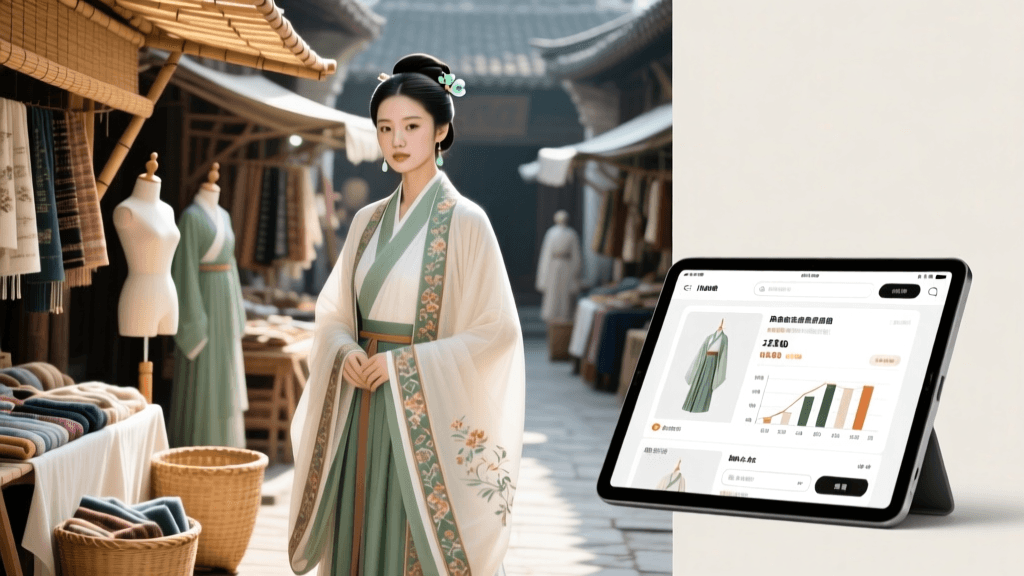
The global revival of Hanfu—the traditional clothing of the Han Chinese people—has transformed a niche historical interest into a multi-billion-dollar fashion industry. For decades, sourcing authentic traditional Chinese garments required navigating bustling physical textile markets, negotiating with local tailors, and relying on specialized brick-and-mortar boutiques in cities like Beijing, Suzhou, and Chengdu. Today, the landscape has radically shifted. The digital era has democratized access to historical fashion, moving the epicenter of Hanfu retail from physical silk markets to sophisticated e-commerce platforms.
The Evolution of Hanfu Retail: From Silk Street to Digital Storefronts
Historically, acquiring high-quality traditional garments meant visiting renowned physical hubs. Beijing’s Silk Street Market and the sprawling textile districts of Suzhou and Hangzhou were the primary destinations for sourcing raw materials like silk, linen, and brocade. Buyers would purchase fabric by the meter and commission local tailors to construct garments based on historical patterns. While this method allowed for bespoke customization, it was incredibly time-consuming, geographically limited, and often prohibitively expensive for international enthusiasts.
The turning point arrived with the maturation of Chinese e-commerce giants like Taobao and Tmall, coupled with the rise of social media platforms such as Xiaohongshu (Little Red Book) and Douyin. According to extensive cultural reporting by the South China Morning Post, the Hanfu market has experienced exponential growth, driven largely by Gen Z consumers who blend historical appreciation with modern digital consumption. Today, specialized Hanfu brands operate massive digital storefronts, utilizing live-streaming, 3D garment modeling, and intricate video demonstrations to sell everything from everyday Song Dynasty minimalism to opulent Ming Dynasty court wear.
Physical Markets vs. E-Commerce: A Buyer’s Comparison
Understanding the pros and cons of physical markets versus digital platforms is crucial for modern collectors and enthusiasts. Below is a structured comparison to help you decide where to source your garments.
| Feature | Physical Markets (e.g., Suzhou, Beijing) | E-Commerce (Taobao, Tmall, Independent Sites) |
|---|---|---|
| Price Range | High (Bespoke tailoring and premium raw silk) | Wide (100 RMB entry-level to 5000+ RMB haute couture) |
| Customization | Complete control over fabric, trim, and exact fit | Limited to brand offerings; some offer custom sizing tiers |
| Wait Times | 1 to 4 weeks for local tailoring | Immediate for stock; 30-90 days for pre-sale (Yushou) items |
| Authenticity | Requires deep textile knowledge to avoid synthetic blends | Community-vetted brands; risk of 'Shan' (counterfeits) if unverified |
| Return Policy | Rarely accepted for custom-tailored pieces | Standard 7-day returns for ready-to-ship stock items |
Navigating Hanfu E-Commerce: Platforms, Brands, and Keywords
Taobao remains the undisputed king of Hanfu retail. However, navigating the platform requires specific Mandarin search terms, as English queries often yield inaccurate or low-quality costume results. When building your digital wardrobe, use these foundational keywords:
- 汉服 (Hanfu): The general umbrella term.
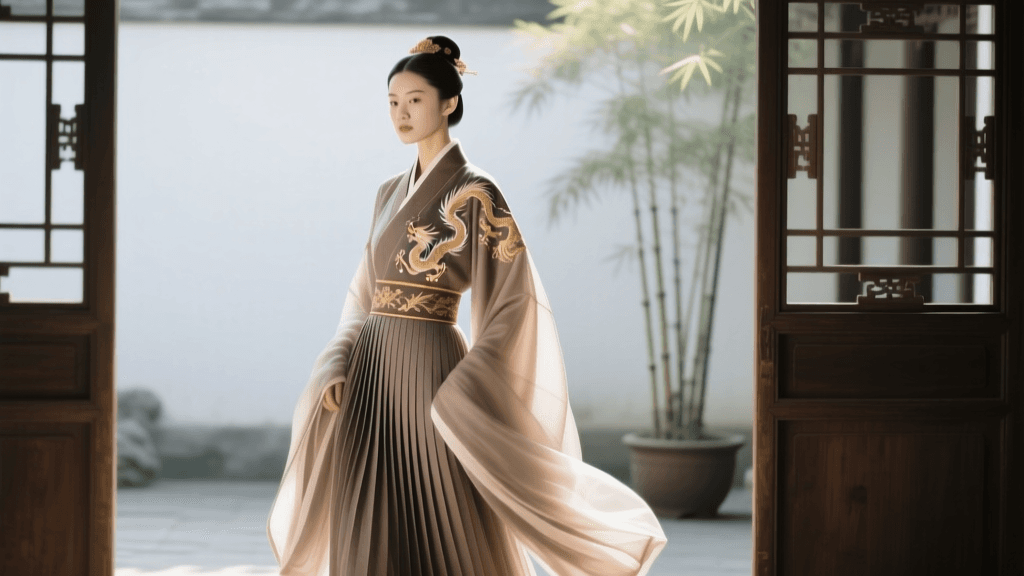
- 明制 (Ming Zhi): Ming Dynasty style, characterized by structured jackets, standing collars, and the iconic Mamianqun.
- 宋制 (Song Zhi): Song Dynasty style, known for slender silhouettes, Beizi (long coats), and everyday elegance.
- 马面裙 (Mamianqun): The 'horse-face' skirt, featuring flat front and back panels with pleated sides.
- 香云纱 (Xiangyunsha): Gambiered Canton gauze, a highly prized, mud-dyed silk recognized for its luxurious texture and historical significance.
For authentic, high-quality garments, buyers should look toward established digital brands. Shisanyu (Thirteen Yu) is renowned for accessible, historically inspired everyday wear. Zhongling offers exquisite mid-tier options with accurate historical patterning. For museum-grade investments, Minghuatang operates at the haute couture level, utilizing traditional weaving techniques and genuine gold-wrapped threads.
Practical Sizing and Measurement Guide for Online Orders
Unlike Western sizing, which relies on generalized S/M/L charts, traditional Chinese garments are deeply rooted in precise flat-pattern cutting. Because Hanfu garments are typically wrap-style or feature generous draping, the fit relies heavily on specific structural anchor points. When ordering online, you must provide measurements in centimeters (cm).
Essential Measurements for Hanfu
- Bust (胸围 - Xiongwei): Measure around the fullest part of your chest. For structured Ming Dynasty jackets (Ao), add 4-6 cm for ease and layering.
- Waist (腰围 - Yaowei): Measure at your natural waistline. This is critical for the placement of the skirt tie.
- Hips (臀围 - Tunwei): Measure around the fullest part of your hips. Essential for ensuring the flat panels of a Mamianqun sit correctly without pulling the pleats open.
- Arm Span / Sleeve Length (通袖长 - Tongxiuchang): Measure from the tip of one middle finger, across the back of the neck, to the tip of the other middle finger. Traditional sleeves (like the Pipa sleeve) are cut based on this full span, not just the shoulder-to-wrist measurement.
- Skirt Length (裙长 - Qunchang): Measure from your natural waist down to your desired hemline, usually 3-5 cm above the ground to account for traditional embroidered shoes.
Pro Tip: Always check the garment's 'Yushou' (pre-sale) status. Many top-tier Hanfu brands operate on a crowdfunding or pre-order model to minimize textile waste. If an item is marked as '预售' (pre-sale), expect a manufacturing wait time of 45 to 90 days before the item ships.
Cost Breakdown: What to Expect When Buying Hanfu Online
The pricing of Hanfu on e-commerce platforms is heavily dictated by the complexity of the weave, the historical accuracy of the pattern, and the rarity of the fabric. The China National Silk Museum frequently highlights the immense labor required for traditional textile production, such as Yunjin (cloud brocade) or Zhuanghua weaving, which justifies the higher price points of premium garments.
Tiered Pricing Guide (in RMB)
- Entry-Level (100 - 300 RMB / $15 - $45 USD): Ideal for beginners and daily wear. Fabrics are usually polyester blends or basic cotton-linen. Patterns are often printed rather than woven. Brands like Shisanyu dominate this space.
- Mid-Tier (300 - 800 RMB / $45 - $115 USD): Features accurate historical cuts, jacquard woven patterns, and better draping fabrics like viscose, rayon, and lightweight silk blends. Excellent for festivals and formal photography.
- Premium / Haute Couture (1,000 - 5,000+ RMB / $140 - $700+ USD): Reserved for purists and collectors. Utilizes pure mulberry silk, genuine Xiangyunsha, and hand-woven brocades. Brands like Minghuatang and Tingyue Ji operate here, often requiring a deposit followed by a final payment upon completion.
Preserving Heritage: The Role of Intangible Cultural Crafts
The e-commerce boom has inadvertently become a lifeline for endangered traditional crafts. As digital demand for historically accurate garments surges, rural artisans and master weavers are finding new economic viability. The intricate processes of silk production, dyeing, and weaving are deeply embedded in Chinese history. In fact, the traditional practices of sericulture and silk craftsmanship were officially inscribed on the Representative List of the Intangible Cultural Heritage of Humanity by UNESCO. By purchasing from verified heritage brands online, global consumers directly fund the continuation of these ancient artisanal techniques, ensuring that the looms of Suzhou and Hangzhou continue to weave history into the modern era.
Avoiding 'Shan': A Guide to Authenticity in the Digital Space
As the market has grown, so has the proliferation of 'Shan' (counterfeit or stolen-design garments). In the Hanfu community, 'Zheng' refers to original, authentic designs created by legitimate brands, while 'Shan' refers to factories that steal digital patterns and mass-produce them using inferior, historically inaccurate cuts and cheap synthetic fabrics.
To ensure you are buying 'Zheng':
- Check the Store Name: Authentic brands usually have 'Enterprise' or 'Flagship' (旗舰店) badges on Tmall/Taobao.
- Look for Design Patents: Legitimate brands often display their textile design patents and historical research citations in the product description.
- Beware of 'Stock' Images: If a store is selling a highly complex, woven Ming Dynasty Ao for 80 RMB and claiming it is 'ready to ship,' it is almost certainly a stolen digital print on cheap polyester, not a genuine woven brocade.
The transition from the tactile, haggling-filled aisles of physical silk markets to the algorithmic, data-driven storefronts of e-commerce represents a monumental shift in how traditional Asian garments are consumed. By understanding the digital terminology, mastering the unique measurement requirements, and respecting the heritage of the textiles, modern buyers can curate a historically resonant and beautifully crafted Hanfu wardrobe from anywhere in the world.