Chinese Couture: Heritage Textiles on the Global Runway
The Shift from Pastiche to Provenance in Haute Couture
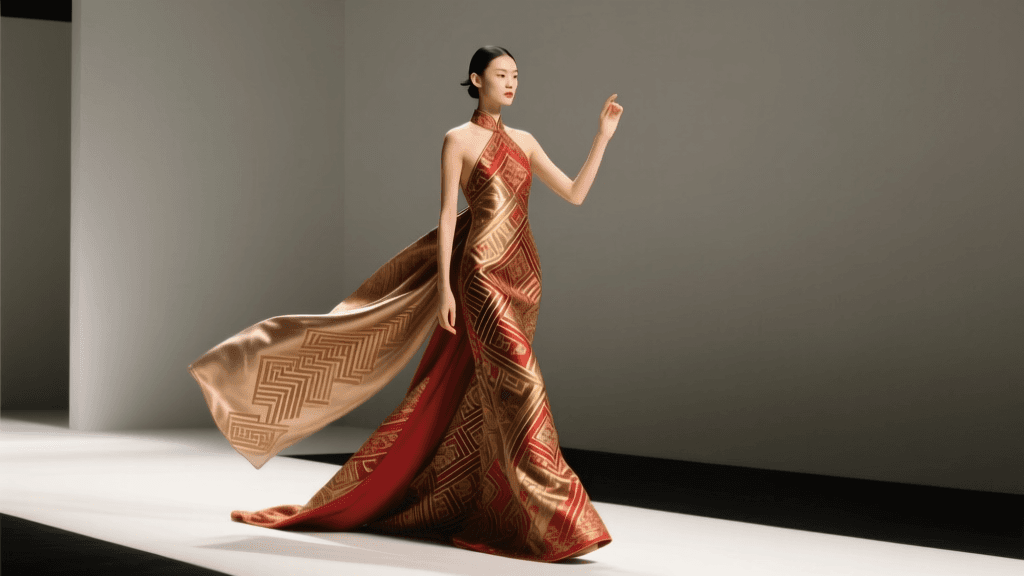
For decades, the integration of Chinese aesthetics into Western haute couture was largely defined by surface-level pastiche: dragon motifs, mandarin collars, and cheongsam-inspired silhouettes. However, a profound paradigm shift has occurred on the global runway over the last decade. Today's leading international fashion houses and independent couturiers are moving beyond mere visual appropriation, diving deep into the structural and material heritage of Chinese textiles. This evolution from motif-driven design to textile-driven couture represents a sophisticated appreciation of Asian traditions, elevating ancient craftsmanship to the pinnacle of modern luxury fashion.
The catalyst for this material renaissance can be traced to a growing demand for sustainability, artisanal authenticity, and narrative-rich garments. As highlighted by the Metropolitan Museum of Art's historical archives on Chinese silk, the technical complexity of traditional Chinese sericulture and weaving has set the global standard for luxury textiles for millennia. Modern couturiers are now leveraging these heritage techniques—such as mud-dyeing, complex jacquard weaving, and micro-split embroidery—to create runway pieces that possess unparalleled drape, texture, and structural integrity.
The Holy Trinity of Runway-Ready Chinese Textiles
To successfully integrate Chinese heritage into a couture collection, designers must understand the unique physical properties of the fabrics. Three textiles currently dominate the high-fashion sourcing market due to their distinct behaviors on the cutting table and under the runway lights.
1. Xiangyunsha (Gambiered Canton Gauze)
Often referred to as 'soft gold,' Xiangyunsha is a highly specialized silk originating from the Pearl River Delta in Guangdong province. Its creation is a masterclass in natural chemistry. Raw silk gauze is repeatedly dipped in the tannin-rich juice of the Dioscorea cirrhosa (a type of yam) and sun-dried up to 30 times. Finally, it is coated with iron-rich river mud, triggering a chemical reaction that turns the fabric a deep, lustrous black on one side and a warm terracotta on the other.
Runway Application: Xiangyunsha possesses a crisp, almost leathery hand-feel and a distinctive 'crackling' sound when moved. It is highly favored by avant-garde couturiers for sculptural, architectural silhouettes that require the fabric to hold its shape without excessive synthetic interfacing. Furthermore, its natural tannin coating makes it inherently water-resistant and antibacterial, a rare functional benefit in haute couture.
2. Song Brocade (Songjin)
Originating in the Song Dynasty (960–1279 AD), Song brocade was historically reserved for mounting imperial scroll paintings and binding rare books due to its flat, matte finish and intricate geometric weaves. Unlike the highly reflective and flamboyant Yun brocade of Nanjing, Song brocade features a subdued elegance with complex, multi-layered jacquard patterns that only reveal themselves upon close inspection.
Runway Application: Because it lacks the high sheen of standard silks, Song brocade is the premier choice for tailored couture suits, structured bodices, and evening coats. Its tight warp-and-weft structure provides immense stability, allowing designers to execute sharp, precise tailoring and corsetry without the fabric buckling or warping under tension.
3. Su Embroidery (Suzhou Silk Stitching)
Su embroidery represents the zenith of needlecraft. Master artisans in Suzhou are capable of splitting a single silk thread into 32 or even 64 microscopic strands. The hallmark of this tradition is 'double-sided embroidery' (shuangmian xiu), where the stitching is so flawless that the pattern appears identical and completely knot-free on both the obverse and reverse sides of the sheer silk organza base.
Runway Application: Couture houses utilize Su embroidery for ethereal, translucent evening gowns. Because the reverse side is completely clean, designers can leave the interior of the garment unlined, allowing the wearer's skin to interact directly with the silk while showcasing the embroidery from both the inside and outside of the garment.
Couture Textile Comparison Chart
| Textile | Origin Region | Weight & Texture | Ideal Couture Application | Approx. Cost (USD/m) |
|---|---|---|---|---|
| Xiangyunsha | Foshan, Guangdong | 19-25 momme; Crisp, leathery, dual-toned | Sculptural outerwear, architectural draping | $120 - $250 |
| Song Brocade | Suzhou, Jiangsu | Heavyweight; Matte, structured, intricate | Tailored suits, corsetry, structured bodices | $80 - $180 |
| Su Embroidery | Suzhou, Jiangsu | Variable (base is sheer organza); Delicate | Unlined evening gowns, sheer overlays panels | $500 - $3,000+ |
Actionable Sourcing Guide for Designers and Stylists
Acquiring authentic, runway-grade heritage textiles requires navigating a highly localized supply chain. International designers cannot simply order these fabrics from standard wholesale portals; they must engage directly with regional hubs and understand the seasonal constraints of traditional production.
Navigating Sourcing Hubs and Seasonal Timing
- For Xiangyunsha (Foshan, Guangdong): Production is entirely dependent on intense, direct sunlight to cure the tannin dyes. Therefore, workshops only operate at full capacity between May and October. Designers must place their yardage orders by early spring to secure allocation for the Autumn/Winter couture shows. Attempting to source Xiangyunsha in winter will result in severe delays or inferior, artificially cured stock.
- For Song Brocade and Su Embroidery (Suzhou & Shengze, Jiangsu): Shengze is one of the world's largest silk weaving hubs. However, true heritage Song brocade is woven on specialized, slower jacquard looms managed by heritage workshops, not mass-market factories. Designers should attend the Intertextile Shanghai Apparel Fabrics trade show to establish direct relationships with these boutique mills.
Verifying Authenticity and Heritage Status
The commercialization of Chinese silk has led to a flood of synthetic imitations. To ensure your couture house is purchasing genuine heritage textiles, look for the Geographical Indication (GI) certification tags issued by the Chinese government. Furthermore, the traditional methods of creating these fabrics are globally protected. As noted by the UNESCO Intangible Cultural Heritage registry, the sericulture and silk craftsmanship of China are recognized as vital human heritage, meaning authentic workshops often carry UNESCO or provincial heritage workshop plaques. Requesting documentation of the dyeing process (such as the specific river mud source for Xiangyunsha) is a standard and respected practice in high-level B2B negotiations.
Technical Construction and Pattern Making
Working with heritage Chinese textiles requires adapting standard couture construction techniques. These fabrics behave differently than European silks and wools, demanding specialized handling in the atelier.
Needle Selection and Seam Finishes
When cutting and sewing Xiangyunsha, standard universal needles will snag the tannin-coated surface, leaving permanent marks. Ateliers must use Microtex or Sharp needles (size 60/8 or 70/10) to pierce the crisp fibers cleanly. Because the fabric frays minimally but can crack along fold lines if pressed too aggressively, traditional French seams are often too bulky. Instead, master tailors use Hong Kong seams (binding the raw edges with ultra-thin silk habotai bias tape) to provide a clean, flexible interior finish that respects the fabric's sculptural drape.
Underlining and Structural Support
While Song brocade is inherently structured, its metallic or matte threads can be abrasive against the skin. Couturiers must underline the entire garment with silk organza or silk charmeuse using a technique called 'mounting,' where the two fabrics are hand-basted together and treated as a single layer before cutting. This preserves the brocade's structural integrity while ensuring the luxurious comfort expected on the international runway.
'True luxury in modern couture is no longer just about the silhouette; it is about the provenance of the thread. When we drape Xiangyunsha, we are draping the sun, the river mud, and centuries of Cantonese chemistry.'
— Atelier Director, Paris-based Haute Couture House
The Future of Sino-Western Sartorial Exchange
The integration of Chinese heritage textiles into international couture is not a fleeting trend; it is a permanent expansion of the global luxury lexicon. As fashion houses face increasing pressure to demonstrate cultural respect and artisanal support, partnering with heritage workshops in Suzhou and Guangdong offers a pathway to genuine sartorial innovation. By mastering the sourcing logistics, respecting the seasonal rhythms of traditional dyeing, and adapting atelier techniques to accommodate these unique materials, designers can create runway collections that are not only visually breathtaking but deeply rooted in the rich tapestry of Asian traditions.
For designers and historians looking to further explore the intersection of Eastern craftsmanship and global fashion, the Victoria and Albert Museum's Asian collections provide an invaluable digital and physical archive, offering endless inspiration for the next generation of cross-cultural couture.