Ukrainian Vyshyvanka Styling 2026: Modern Capsule Wardrobe
The 2026 Vyshyvanka Renaissance: Beyond the Festival
The Ukrainian vyshyvanka—the traditional embroidered shirt—has completed a remarkable evolution. Once reserved strictly for national holidays or village celebrations, this iconic garment has firmly established itself as a cornerstone of the 2026 global slow-fashion movement. Today, the vyshyvanka is no longer viewed merely as a costume or a relic of the past; it is a dynamic, living textile that bridges ancient semiotics with contemporary urban aesthetics. As consumers in 2026 increasingly reject mass-produced fast fashion in favor of heritage garments with transparent supply chains, the demand for authentic, hand-embroidered Eastern European folk dress has reached unprecedented heights.
Integrating a vyshyvanka into a modern capsule wardrobe requires a nuanced understanding of silhouette, proportion, and cultural context. The goal is to honor the garment's protective and symbolic roots while styling it for the boardroom, the art gallery, or a weekend in the city. According to cultural preservation initiatives tracked by Folk Ukraine, the contemporary revival is driven by a new generation of artisans who are adapting historical regional patterns to modern, minimalist cuts, making the embroidery more accessible for daily wear without diluting its profound cultural meaning.
Sourcing Authentic Artisanal Pieces in 2026
The market is currently flooded with machine-embroidered replicas that appropriate traditional motifs without supporting the communities that created them. Building an ethical 2026 capsule wardrobe means investing in authentic, hand-stitched pieces. True artisanal vyshyvankas are crafted on hand-woven linen, often sourced from the Rivne or Volyn regions, and dyed using natural botanicals like madder root for deep reds and woad for rich blues.
Cost Breakdown: Fast Fashion vs. Artisanal Heritage
When budgeting for your folk dress capsule, it is crucial to understand the labor economics behind the embroidery. A single authentic shirt can require between 40 and 120 hours of meticulous cross-stitch or satin-stitch work.
- Mass-Produced Replicas ($30 - $60): Machine-embroidered on synthetic blends. These lack the structural integrity of linen and often feature culturally inaccurate or randomized motifs. Avoid these for a genuine heritage capsule.
- Semi-Artisanal / Studio Pieces ($120 - $250): Hand-embroidered on commercially woven linen. These are excellent entry-level pieces for everyday wear, often featuring simplified geometric patterns that take 20-30 hours to complete.
- Master Artisanal / Heirloom ($300 - $800+): Hand-woven linen, natural dyes, and complex regional techniques like the zavolikannya (weaving technique) or lyshva (cutwork). These are investment pieces meant to last generations.
To source authentic pieces, look for verified artisanal collectives and direct-to-consumer platforms that transparently list the region of origin and the name of the embroiderer. The Ukrainian Institute frequently highlights contemporary designers and heritage brands that successfully translate ancient semiotics into modern, ethically produced silhouettes, providing an excellent starting point for conscious consumers.
Contemporary Styling Rules for the Modern Wardrobe
Wearing a vyshyvanka in a modern urban environment requires balancing the volume and visual weight of the embroidery with contemporary tailoring. Here are the essential styling rules for 2026.
Rule 1: Contrast the Silhouette
Traditional vyshyvankas are inherently voluminous, featuring gathered necklines, puff sleeves, and loose, flowing bodices designed for ease of movement and modesty. To prevent the outfit from looking costumey, you must anchor this volume with structured, tailored bottoms. Pair a billowing white linen vyshyvanka with high-waisted, wide-leg wool trousers in charcoal or navy. The sharp, architectural lines of the trousers will ground the romantic volume of the shirt, creating a sophisticated, high-fashion silhouette suitable for a modern office or gallery opening.
Rule 2: Monochromatic Anchoring
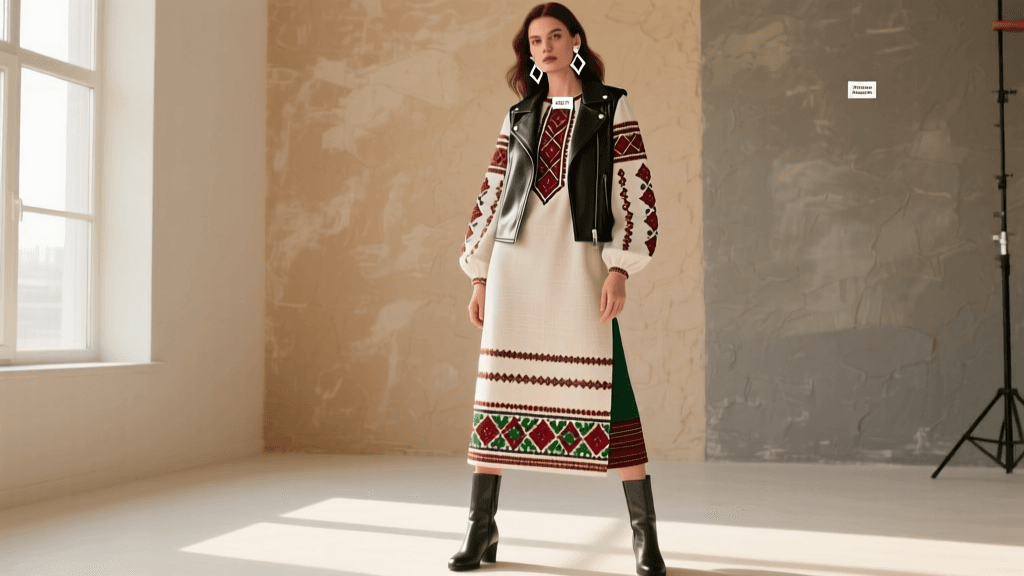
The embroidery on a vyshyvanka is the focal point of the garment. Let it shine by anchoring the rest of your outfit in a monochromatic palette. If you are wearing a shirt with vibrant Hutsul geometric patterns in orange, black, and green, pair it with raw, dark-wash selvedge denim and a structured black leather jacket. For the elegant white-on-white embroidery of the Poltava region, pair the shirt with a monochromatic cream or oatmeal-colored linen suit. This approach allows the texture of the thread to become the primary visual interest.
Rule 3: Transitional Layering
In 2026, layering is key to extending the wearability of folk garments across multiple seasons. During the colder months, wear a lightweight, fine-gauge merino turtleneck underneath your vyshyvanka, allowing the embroidered cuffs and chest panel to peek through. Alternatively, treat the vyshyvanka as a statement blouse beneath an oversized, sharply tailored blazer. The contrast between the rigid, modern lapels of the blazer and the delicate, historical needlework of the shirt creates a compelling visual tension.
Regional Motifs and Modern Pairings
Ukraine's diverse regions boast distinct embroidery styles, each carrying specific historical meanings. Understanding these motifs allows you to choose a garment that resonates with your personal aesthetic and values.
| Region | Traditional Motif & Color | Historical Meaning | Contemporary 2026 Styling Pairing |
|---|---|---|---|
| Poltava | White-on-white, intricate cutwork and satin stitch. | Purity, spiritual light, and connection to the divine. | Tailored charcoal wool trousers, minimalist leather loafers, and a structured trench coat. |
| Hutsulshchyna | Dense geometric patterns; vibrant orange, black, and green. | Protection from evil, mountain energy, and vitality. | Raw selvedge denim, chunky knit cardigans, and heavy leather Chelsea boots. |
| Bukovyna | Floral motifs, metallic threads, and subtle beadwork. | Prosperity, celebration, and the beauty of nature. | Sleek midi skirts, structured evening blazers, and minimalist gold jewelry. |
| Volyn | Strict geometric shapes; deep red and black on white. | Ancestral wisdom, earth, and life force. | High-waisted pleated trousers, minimalist ankle boots, and a sleek leather belt. |
Accessorizing and Footwear
When accessorizing a vyshyvanka for contemporary wear, the golden rule is restraint. Historically, these shirts were worn with heavy coral bead necklaces, coin necklaces (duka), and elaborate floral wreaths. While these are stunning and appropriate for Vyshyvanka Day or cultural festivals, they can overwhelm a modern everyday outfit. Instead, opt for delicate, minimalist gold or silver jewelry. A single, sculptural metal cuff or a pair of understated hoop earrings complements the intricate needlework without competing with it.
Footwear should firmly plant the outfit in the present day. Avoid traditional folk footwear like postoly (woven leather shoes) for urban styling. Instead, lean into modern, architectural footwear: chunky loafers, pointed-toe ankle boots, or sleek, minimalist sneakers. The juxtaposition of ancient textile craftsmanship with modern industrial footwear design is a hallmark of the 2026 folk-revival aesthetic.
Caring for Hand-Embroidered Linen
Authentic hand-embroidered linen requires specific care to preserve both the fabric and the integrity of the threads, especially if natural dyes were used.
- Washing: Never machine wash a hand-embroidered vyshyvanka. Hand wash in cool water (below 30°C) using a mild, pH-neutral detergent specifically designed for delicates. Do not soak for extended periods, as natural dyes may bleed slightly.
- Drying: Never wring or twist the linen, as this will distort the embroidery and break the fibers. Gently press the water out by rolling the garment in a clean, dry towel. Lay flat to dry away from direct sunlight to prevent the linen from becoming brittle.
- Ironing: Linen wrinkles naturally, but for a crisp, modern look, iron the garment while it is still slightly damp. Always iron on the reverse side (inside out) using a medium-to-high steam setting. Place a clean cotton cloth between the iron and the embroidery to prevent crushing the three-dimensional texture of the stitches.
Conclusion
The integration of the Ukrainian vyshyvanka into a 2026 capsule wardrobe is a powerful statement of sartorial intentionality. By sourcing ethically, understanding regional semiotics, and applying modern styling principles, you transform a historical artifact into a vibrant, everyday garment. This approach not only elevates your personal style but actively participates in the preservation and global celebration of European folk dress, proving that true heritage is not kept behind glass—it is worn, lived in, and carried forward.