Strój Krakowski Guide: 2026 Polish Folk Dance Festivals
The Strój Krakowski: A Living Textile Tradition
The Strój Krakowski, or Kraków regional costume, stands as one of the most recognizable and celebrated traditional garments in Poland. As we navigate the vibrant festival season of 2026, this iconic attire remains the cornerstone of Polish folk dance ensembles and summer cultural celebrations. From the energetic stomps of the Krakowiak dance to the ethereal midsummer Wianki festivals, the Strój Krakowski is not merely a museum relic; it is a living, breathing textile tradition that demands precision, respect, and an understanding of its intricate anatomy. In this comprehensive 2026 guide, we explore the construction, dance mechanics, and modern sourcing of the Kraków folk costume, ensuring you are fully prepared for this year’s European folk dance festivals.
The Anatomy of the Female Strój Krakowski
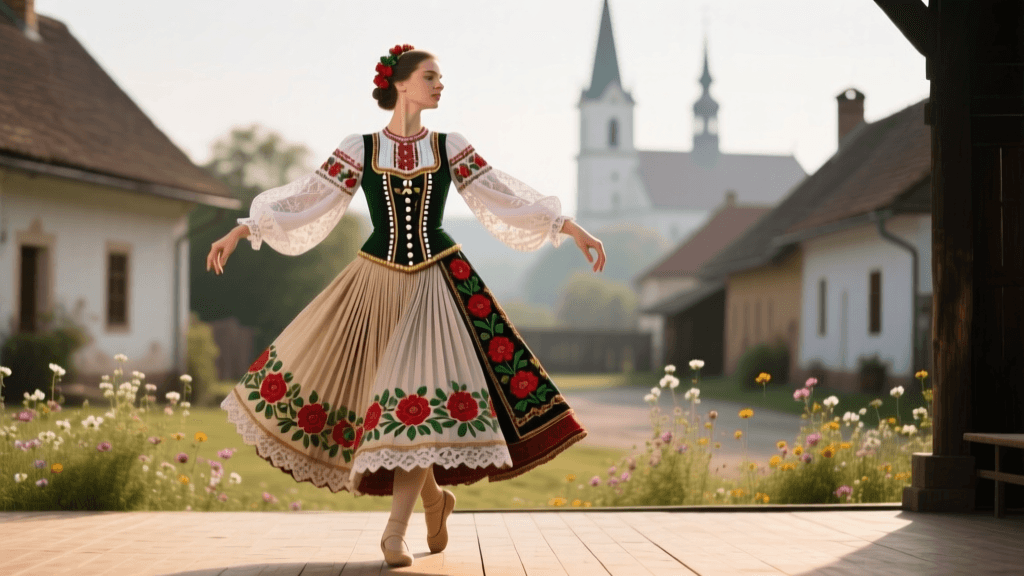
The female Kraków costume is a masterclass in layered textiles, vibrant colors, and meticulous embroidery. For folk dancers performing in 2026, authenticity in movement relies heavily on the correct weight and drape of these garments.
The Gorset (Corset)
The focal point of the female attire is the gorset, a deeply structured corset typically crafted from rich velvet, brocade, or high-quality wool. In 2026, master tailors in the Małopolska region are increasingly utilizing sustainably sourced silk threads and ethically produced glass sequins to recreate the historical floral motifs. The corset is heavily embroidered with roses, forget-me-nots, and geometric patterns, often featuring a distinctive peplum flare at the hips that accentuates the dancer's movements during rapid twirls.
The Spódnica (Skirt) and Zapaska (Apron)
Beneath the corset lies the spódnica, a full, heavily pleated skirt made from tybet (a lightweight wool blend) or floral cotton. The skirt must be voluminous enough to create a perfect bell shape when the dancer spins. Over the skirt, dancers wear a zapaska, an apron made of white cotton or delicate tulle, featuring intricate whitework embroidery. The contrast between the dark, rich skirt and the pristine white apron is visually striking under festival stage lights.
Accessories: Wianek and Koraliki
No female Kraków costume is complete without the wianek (flower wreath) and koraliki (coral beads). Unmarried women and female dancers wear elaborate wreaths woven from artificial and fresh flowers, adorned with long, trailing ribbons that catch the wind during outdoor performances. The neck is layered with multiple strands of genuine red coral beads, a historical status symbol that adds a subtle, rhythmic clicking sound during the dance.
The Anatomy of the Male Strój Krakowski
The male counterpart is equally striking, designed to project strength, agility, and regional pride. It is specifically engineered to withstand the rigorous physical demands of traditional Polish folk dance.
The Sukmana and Kaftan
The most iconic outer garment is the sukmana, a long, flared woolen coat. For dance ensembles, the sukmana is often tailored with a slightly higher hemline in the front to allow for deep squats and high kicks. It is heavily decorated with red and black embroidery, appliqué, and tassels. Beneath the sukmana, men wear a kaftan, a shorter, sleeveless or short-sleeved tunic that provides core warmth without restricting arm movements.
Spodnie, Buty, and Kapeluś
Male dancers wear white linen trousers (spodnie) tucked into tall, black leather boots (buty). The boots feature thick, stacked wooden heels that are essential for the percussive stomping characteristic of the Krakowiak dance. The ensemble is topped with a kapeluś krakuska, a felt hat adorned with a magnificent peacock feather and a band of red coral and sequins. The hat must be secured tightly, as the vigorous head movements of the dance can easily dislodge it.
Folk Dance Dynamics: The Krakowiak and Oberek
Understanding the Strój Krakowski requires observing it in motion. The costume is intrinsically linked to the choreography of regional dances, particularly the Krakowiak and the Oberek.
According to the official Polish cultural heritage archives, the Krakowiak is a fast-paced, syncopated dance in 2/4 time. The heavy pleats of the female spódnica and the trailing ribbons of the wianek serve to amplify the visual impact of the sudden stops, leaps, and directional changes. For the male dancer, the heavy wool of the sukmana swings dramatically during the characteristic heel-clicking jumps, while the stiff leather boots provide the necessary acoustic feedback against wooden stage floors.
The Oberek, a rapid spinning dance, tests the structural integrity of the female gorset and the volume of the skirt. A properly constructed 2026 dance-grade skirt will flare out into a perfect horizontal disc, a visual hallmark of elite Polish folk ensembles like the renowned Mazowsze or Śląsk troupes. The Seweryn Udziela Ethnographic Museum in Kraków frequently hosts exhibitions detailing how historical tailoring techniques directly influenced the evolution of these dynamic dance movements.
2026 Sourcing Guide and Pricing Table
Acquiring an authentic Strój Krakowski in 2026 requires navigating a market that balances historical accuracy with the durability needed for festival wear. Whether you are outfitting a university folk dance ensemble or seeking a premium garment for the Wianki festival, understanding current pricing and sourcing channels is crucial.
| Garment Component | Authentic Handmade (Artisan) | Ensemble-Grade (Dance Troupe) | 2026 Sourcing Recommendation |
|---|---|---|---|
| Female Gorset (Corset) | €450 - €800 | €200 - €350 | Commission from Małopolska tailors for artisan; Folkstar for ensemble. |
| Female Spódnica (Skirt) | €250 - €400 | €120 - €180 | Ensure tybet fabric is used for proper drape and weight. |
| Male Sukmana (Coat) | €600 - €1,200 | €300 - €500 | Heavy wool required; check hemline for dance clearance. |
| Leather Dance Boots | €350 - €500 | €180 - €250 | Must have stacked wooden heel and reinforced toe box. |
| Red Coral Beads (Koraliki) | €150 - €300 | €40 - €80 (Resin) | Genuine coral for artisan; high-quality resin for active dance. |
For dance troupes prioritizing durability and budget in 2026, ensemble-grade costumes sourced from specialized Polish theatrical tailors offer the best balance. However, for cultural preservationists and festival attendees seeking heirloom quality, commissioning directly from regional artisans in villages like Bronowice or Zielonki remains the gold standard.
Wianki 2026: Festival Etiquette and Cultural Appreciation
The Wianki festival, celebrating the midsummer solstice, is a cornerstone of Kraków’s cultural calendar. In 2026, the banks of the Vistula River will once again be filled with music, folk dancing, and the floating of floral wreaths. When wearing the Strój Krakowski to such events, cultural respect is paramount.
First, ensure the garment is worn correctly. The female apron should always be tied at the back or side, never obscuring the front embroidery of the skirt. The male hat should be removed when entering indoor venues or during the national anthem. Second, understand the regional variations; the Kraków costume is specific to the Małopolska region. Wearing it as a generic 'Polish' costume without acknowledging its specific regional roots diminishes its cultural significance.
By investing in properly constructed garments and understanding the deep historical context of the Strój Krakowski, participants and dancers in 2026 can help preserve this magnificent European folk tradition for generations to come.