How to Start and Run a Profitable Kimono Rental Shop
The Intersection of Heritage and Hospitality
Starting a kimono rental business in Japan is more than just a commercial venture; it is an opportunity to serve as a cultural ambassador. As global interest in traditional Japanese garments continues to surge, the kimono rental industry has evolved into a highly lucrative sector within the broader tourism economy. For entrepreneurs and cultural enthusiasts alike, opening a rental shop in historic districts like Kyoto, Tokyo, or Kamakura offers a unique blend of fashion curation, customer service, and heritage preservation. This comprehensive guide will walk you through the foundational, operational, and financial aspects of launching a successful kimono rental shop.
Understanding the Market and Tourism Trends
The viability of a kimono rental shop is intrinsically linked to inbound and domestic tourism. According to data published by the Japan National Tourism Organization (JNTO), the post-pandemic rebound in international visitors has been staggering, with millions of tourists flocking to Japan specifically for cultural immersion experiences. Wearing a kimono while visiting temples, shrines, and traditional gardens has become a staple itinerary item for travelers from North America, Europe, and neighboring Asian countries.
However, the market is competitive. To stand out, modern rental shops must offer more than just a garment; they must provide a seamless, high-quality "cultural experience" that includes professional dressing services, hair styling, and curated walking routes. Understanding the seasonal peaks—such as the cherry blossom season in spring and the autumn foliage season—is critical for inventory planning and staffing.
Legalities and Business Registration
Before sourcing your first obi, you must navigate the Japanese business registration process. Foreign entrepreneurs will need to secure the appropriate Business Manager Visa, which requires a minimum investment of 5,000,000 JPY (approximately $33,000 USD) or the hiring of at least one full-time resident employee. The Japan External Trade Organization (JETRO) provides extensive, up-to-date resources for foreign investors looking to establish a legal entity, such as a Kabushiki Kaisha (KK) or Godo Kaisha (GK), in Japan.
Additionally, you must register your business with the local tax office and secure commercial property leases that explicitly permit retail and service operations. Some historic districts in Kyoto have strict aesthetic guidelines regarding shop signage and exterior modifications, so consulting with local municipal offices is a mandatory early step.
Startup Costs and Financial Projections
The initial capital required to open a kimono rental shop can vary significantly based on location, shop size, and the quality of your inventory. Below is a detailed breakdown of estimated startup costs for a mid-sized shop in a prime tourist area like Kyoto's Higashiyama ward or Tokyo's Asakusa district.
| Expense Category | Estimated Cost (JPY) | Estimated Cost (USD) | Notes and Considerations |
|---|---|---|---|
| Commercial Lease (Deposit) | ¥1,500,000 | $10,000 | Typically requires 3-6 months of rent upfront as key money and deposit. |
| Initial Inventory (150 sets) | ¥2,500,000 | $16,800 | Mix of antique and modern komon, yukata, and formal furisode. |
| Shop Renovation & Fitting | ¥3,000,000 | $20,200 | Installing large mirrors, specialized lighting, privacy screens, and flooring. |
| Marketing & Website Launch | ¥600,000 | $4,000 | Multilingual SEO, booking system integration, and social media ad spend. |
| Licenses & Legal Fees | ¥400,000 | $2,700 | Judicial scrivener fees for company registration and visa processing. |
| Total Estimated Startup | ¥8,000,000 | $53,700 | Varies heavily by location, scale, and renovation needs. |
Sourcing Inventory and Managing Seasonality
Your inventory is the lifeblood of your business. A well-curated collection should cater to diverse tastes, body types, and seasonal requirements. Traditional Japanese clothing is strictly governed by the calendar, and your shop must reflect this.
Seasonal Fabric Rules
- Awase (Lined Kimono): Worn from October through May. These are your workhorses and should make up 60% of your core inventory.
- Hitoe (Unlined Kimono): Worn in June and September. Essential for the transitional weather.
- Usumono (Sheer/Summer Kimono) & Yukata: Worn from July to August. Breathable cotton yukata are highly popular, easy to maintain, and essential for summer festivals and fireworks viewing.
Where to Source
While you can purchase wholesale modern reproductions from textile manufacturers in Kyoto and Tango, antique kimono offer unique, one-of-a-kind patterns that tourists covet. Frequenting flea markets such as the Toji Kobo Market in Kyoto or the Oedo Antique Market in Tokyo allows you to handpick high-quality vintage silk garments. When buying antique, always inspect the collar and hem for irreparable stains, and check the silk for "shikko" (dry rot or tearing).
Shop Layout and the Dressing Experience (Kitsuke)
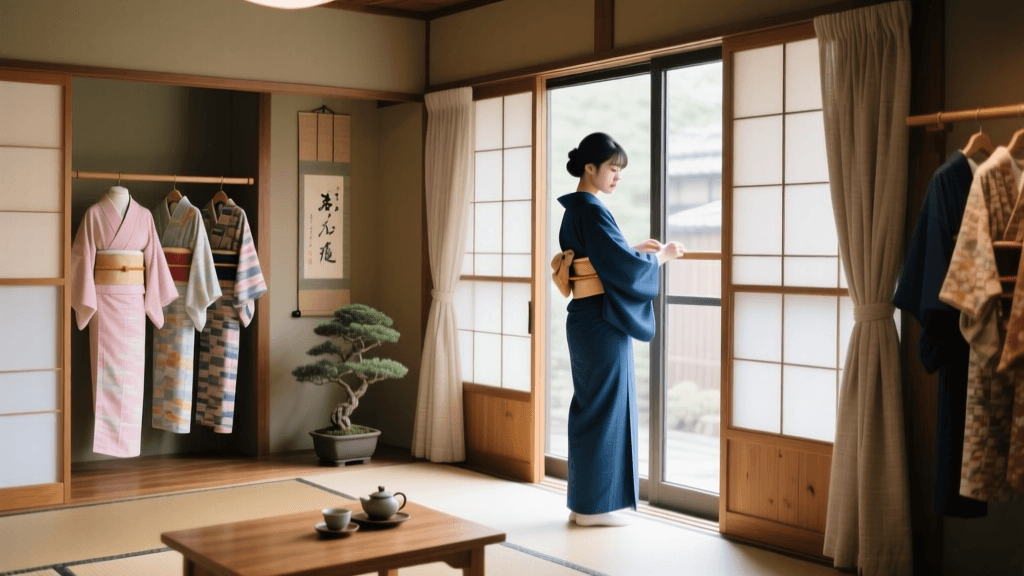
The physical layout of your shop must be optimized for the "kitsuke" (dressing) process. Dressing a customer in a full kimono ensemble takes between 30 to 45 minutes and requires specific spatial arrangements.
Spatial Requirements
Each dressing station should have a minimum clearance of 2 square meters. You will need full-length mirrors positioned at the front and side to allow customers to view their obi (sash) knot from behind. The flooring should be smooth wood or tatami, as dressers will be kneeling or bending frequently. Furthermore, adequate ventilation is crucial, as the physical exertion of dressing customers and the layered garments can make the room warm.
The Accessories Arsenal
A kimono is not just a single garment; it is a complex system of layers and ties. Your shop must be heavily stocked with the following undergarments and accessories:
- Susoyoke and Hadajuban: The base undergarments that protect the silk from skin oils.
- Nagajuban: The under-kimono that provides the collar structure.
- Koshihimo: Cotton cords used to tie and secure the garments at the waist.
- Datejime: Wider, padded belts that smooth out the silhouette before the main obi is tied.
- Obi-ita and Obijime: Stiffeners and decorative cords used to perfect the obi knot.
Staffing and Kitsuke Certification
The quality of your dressing service will dictate your customer reviews and return business. Employing certified "kitsuke-shi" (kimono dressers) is highly recommended. In Japan, institutions like the Soubien Kimono Academy or the All Japan Kimono Consultants Association offer rigorous certification programs ranging from Level 3 (basic) to Level 1 (master). A master dresser can tie dozens of complex, decorative obi knots that elevate the customer's experience and justify premium pricing.
"The art of kitsuke is not merely about wrapping fabric; it is about sculpting a silhouette that honors the wearer's posture and the garment's heritage. A skilled dresser transforms a tourist into a vision of traditional elegance."
Pricing Strategies and Upselling
To maximize revenue, successful rental shops employ tiered pricing models. A standard package typically includes a basic "komon" (everyday patterned kimono), basic obi, standard sandals (zori or geta), and a small drawstring bag.
Sample Pricing Tiers
- Standard Komon Package: ¥5,000 - ¥7,000. Ideal for casual temple hopping.
- Premium Vintage Silk Package: ¥9,000 - ¥12,000. Features hand-painted antique silk and a more complex obi knot.
- Furisode Package: ¥15,000 - ¥20,000. Long-sleeved formal wear, popular for winter and spring photography sessions.
- Add-ons: Professional hair styling (¥2,000), premium lace obi overlays (¥1,500), professional photoshoot with a staff photographer (¥10,000+).
Upselling these add-ons is where the highest profit margins are realized. Many tourists are willing to pay extra for a complete, worry-free aesthetic package.
Marketing to Inbound Tourists
Visibility is everything. The official Japan National Tourism Organization's travel portal frequently highlights cultural experiences, proving the institutional support for this sector. To capture this audience, your digital strategy must be robust.
First, your website must be fully optimized in English, Simplified Chinese, and Korean, featuring a seamless, mobile-friendly booking engine. Second, leverage visual social media platforms like Instagram and TikTok. Create short, engaging videos showing the "before and after" transformation of the kitsuke process. Finally, establish B2B partnerships with local boutique hotels, ryokan, and tour guides, offering them a 10-15% commission for every guest they refer to your shop.
Conclusion
Running a kimono rental shop is a demanding but deeply rewarding enterprise. It requires a meticulous eye for textile curation, a deep understanding of traditional dressing techniques, and sharp modern business acumen. By respecting the foundational rules of Japanese garment seasonality, investing in skilled staff, and executing a targeted digital marketing strategy, you can build a thriving business that bridges the gap between ancient Asian traditions and modern global tourism.