Heritage Kimono Textiles: Sourcing Trade Route Imports in 2026
The Global Canvas: Rethinking the Kimono in 2026
When discussing traditional Japanese garments, the narrative often centers on isolated, domestic craftsmanship. However, the kimono has always been a global canvas, deeply influenced by centuries of international trade, maritime routes, and overland caravans. In 2026, a renaissance in heritage textile appreciation has led collectors, fashion historians, and modern kimono enthusiasts to actively seek out garments and fabrics that reflect these historical imports. Understanding the origins of imported raw silks, foreign dye compounds, and overseas weaving techniques is no longer just an academic exercise; it is a vital skill for sourcing authentic and historically significant textiles in today's market.
This comprehensive guide explores the historical trade routes that shaped Japanese textile arts and provides actionable advice for identifying, sourcing, and investing in trade-route heritage kimono textiles in 2026.
The Silk Road and the Foundation of Nishijin-ori
Long before the Edo period's maritime trade, the overland Silk Road laid the groundwork for Japan's most prestigious weaving traditions. The UNESCO Silk Roads Programme highlights how the transmission of textile technologies from China and Central Asia profoundly impacted early Japanese garment production. During the Nara and Heian periods, imported raw silk, advanced draw-loom technologies, and metallic thread techniques arrived via the Korean peninsula and direct diplomatic missions to Tang Dynasty China.
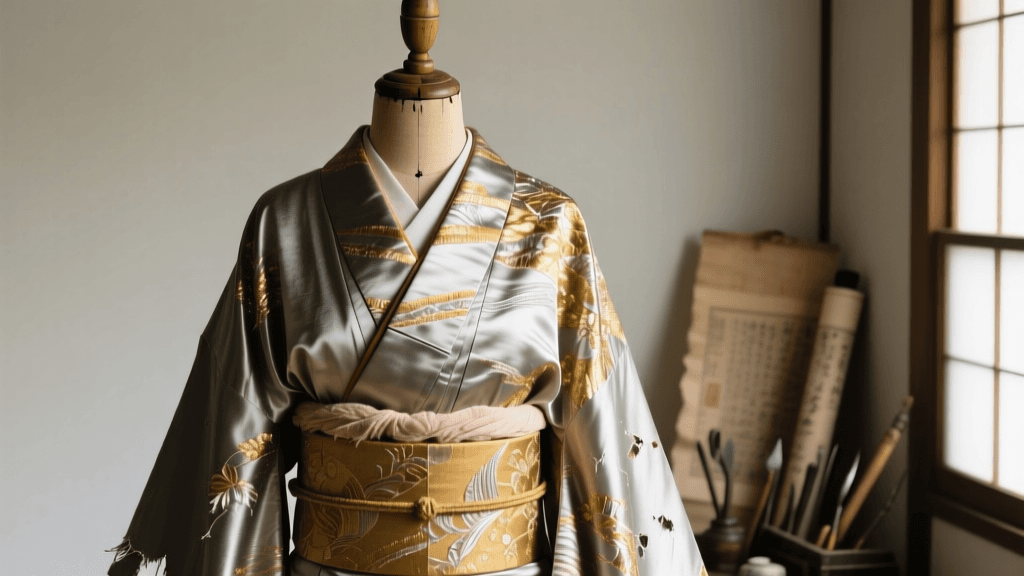
These historical imports culminated in the creation of Nishijin-ori, the luxurious brocade weaving tradition centered in Kyoto. Today, the Nishijin Textile Center continues to produce obi and kimono fabrics utilizing these ancient, imported loom structures. In 2026, a newly woven, authentic Nishijin-ori obi that utilizes traditional imported gold-leaf thread techniques and historical Chinese-inspired motifs (such as the karakusa arabesque) commands a premium, typically ranging from ¥450,000 to ¥1,200,000, reflecting both the scarcity of skilled artisans and the cost of heritage-grade silk.
The Nanban Trade: European and Indian Influences
The most dramatic influx of foreign textiles occurred during the 'Nanban' (Southern Barbarian) trade period of the 16th and 17th centuries. Portuguese and later Dutch traders introduced a wealth of foreign materials to Japan's shores. According to the Victoria and Albert Museum's Asian Collections, these imports included European woolens, velvets, and, most importantly, Indian chintz and calico.
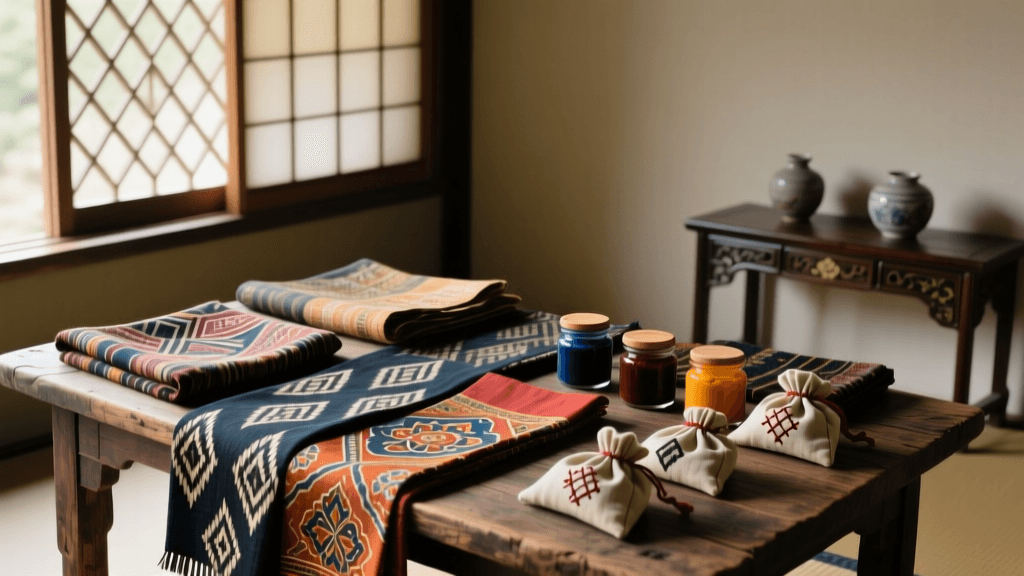
Indian chintz, known in Japan as sarasa, became highly prized. Because Japan's domestic cotton production was still in its infancy and its dyeing techniques for cotton were limited, the vibrant, colorfast floral and geometric patterns of imported sarasa were treated as precious commodities. Rather than being worn as everyday garments, these imported textiles were carefully cut and repurposed into high-status items: tea ceremony garments (shifuku), wrapping cloths (fukusa), and the collars of formal haori jackets. Sourcing authentic Edo-period sarasa remnants in 2026 requires a keen eye and access to specialized antique textile auctions in Kyoto and Tokyo.
2026 Market Guide: Sourcing Trade-Route Heritage Textiles
For collectors and practitioners looking to acquire textiles that embody these historical trade routes, the 2026 market offers several distinct avenues. Whether you are seeking vintage Edo-period imports or modern revival pieces crafted using historically imported methods, knowing where to look is essential.
- Nishijin District (Kyoto): For revival Nishijin-ori that honors Silk Road weaving imports, visit the established weaving houses along Imadegawa-dori. In 2026, many houses offer 'heritage weave' commissions, allowing buyers to select historical Tang-inspired patterns woven on traditional jacquard looms.
- Toji and Tenjin Antique Markets (Kyoto): Held monthly, these markets are prime hunting grounds for vintage sarasa patches, imported velvet haori collars, and early Meiji-era wool kimono (meisen precursors) that reflect the opening of global maritime trade.
- Specialized Online Auctions: Platforms specializing in Japanese antiques have seen a surge in 'Nanban trade' categorized lots in 2026. Look for seller authentication regarding the origin of cochineal dyes and Indian block-printing techniques.
Comparative Table: Historical Imports vs. 2026 Revival Equivalents
To navigate the market effectively, buyers must understand how historical imports translate to the modern textile landscape. The following table outlines key trade-route imports and their 2026 market equivalents.
| Historical Import | Origin Trade Route | 2026 Revival / Market Equivalent | Estimated 2026 Price (JPY) |
|---|---|---|---|
| Raw Silk & Draw-loom Tech | Overland Silk Road (China) | Nishijin-ori Heritage Brocade Obi | ¥450,000 - ¥1,200,000 |
| Indian Chintz (Sarasa) | Maritime Nanban Trade (India/Europe) | Antique Edo-period Sarasa Tea Cloths | ¥30,000 - ¥150,000 per piece |
| Cochineal / Carmine Dye | Maritime Trade (Americas via Europe) | Natural Cochineal Revival Yuzen Kimono | ¥800,000 - ¥2,500,000 |
| European Wool & Velvet | Maritime Trade (Netherlands/Portugal) | Vintage Meiji/Taisho Wool Haori | ¥15,000 - ¥60,000 |
Authenticating Heritage Dyes: Cochineal, Indigo, and Safflower
A critical aspect of sourcing trade-route textiles is authenticating the dyes. The importation of cochineal (a red dye derived from scale insects native to the Americas) via European trading ships revolutionized Japanese red dyeing. Before this, Japan relied heavily on safflower (beni-bana) and madder root. Cochineal provided a vastly superior colorfastness and a deeper, more vibrant crimson.
In 2026, advanced textile conservation has made it easier to distinguish between domestic and imported historical dyes. When examining a vintage red kimono or obi, look for the following markers:
- Colorfastness: Authentic imported cochineal retains its deep crimson hue even after a century of light exposure, whereas historical safflower reds often fade to a pale, yellowish-pink or brownish hue over time.
- UV Fluorescence: Under ultraviolet light, cochineal-dyed silk exhibits a distinct, warm orange-red fluorescence, while madder root tends to glow with a cooler, brownish-red tone.
- Mordant Pairing: Historical Japanese dyers often paired imported cochineal with domestic alum or iron mordants to create varying shades of purple and black, a chemical signature that modern spectrometry can easily identify for high-end auction authentication.
Preservation and Institutional Support in 2026
The preservation of these global trade narratives is heavily supported by international cultural institutions. In 2026, collaborative exhibitions between Japanese museums and European galleries have shed new light on the maritime routes that supplied the Edo and Meiji periods with foreign textiles. These exhibitions not only educate the public but also drive up the provenance and value of privately held trade-route garments.
For serious collectors, engaging with organizations dedicated to textile conservation is paramount. Institutions like the Kyoto Costume Institute and international bodies continue to publish open-access research on the chemical analysis of historical imports, providing buyers with the scientific backing needed to verify the origins of their purchases. Supporting artisan cooperatives that specialize in revival weaving—such as those recreating 17th-century sarasa patterns using traditional Indian block-printing methods adapted for Japanese washi paper and silk—ensures that the legacy of these trade routes remains a living, breathing part of the kimono tradition.
Conclusion: Wearing the World
The kimono is far more than a symbol of isolated Japanese tradition; it is a meticulously crafted archive of global connectivity. From the metallic threads of the Silk Road to the vibrant cotton chintz of the Nanban maritime routes, every import has left an indelible mark on the garment's evolution. As we navigate the textile market in 2026, understanding these historical trade routes empowers us to source, authenticate, and appreciate kimono textiles not just as beautiful garments, but as profound historical artifacts that weave the story of the world into the fabric of Japan.