Kimono Travel Essentials 2026: Packing Guide & Where to Wear
The Resurgence of Traditional Wear in 2026 Travel
As global travel continues to evolve in 2026, the desire for authentic, culturally immersive experiences has never been higher. For visitors to Japan, wearing a kimono or yukata is no longer just a photo opportunity; it is a profound way to connect with the nation's rich textile heritage. However, navigating the logistics of bringing your own traditional garments—or knowing how to seamlessly integrate rentals into your itinerary—requires careful planning. According to the Japan National Tourism Organization, cultural tourism has surged this year, with a distinct shift toward 'slow travel' in regional hubs outside the hyper-crowded centers of Kyoto and Tokyo.
Whether you are a seasoned collector bringing your own vintage silk pieces or a first-time traveler preparing to rent a summer yukata, understanding what to pack and where to wear these garments is essential. This comprehensive 2026 guide covers everything from wrinkle-free packing techniques to the most scenic, crowd-friendly locations for your traditional wardrobe.
The Ultimate Kimono Packing Checklist
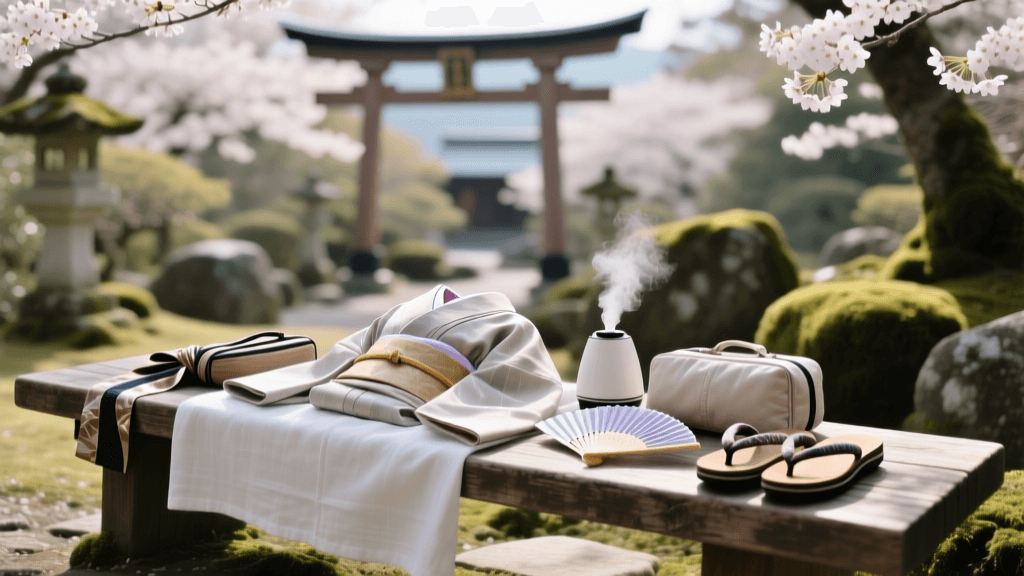
A kimono is not a single garment but a complex system of layers and accessories. Forgetting even one crucial component can make dressing impossible. Below is the definitive checklist for travelers bringing their own attire. For a deeper understanding of how these pieces interact, the Japan Guide's traditional clothing resource offers excellent visual breakdowns of the layering process.
| Item | Purpose | 2026 Packing Tip |
|---|---|---|
| Kimono / Yukata | The main outer garment | Roll rather than fold to protect delicate silk threads from permanent creasing. |
| Nagajuban | Undergarment protecting the kimono | Pack a modern, washable synthetic blend to save luggage space and ease laundry. |
| Obi | The wide sash | Pre-folded 'tsuke' obi are highly recommended for travel to eliminate complex tying. |
| Koshihimo (x3) | Thin ties to secure layers | Substitute with soft, stretchy modern hair ties if traditional ones are forgotten. |
| Datejime (x2) | Wide ties for smoothing | Use elastic velcro datejime for quick dressing in small hotel bathrooms. |
| Obijime & Obiage | Decorative cord and scarf | Store in a small ziplock bag to prevent the metallic threads from snagging. |
| Tabi | Split-toe socks | Bring stretch-toe modern tabi; they fit over standard socks in winter. |
| Zori / Geta | Traditional footwear | Wrap in shower caps to keep luggage clean; ensure thongs are broken in. |
Mastering the Art of Wrinkle-Free Packing
The most common mistake travelers make is folding their kimono using the traditional 'tatami' method for long-haul flights. While the tatami fold is perfect for drawer storage, the sharp, rigid creases it creates are disastrous when unpacked in a hotel room lacking a proper steamer.
The 'Maki' (Rolling) Method
For travel in 2026, textile conservators recommend the rolling method. Lay the kimono flat on a clean surface, place acid-free tissue paper over the silk to absorb ambient moisture, and gently roll the garment from the hem to the collar. Place the rolled kimono inside a breathable cotton garment bag. This distributes the fabric's tension and prevents hard creases.
Steaming on the Go
Do not rely on hotel irons, as direct heat can scorch vintage silk or melt synthetic yukata fibers. Pack a portable, dual-voltage travel steamer. Alternatively, hang your garments in the bathroom while taking a hot shower, allowing the ambient steam to gently relax the fibers. For stubborn wrinkles, lightly mist the fabric with distilled water and smooth it with your palms.
Top Destinations to Wear Kimono in 2026
While Kyoto remains the spiritual home of the kimono, the city's ongoing 2026 overtourism management initiatives mean that popular spots like Kiyomizu-dera and the bamboo groves of Arashiyama are heavily restricted and uncomfortably crowded. To truly appreciate the elegance of your garment, consider these breathtaking, less congested alternatives.
1. Kanazawa: The Elegant Alternative
Often called 'Little Kyoto,' Kanazawa offers impeccably preserved historical districts without the crushing crowds. Strolling through the Higashi Chaya geisha district in a silk kimono feels incredibly authentic. The nearby Kenroku-en, one of Japan's top three landscape gardens, provides stunning seasonal backdrops, from weeping cherry blossoms in spring to yukata-clad summer evenings illuminated by paper lanterns.
2. Kawagoe: Edo-Style Charm Near Tokyo
Located just 45 minutes from central Tokyo, Kawagoe (known as 'Little Edo') features a spectacular street lined with traditional kurazukuri (clay-walled) merchant warehouses. The iconic Toki no Kane (Time Bell Tower) and the atmospheric Candy Alley make for perfect, culturally rich photo opportunities. Kawagoe's flat, paved streets are also much kinder to traditional zori sandals than the steep, uneven stone steps of Kyoto's temples.
3. Kyoto's Hidden Northern Temples
If you must visit Kyoto, pivot to the northern and eastern wards. Temples like Shoren-in Monzeki offer expansive, manicured moss gardens where you can sit on wooden verandas in your kimono in total tranquility. Daigo-ji temple, located further south, offers sweeping grounds and spectacular autumn foliage, allowing for uninterrupted, serene photography.
Navigating Rentals vs. Bringing Your Own Heirloom
The decision to rent or pack your own garments depends heavily on your itinerary and luggage constraints. In 2026, the rental market in Japan has become highly sophisticated, offering premium, authentic silk options that rival personal collections.
The Case for Renting
Renting is ideal for travelers on a multi-city bullet train tour. Premium rental packages in Kyoto and Tokyo now average ¥7,500 to ¥12,000 for the day, which includes professional dressing, hair styling, and high-grade silk garments. Many modern rental shops now offer 'return by mail' services, allowing you to drop the garments in a designated locker at the train station rather than rushing back to the shop before closing.
The Case for Bringing Your Own
Bringing your own kimono is recommended for collectors, practitioners of traditional arts, or those with specific sizing needs that standard rental shops cannot accommodate. To mitigate the burden of carrying heavy silk and accessories, utilize Japan's legendary 'Ta-Q-Bin' (luggage forwarding) service. In 2026, you can seamlessly forward your kimono suitcase directly from the airport to your ryokan, ensuring your garments are waiting for you upon arrival without you having to haul them through crowded transit hubs.
Pro Tip for 2026: If you bring your own kimono, always pack a lightweight, modern 'haori' (jacket). It instantly elevates a simple outfit, provides necessary warmth in aggressively air-conditioned summer trains, and covers the back of the obi if your tying skills are still developing.
Seasonal Adaptations for the 2026 Climate
Japan's distinct seasons dictate not just the color palette of your kimono, but the very fabric and structure. Dressing inappropriately for the season is considered a major faux pas in traditional fashion.
- Spring (March to May): This is the season for 'awase' (lined) kimono. As the cherry blossoms bloom, pastels and floral motifs are mandatory. Pack a lightweight wool or silk haori for chilly spring evenings.
- Summer (June to August): The heat and humidity are intense. Transition entirely to 'yukata' (unlined cotton) or 'ro' and 'sha' (woven gauze silk). These breathable fabrics are essential. Pair with a casual 'hanhaba' obi and wooden geta.
- Autumn (September to November): As the maples turn crimson, return to lined silk kimono featuring autumnal motifs like susuki grass, chrysanthemums, or falling leaves. Rich jewel tones like deep burgundy and forest green are highly appropriate.
- Winter (December to February): Warmth is paramount. Wear a padded 'juban' undergarment, thick tabi socks, and consider wrapping a luxurious wool or cashmere shawl around your shoulders. Traditional 'kanto' (arm warmers) are also making a stylish comeback among younger wearers.
Final Thoughts on Cultural Respect and Travel
Wearing a kimono as a foreign traveler in 2026 is widely celebrated as a sign of deep respect for Japanese culture. The key to a successful experience lies in preparation. By carefully selecting your accessories, mastering wrinkle-free packing, and choosing destinations that allow for a peaceful, immersive experience, you transform your journey from a simple vacation into a living, breathing participation in Asian traditions. Whether you are sipping matcha in a Kanazawa teahouse or listening to the time bell in Kawagoe, your traditional garments will serve as a beautiful bridge between the past and the present.