Chinese Wedding Attire Guide: Qun Kwa, Xiu He Fu and Hanfu
The Renaissance of Chinese Ceremonial Wedding Attire
Chinese weddings are a vibrant tapestry of ancient customs, familial devotion, and striking visual symbolism. At the heart of these ceremonies is the traditional wedding attire, which serves not merely as clothing, but as a wearable blessing for the couple's future. For modern brides and grooms navigating the intersection of heritage and contemporary fashion, selecting the right ceremonial garment requires an understanding of history, regional variations, and intricate craftsmanship. According to the Victoria and Albert Museum, Chinese dress has long been a marker of social status, regional identity, and cosmological belief, making the wedding garment one of the most culturally significant pieces a person will ever wear.
Today, brides typically choose between three primary styles for their tea ceremonies and traditional banquets: the structured Cantonese Qun Kwa, the romantic and flowing Xiu He Fu, and the historically rooted Hanfu. This comprehensive guide breaks down the nuances, costs, and practical considerations for each, ensuring your ceremonial attire is as meaningful as it is beautiful.
Decoding the Symbolism: Dragons, Phoenixes, and Bats
Before exploring specific garments, it is crucial to understand the visual language of Chinese wedding embroidery. Traditional attire is heavily adorned with motifs designed to invoke luck, fertility, and longevity. The dragon and phoenix (Long Feng) are the most prominent, representing the balance of yin and yang, and the harmonious union of the groom and bride. Peonies symbolize wealth and honor, while lotus flowers represent purity and a fruitful marriage. Interestingly, bats are also highly favored; the Chinese word for bat (fu) is a homophone for good fortune and blessing, making a design of five bats a wish for the 'Five Blessings' (longevity, wealth, health, virtue, and a natural death).
The Qun Kwa (裙褂): The Cantonese Classic
Originating from the Guangdong region, the Qun Kwa is a two-piece ensemble consisting of a tailored jacket (gua) and a straight skirt (kwa). It is renowned for its stiff, structured silhouette and dense, metallic embroidery. Historically, the Qun Kwa was a dowry item that took the bride's family years to embroider by hand, serving as a display of the family's wealth and the bride's domestic skill.
Embroidery Density and Grading
The value and prestige of a Qun Kwa are determined by its embroidery density—the percentage of the silk base fabric covered by gold and silver thread. The grades are strictly categorized:
- Xiao Wu Fu (Small Five Blessings): Approximately 30% to 50% embroidery density. A more affordable, everyday ceremonial option.
- Zhong Wu Fu (Medium Five Blessings): Around 60% to 70% density, offering a rich, textured appearance.
- Da Wu Fu (Large Five Blessings): 80% to 90% density, heavily ornate and highly sought after.
- Gua Huang (Jacket Emperor): 100% density. The base fabric is completely obscured by intricate, three-dimensional gold and silver thread work. Creating a Gua Huang can take a master artisan over a year.
Costs and Sourcing
Because of the intense labor involved, purchasing a bespoke, hand-embroidered Qun Kwa is a significant investment. A genuine Gua Huang can cost between $10,000 and $30,000 USD. For this reason, the rental market is incredibly robust. Renting a high-quality Qun Kwa for a weekend typically ranges from $300 to $1,500 USD, depending on the embroidery grade and the inclusion of matching accessories.
The Xiu He Fu (秀禾服): The Modern Romantic Standard
While it looks steeped in antiquity, the Xiu He Fu is actually a relatively modern invention. It gained widespread popularity after being worn by the character Xiu He in the 2001 television drama Orange Turned Red. Today, it is arguably the most popular choice for Chinese brides across the diaspora due to its forgiving silhouette and romantic aesthetic.
Design Elements and Silhouette
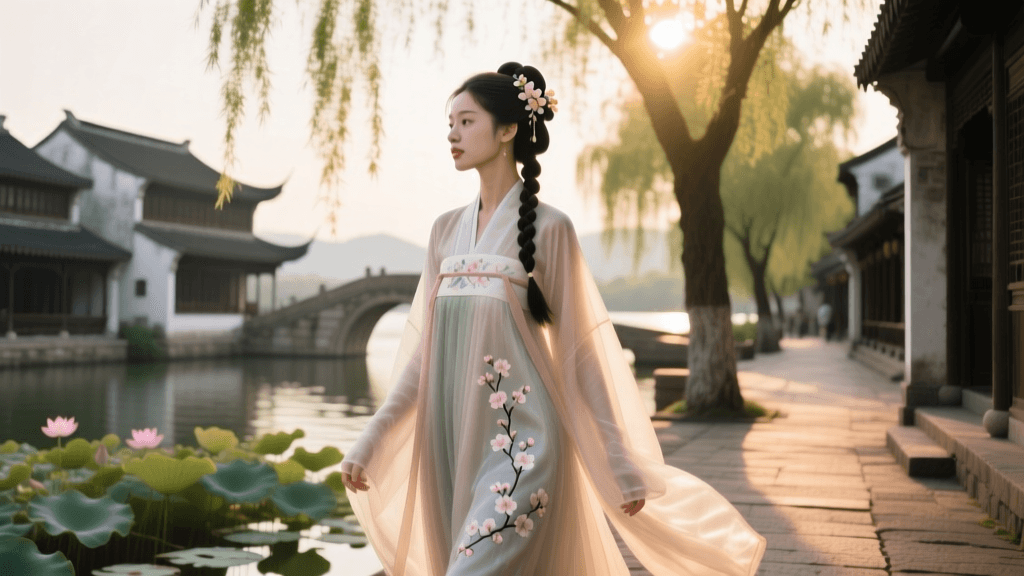
Unlike the straight, restrictive skirt of the Qun Kwa, the Xiu He Fu features a sweeping A-line or pleated skirt, often resembling the traditional horse-face skirt (mamianqun). The top is characterized by batwing sleeves or wide, flowing bell sleeves, which create a dramatic, elegant effect when the bride is serving tea or fanning herself. The embroidery on a Xiu He Fu is typically done with colorful silk threads alongside gold, allowing for vibrant reds, pinks, and greens to complement the metallic accents.
Costs and Accessibility
The Xiu He Fu is generally more accessible than the Qun Kwa. Because the embroidery is often machine-assisted or utilizes less dense hand-stitching, purchase prices range from $200 for basic, mass-produced versions to $3,000 for bespoke, hand-finished pieces. It is also highly adaptable to different body types, making it a stress-free option for brides who want comfort during long ceremonial days.
Hanfu (汉服): The Historical Revival
As noted by the China Heritage Project, the Hanfu movement has sparked a massive cultural revival among young people seeking to reconnect with pre-Qing dynasty Han Chinese roots. For weddings, this means looking to the Zhou, Tang, and Ming dynasties for ceremonial inspiration.
Ming Dynasty Fengguan Xiapei
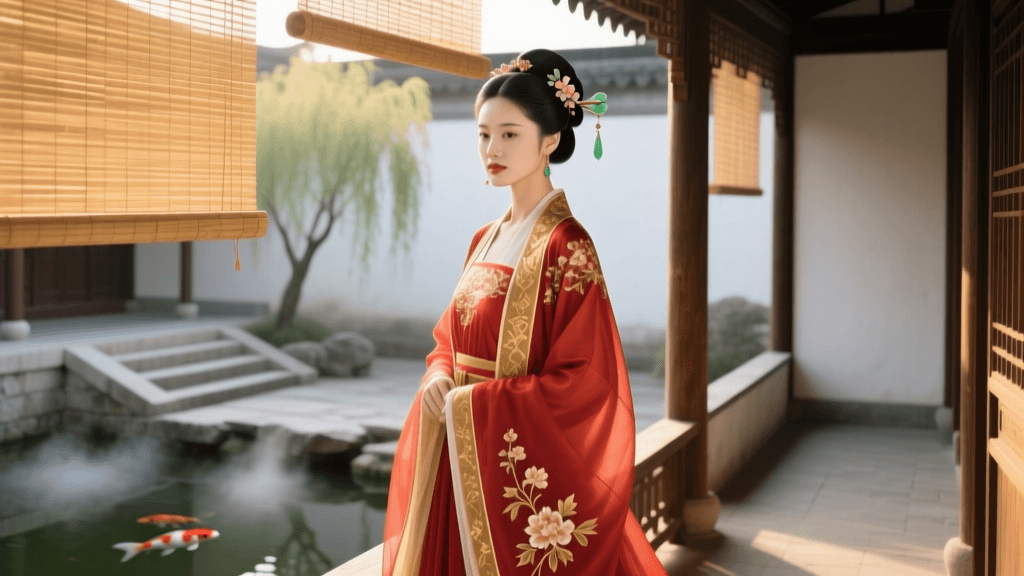
The most popular Hanfu wedding attire is modeled after the Ming Dynasty's Fengguan Xiapei (Phoenix Crown and Cloud Cape). This highly formal ensemble features a sweeping, voluminous robe with wide sleeves, often in deep crimson or emerald green, paired with an intricately beaded phoenix crown. The Metropolitan Museum of Art highlights the Ming era as a pinnacle of Chinese silk weaving and textile luxury, which is reflected in the heavy brocades and elaborate cloud collars used in modern Hanfu wedding replicas. Hanfu is ideal for couples hosting outdoor, nature-inspired ceremonies or those deeply invested in historical reenactment and traditional Confucian wedding rites.
Comparison Chart: Qun Kwa vs. Xiu He Fu vs. Hanfu
| Feature | Qun Kwa (裙褂) | Xiu He Fu (秀禾服) | Hanfu (Ming Style) |
|---|---|---|---|
| Silhouette | Straight skirt, tailored jacket | A-line skirt, batwing sleeves | Voluminous robes, cloud collar |
| Embroidery | Dense gold/silver thread (3D) | Silk thread & gold (colorful) | Woven brocade & silk appliqué |
| Best For | Formal tea ceremonies, Cantonese families | All body types, romantic aesthetics | Historical rites, outdoor ceremonies |
| Avg. Rental Cost | $400 - $1,500 USD | $150 - $500 USD | $200 - $800 USD |
| Mobility | Restrictive (narrow skirt) | High (flowing skirt) | Moderate (heavy layers) |
Practical Guide: Sourcing, Measurements, and Timelines
Securing the perfect traditional Chinese wedding garment requires meticulous planning. Whether you are visiting a master tailor in Chinatown, ordering from a bespoke studio in Suzhou, or renting from a local bridal boutique, precise measurements and strict timelines are non-negotiable.
Essential Measurements for Bespoke Tailoring
Traditional garments are cut differently than Western gowns. A tailor will require the following specific metrics to ensure the collar sits flat and the embroidery aligns perfectly across the seams:
- Bust, Waist, and Hips: Measured over the undergarments you plan to wear on the day.
- Shoulder Width: Crucial for the Qun Kwa, as the jacket must sit squarely on the shoulders without pulling the heavy embroidery.
- Sleeve Length: Measured from the center back of the neck to the wrist bone, ensuring the intricate cuff designs are fully visible when your hands are folded in front.
- Hollow-to-Hem: Measured from the base of the neck to the desired skirt length, factoring in the exact heel height of your ceremonial wedding shoes.
The 9-Month Sourcing Timeline
- 9-12 Months Prior: Decide on your style (Qun Kwa, Xiu He Fu, or Hanfu). If purchasing a bespoke, hand-embroidered Qun Kwa, you must place your order now, as artisans require 6 to 10 months to complete dense embroidery.
- 6-8 Months Prior: Schedule boutique appointments for rentals or try-ons for ready-to-wear Xiu He Fu. Book your gold jewelry (Dragon and Phoenix bangles) if you are having them custom cast.
- 3-4 Months Prior: Finalize your undergarments. Traditional garments require specific foundation wear to maintain the structured silhouette without visible modern bra straps.
- 1 Month Prior: Final fitting. Your body may have changed during wedding planning; a skilled tailor will make micro-adjustments to the side seams and hem.
The Finishing Touches: Ceremonial Gold Jewelry
No traditional Chinese wedding ensemble is complete without its accompanying gold jewelry, known as Long Feng Zhuo (Dragon and Phoenix Bangles). In Cantonese and Hokkien traditions, the bride is adorned with heavy, 24-karat gold bangles, necklaces, and hairpins gifted by both sets of parents and elder relatives. The bride often wears all the bangles on her arms simultaneously during the tea ceremony as a public display of familial love and financial blessing. When planning your budget, ensure you account for the cost of purchasing or renting this gold, as well as the traditional red silk fans, embroidered shoes, and hair accessories that complete the ceremonial look.
Conclusion
Choosing your Chinese wedding attire is a deeply personal journey that bridges the gap between ancestral reverence and personal style. Whether you opt for the unparalleled luxury and structure of a Gua Huang Qun Kwa, the romantic grace of a Xiu He Fu, or the historical majesty of Ming Dynasty Hanfu, understanding the craftsmanship, symbolism, and logistical requirements will ensure you walk into your tea ceremony with confidence, elegance, and the blessings of centuries of tradition.