Sourcing Authentic Xiangyunsha: China's Intangible Heritage Silk
The 'Soft Gold' of the Pearl River Delta
In the vibrant and rapidly expanding world of the modern Hanfu movement, enthusiasts and collectors are increasingly turning their attention to historically accurate, premium textiles. Among the most coveted of these is Xiangyunsha (香云纱), also known in the West as Gambiered Canton Gauze. Revered as the 'soft gold' of the silk world, Xiangyunsha is not merely a fabric; it is a living testament to centuries of Chinese artisanal mastery. In 2008, the traditional dyeing and weaving techniques of Xiangyunsha were officially inscribed on China's National Intangible Cultural Heritage list, recognizing the profound cultural and historical significance of this unique textile. This regional craft is deeply intertwined with the broader sericulture and silk craftsmanship of China, which has been globally recognized for its historical impact on human civilization.
Originating from the Shunde district of Foshan in Guangdong province, Xiangyunsha is celebrated for its remarkable breathability, natural antibacterial properties, and its distinct, rustling sound when worn—a sound that historically evoked the ringing of clouds, giving the fabric its poetic name. For Hanfu wearers seeking authenticity, luxury, and a tangible connection to the artisans of the Pearl River Delta, understanding the nuances of Xiangyunsha is essential.
The Alchemy of Earth, Sun, and Silk
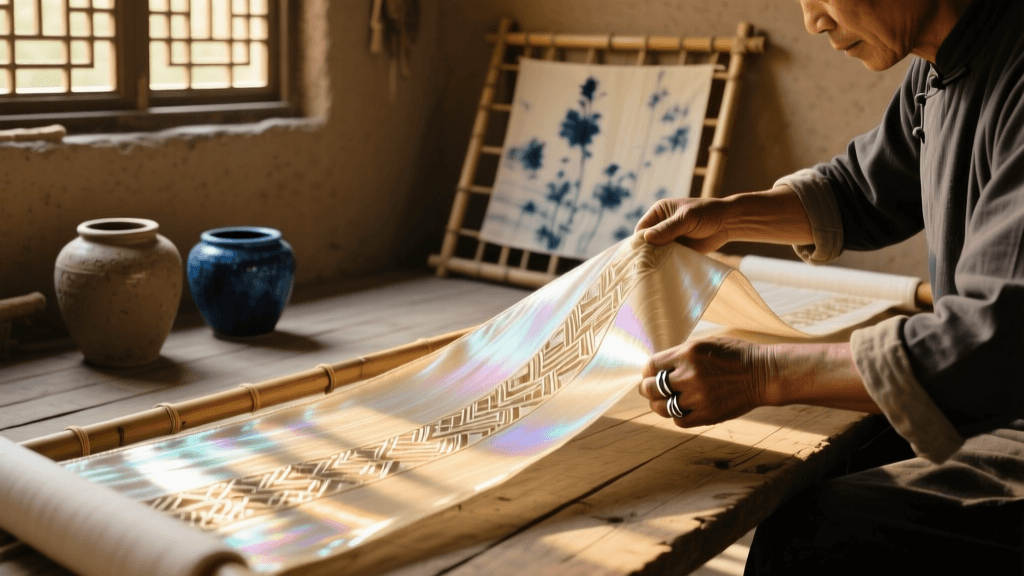
The creation of authentic Xiangyunsha is a grueling, 30-step process that relies entirely on the natural environment and the seasoned intuition of master artisans. Unlike modern synthetic dyes or factory-produced silks, this intangible heritage craft cannot be rushed or replicated in a climate-controlled laboratory. The process begins with premium mulberry silk gauze, which is repeatedly soaked in the juice of the Shulang (Dioscorea cirrhosa) tuber. This tuber is rich in tannins, which naturally dye the silk a warm, earthy amber.
The true magic, however, occurs during the mud-dyeing phase. Artisans harvest specific, iron-rich river mud from the Pearl River Delta. When the tannin-soaked silk is coated with this mud and exposed to the intense subtropical sun, a chemical reaction occurs. The iron ions in the mud bind with the tannins, creating a dark, lustrous, and slightly metallic coating on one side of the fabric, while the reverse side remains a rich, reddish-brown. This labor-intensive cycle of dyeing, mud-coating, and sun-drying is repeated dozens of times over several weeks. Because the process relies heavily on intense sunlight and specific humidity levels, authentic Xiangyunsha can only be produced between March and November.
'The fabric is born of the earth, shaped by the sun, and finished by the river. It is a collaboration between the artisan and nature.' — Traditional Shunde Dyer's Proverb
Material Comparison: Heritage Silk vs. Modern Imitations
As the popularity of Hanfu has surged, the market has been flooded with synthetic imitations marketed as 'mud silk' or 'vintage Xiangyunsha.' To make informed purchasing decisions, it is crucial to understand how authentic heritage silk compares to standard and synthetic alternatives.
| Feature | Authentic Xiangyunsha | Standard Mulberry Silk | Synthetic 'Mud Silk' Imitation |
|---|---|---|---|
| Base Material | 100% Mulberry Silk Gauze | 100% Mulberry Silk | Polyester / Nylon Blend |
| Dye Process | Shulang Tuber & River Mud | Modern Chemical or Plant Dyes | Chemical Dyes & Synthetic Coatings |
| Production Time | 15-30 Days (Weather Dependent) | 1-3 Days (Factory Dyed) | Hours (Mass Produced) |
| Breathability | Exceptional (Moisture-wicking) | High | Very Low (Traps Heat) |
| Texture & Sound | Crisp, 'Crackle' effect, Rustles | Soft, Smooth, Silent | Stiff, Plastic-like, Squeaks |
| Average Cost (per meter) | 300 - 2,500 RMB | 80 - 200 RMB | 20 - 50 RMB |
A Buyer’s Guide to Authentic Gambiered Gauze
Sourcing genuine Xiangyunsha requires a keen eye and an understanding of the fabric's unique sensory markers. When evaluating a potential purchase, whether from a specialized Hanfu tailor or a textile merchant, look for the following indicators of authenticity.
Identifying the Real Craft
- The Crackle Effect (龟裂纹): Authentic Xiangyunsha features a subtle, irregular crackle pattern on its dark side, resembling the shell of a tortoise or dry earth. This is a natural result of the mud-drying process and cannot be perfectly mimicked by machine printing.
- The Scent: Genuine fabric carries a faint, earthy aroma reminiscent of sweet potatoes, damp soil, and dried herbs. Synthetic versions will either smell of chemicals or have no scent at all.
- Water Resistance: Due to the mud and tannin coating, the dark side of authentic Xiangyunsha is naturally water-resistant. A drop of water should bead up slightly on the surface rather than absorbing instantly.
- The Two-Tone Reverse: The front should be a deep, lustrous black or dark brown, while the reverse side must be a distinct, warm amber or reddish-brown. If both sides are the same color, it is not traditional Xiangyunsha.
Hanfu Tailoring: Measurements, Costs, and Styles
Integrating Xiangyunsha into your Hanfu wardrobe requires careful planning regarding yardage, tailoring styles, and budget. Because the fabric is stiffer and more structured than standard silk, it is exceptionally well-suited for garments that require architectural volume and crisp pleating.
Yardage and Style Recommendations
When commissioning a custom Hanfu set, accurate measurements are vital to ensure you purchase enough heritage fabric. Most authentic Xiangyunsha is woven on traditional looms, resulting in a fabric width of approximately 140 centimeters (55 inches).
- Ming Dynasty Aoqun (Jacket and Horse-Face Skirt): The structured nature of Xiangyunsha makes it the absolute ideal choice for a Ming Dynasty Mamianqun (horse-face skirt). The fabric holds sharp, knife-like pleats beautifully. You will need approximately 4 to 4.5 meters for the skirt, and 2.5 meters for the Ao (jacket). Total yardage: 6.5 to 7 meters.
- Song Dynasty Beizi (Long Jacket): For a more minimalist, elegant look, a Song Dynasty Beizi crafted from Xiangyunsha offers a striking, dignified silhouette. The fabric's natural stiffness gives the wide sleeves a beautiful drape. You will need approximately 2.5 to 3 meters of fabric.
- Tang Dynasty Banbi (Half-Sleeve Jacket): For a lighter, summer-appropriate garment, a Banbi requires only 1.5 to 2 meters, making it a cost-effective entry point for those wanting to experience the fabric.
Pricing and Commissioning Costs
The cost of authentic Xiangyunsha varies wildly based on the complexity of the base weave. Plain weave gauze typically starts at 300 to 500 RMB ($40 to $70 USD) per meter. However, jacquard-woven Xiangyunsha, which features intricate tonal patterns woven directly into the silk before the dyeing process, can range from 800 to 2,500 RMB ($110 to $350 USD) per meter. When budgeting for a full, high-end Ming Dynasty set, expect to spend between $350 and $800 USD on fabric alone, excluding the tailor's labor.
Commissioning Timelines and Artisan Lead Times
Patience is a prerequisite when dealing with intangible heritage crafts. Because the dyeing process is entirely dependent on the intense subtropical sun and specific humidity levels, artisans in Shunde only produce Xiangyunsha from early March to late November. If you attempt to commission a custom, dyed-to-order batch in December, you will be placed on a waiting list until the spring rains cease and the sun returns. Standard lead times for authentic, artisan-dyed fabric range from 3 to 6 months. Buyers seeking immediate gratification must rely on pre-dyed stock held by specialized textile merchants.
Caring for Intangible Heritage Garments
Owning a garment made from Xiangyunsha is an exercise in cultural preservation. Proper care ensures the fabric's longevity and allows the colors to mature gracefully over time. Unlike modern textiles, Xiangyunsha actually softens and becomes more comfortable with age and wear, developing a unique patina that reflects the owner's lifestyle.
- Washing: Never machine wash or dry clean Xiangyunsha. Hand wash the garment in cool water (strictly under 30°C or 86°F). Use a pH-neutral silk detergent or a mild, natural baby shampoo. Avoid alkaline soaps, which will strip the tannin and mud coating.
- Drying: Never wring or twist the fabric, as this will permanently damage the delicate 'crackle' coating. Gently press out excess water and hang the garment to dry in a well-ventilated, shaded area. Direct sunlight during the drying phase can cause the dark coating to become brittle and flake.
- Storage: Store the garment on a wide, padded hanger to maintain the structure of the shoulders and pleats. Keep it in a breathable cotton garment bag away from direct sunlight and dampness.
Preserving the Artisan Legacy
The modern Hanfu renaissance has played a pivotal role in saving Xiangyunsha from the brink of extinction. In the late 20th century, the grueling nature of the work and the rise of cheap synthetic fabrics led to a massive decline in master dyers. Today, the demand from Hanfu enthusiasts provides a vital economic lifeline to the remaining artisan families in Shunde, encouraging a new generation to learn the 30-step process.
For those interested in studying the historical context and preservation of these magnificent textiles, institutions like the China National Silk Museum in Hangzhou offer invaluable resources, exhibitions, and archives dedicated to regional dyeing techniques and the evolution of Chinese fashion. By choosing to invest in authentic, ethically sourced Xiangyunsha, Hanfu wearers do more than elevate their wardrobe; they become active patrons of a living, breathing intangible heritage, ensuring that the 'soft gold' of the Pearl River Delta continues to rustle like clouds for generations to come.