A Guide to Styling Kimono and Hakama for Anime Cosplay
The Intersection of Traditional Garments and Anime Culture
Anime and manga have long drawn profound inspiration from Japan’s rich historical periods, particularly the Edo, Meiji, and Taisho eras. Global phenomena like Demon Slayer (Kimetsu no Yaiba), Rurouni Kenshin, and Gintama have sparked a massive resurgence in traditional Japanese fashion among cosplay communities. However, transitioning from a two-dimensional anime character to a three-dimensional, convention-ready cosplay requires much more than purchasing a mass-produced costume online. It demands a foundational understanding of traditional garment construction, proper layering techniques, and practical convention survival tactics.
According to the Victoria and Albert Museum, the kimono is not merely a static historical artifact but a dynamic garment that has continuously evolved, heavily influencing global fashion and pop culture. Anime creators frequently adapt these garments, adding fantastical elements like exaggerated sleeves, vibrant unnatural color palettes, and asymmetrical hemlines. To replicate these looks authentically while maintaining comfort, cosplayers must bridge the gap between historical accuracy and modern convention realities.
Decoding Anime Archetypes: Kimono vs. Hakama
When planning an anime-inspired traditional cosplay, your first step is identifying the silhouette that defines your character. Most historical or fantasy anime costumes fall into two primary categories: the flowing elegance of the kimono or the structured martial presence of the hakama.
The Samurai and Swordsman: Hakama Focus
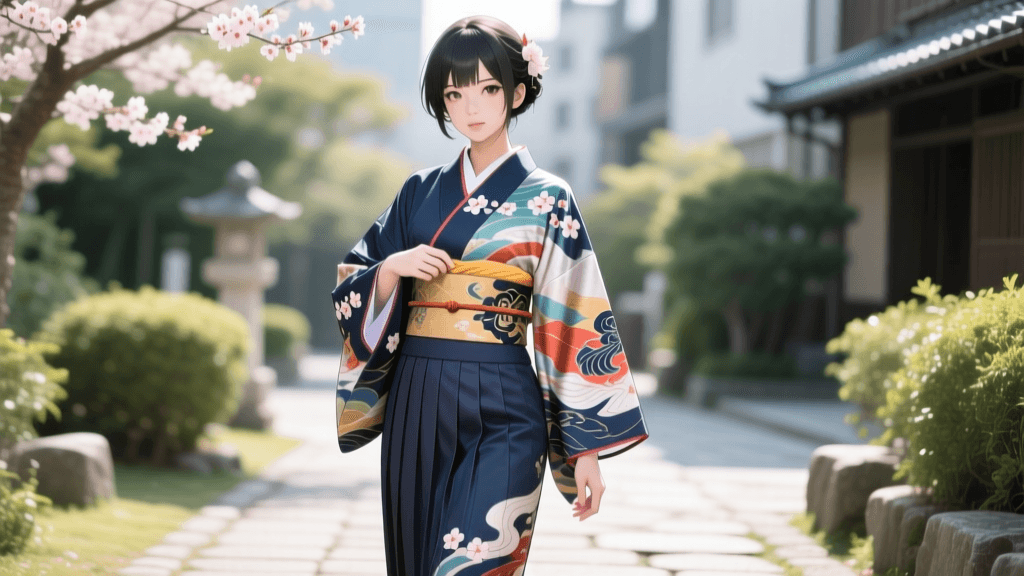
Characters like Himura Kenshin or the Hashira from Demon Slayer frequently sport hakama. The hakama is a pleated, divided skirt worn over a kimono. For cosplay, you must choose between two types:
- Umanori-bakama (Horse-riding hakama): Features split legs, functioning like wide trousers. This is essential for action-oriented cosplayers who need mobility for staged fights or navigating crowded convention halls.
- Andon-bakama (Lantern hakama): Unsplit, functioning like a traditional skirt. This is better suited for scholarly characters, shrine maidens (miko), or formal indoor photoshoots.
A standard hakama features five pleats in the front and two in the back, symbolizing the five Confucian virtues. When tying the himo (strings), ensure the stiff koshi-ita (back board) rests snugly against your lower back, just above the obi knot, to maintain the rigid, authoritative posture seen in anime.
The Shrine Maiden and Mystical Warrior: Kimono Focus
For characters like Yoriichi or traditional miko, the kimono is the base layer. Anime often utilizes the kosode (small sleeve) for historical accuracy, or the furisode (long, swinging sleeve) for youthful, magical characters. The most crucial element to master is the haori (jacket). In Demon Slayer, Tanjiro’s iconic black-and-green ichimatsu (checkerboard) haori is worn open, allowing the underlying kimono and obi to remain visible. Secure the haori with a braided haori-himo tie at the chest to prevent it from slipping off your shoulders during active convention hours.
Sourcing and Assembling Your Cosplay Kit
While it is tempting to buy a pre-packaged 'anime kimono' from fast-fashion costume sites, these garments often lack the correct drape, weight, and collar structure. Sourcing authentic, second-hand garments yields vastly superior results. Websites like Yamatoku, Chicago Kimono, or local Japanese thrift stores offer genuine silk and polyester kimono for a fraction of their original retail price.
| Material | Estimated Cost | Convention Suitability | Maintenance & Care |
|---|---|---|---|
| Authentic Silk | $100 - $500+ | Low (Stains easily, heavy, wrinkles) | Dry clean only; highly delicate |
| Polyester Chirimen | $30 - $80 | High (Washable, drapes well, durable) | Machine wash cold; hang dry |
| Cotton / Yukata | $20 - $60 | Medium (Breathable, but casual look) | Machine wash; easy to iron |
| Costume Satin | $40 - $100 | Low (Slippery, poor drape, frays) | Hand wash; requires hem tape |
For convention environments, polyester chirimen (crepe) is the ultimate choice. It mimics the textured look of silk but is entirely machine washable—a lifesaver when dealing with convention center floors and unpredictable weather.
Practical Layering for Convention Survival
Wearing multiple layers of traditional Japanese clothing in a crowded, poorly ventilated convention center can quickly lead to heat exhaustion. Modern cosplayers rely on strategic layering to survive.
- Base Layer: Skip the traditional cotton hadajuban and opt for modern moisture-wicking innerwear like Uniqlo’s AIRism line. A deep-V-neck AIRism top ensures the modern fabric remains hidden beneath the kimono collar.
- Collar Stays: Anime characters often feature impossibly crisp, symmetrical collars. Use double-sided toupee tape along the neckline to keep the han-eri (half-collar) perfectly flat against your chest.
- The Obi: A traditional fukuro obi is over 4.5 meters long and heavily padded. For cosplay, purchase a pre-tied tsuke-obi (clip-on obi) or use a lightweight cotton obi reinforced with craft foam to achieve the bulky, structured anime look without the suffocating weight.
Pro-Tip: Always carry a small emergency kit containing safety pins, double-sided fabric tape, and a lint roller. The hem of a kimono will inevitably drag on convention center floors, and tape is essential for quick, invisible repairs.
Footwear: Zori, Tabi, and Geta
Footwear can make or break a cosplay. Traditional tabi (split-toe socks) are mandatory for authenticity. However, walking miles in wooden geta will cause severe blisters for the uninitiated. If your character requires geta, apply moleskin padding to the inside straps and the wooden base where your heel strikes. For long convention days, swap the wooden soles for modern rubber-soled zori disguised with fabric covers, or use specialized cosplay flip-flops with a faux-thong placement that accommodates tabi socks.
Hair, Props, and Final Touches
Anime hair defies gravity, and historical anime hairstyles are no exception. Characters often feature elaborate updos secured with kanzashi (ornamental hairpins). When sourcing kanzashi, avoid cheap plastic variants that snap easily. Opt for lightweight wooden or resin pieces. If your character wields a sword, such as a katana or nichirin blade, remember that convention weapon policies are strict. Props must be made of lightweight EVA foam or 3D-printed PLA, and they must be 'peace-bonded' (zip-tied into the scabbard) by convention security.
Respecting the Culture While Cosplaying
While anime takes creative liberties with traditional dress, cosplayers should adhere to the most critical rule of kimono wearing: the lapel alignment. According to the Japan National Tourism Organization, the left side of the kimono must always wrap over the right side. Wrapping right-over-left is strictly reserved for dressing the deceased for burial. Getting this wrong is considered highly disrespectful and is a glaring error that will immediately pull viewers out of the illusion of your cosplay.
Furthermore, The Japan Times notes that while the global appreciation of the kimono has surged through pop culture exhibitions, wearing it with an understanding of its structural integrity honors the artisans who created them. Avoid mixing incompatible garments, such as wearing a casual summer yukata with a formal winter maru obi. By studying the seasonal and formal rules of traditional Japanese garments, your anime cosplay will transcend simple costuming and become a genuine tribute to the rich textile history that inspired your favorite creators.
Ultimately, styling kimono and hakama for anime cosplay is a rewarding challenge. It requires patience, a willingness to learn traditional dressing techniques, and the ingenuity to adapt them for modern environments. When you finally step onto the convention floor, your garment moving with the precise, sweeping grace seen in your favorite anime, you will know the effort was entirely worth it.