Buying Authentic Silk Kimono & Hanbok Online in 2026
The 2026 Landscape of Asian Traditional Garment E-Commerce
The global appetite for Asian traditional garments has surged, driven by a renewed interest in cultural heritage, sustainable fashion, and artisanal craftsmanship. As we navigate 2026, cross-border e-commerce has become more accessible than ever. Advanced real-time AI browser translation now allows international buyers to seamlessly navigate domestic Japanese and Korean marketplaces, breaking down the language barriers that once restricted authentic silk shopping to physical trips to Kyoto or Seoul. However, this accessibility also brings a proliferation of synthetic replicas and mass-produced dropshipped garments marketed as traditional wear.
For collectors, cultural practitioners, and fashion enthusiasts, knowing how to source genuine silk kimono and hanbok directly from Asian marketplaces is an essential skill. This guide will walk you through the top platforms, verification techniques, and 2026 shipping logistics to ensure your investment in Asian traditional garments is both authentic and culturally respectful.
Top Marketplaces for Authentic Silk Kimono and Hanbok
Rakuten Japan: The Premier Kimono Hub
Rakuten remains the undisputed leader for sourcing authentic Japanese garments in 2026. While Rakuten Global has evolved, the domestic Japanese site (rakuten.co.jp) offers the deepest inventory of both vintage and newly woven silk kimono. The key to success here is utilizing native Japanese search terms. Instead of searching for 'silk kimono', buyers should search for '正絹' (shouken), which specifically denotes pure, unadulterated silk. For specific weaves, searching '縮緬' (chirimen - silk crepe) or '綸子' (rinzu - silk damask) will filter out polyester blends and direct you to specialized Kyoto and Nishijin-based merchants.
Gmarket and 11st: Sourcing Korean Hanbok
For authentic hanbok, South Korean domestic platforms like Gmarket (gmarket.co.kr) and 11st (11st.co.kr) are vastly superior to globalized fast-fashion sites. In 2026, the Cultural Heritage Administration of Korea continues to emphasize the preservation of traditional weaving techniques, and many certified artisans maintain storefronts on these domestic platforms. When searching, look for '명주' (myeongju - traditional plain weave silk) or '공단' (gongdan - satin weave used for ceremonial wear). A genuine handmade myeongju hanbok set from a certified artisan will typically range from 800,000 to 1,500,000 KRW (approximately $600 to $1,150 USD in 2026), reflecting the intensive labor required for traditional natural dyeing and weaving.
How to Verify Authentic Silk and Traditional Construction
Verifying textiles online requires a keen eye for digital evidence. According to the Victoria and Albert Museum's Asian collections, traditional silk weaving possesses distinct structural characteristics that synthetic fibers cannot perfectly replicate. When browsing listings on Rakuten or Gmarket, look for the following verification markers:
- High-Resolution Macro Photography: Authentic sellers in 2026 provide macro shots of the fabric weave. Genuine chirimen silk will show a distinct, uneven pebbled texture caused by the highly twisted weft threads, whereas polyester crepe will appear uniformly stamped.
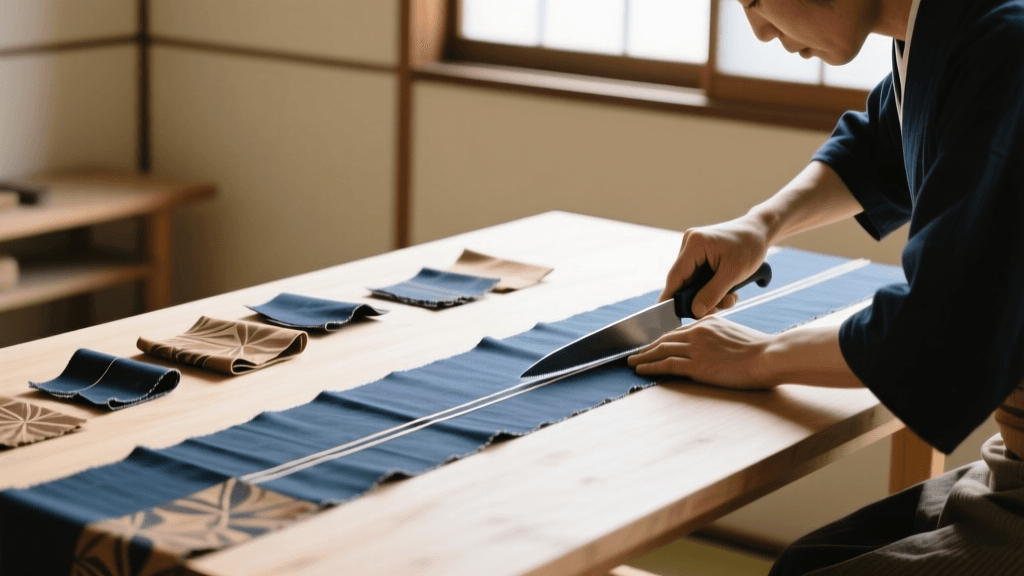
- Traditional Bolt Widths: Authentic kimono silk is woven on traditional looms resulting in a bolt width (tanmono) of exactly 36cm to 38cm. If a listing shows fabric widths of 110cm or 140cm, it is almost certainly modern, mass-produced apparel silk or synthetic, not traditional kimono silk.
- Digital Textile Certificates: Many premium Korean hanbok makers now include digital QR codes linked to blockchain-verified certificates of authenticity, detailing the origin of the silk threads and the specific artisan workshop.
- Hand-Stitching Evidence: Traditional kimono and hanbok are constructed using specific hand-stitching techniques that allow the garment to be entirely disassembled for cleaning and re-sewn. Look for close-up photos of the inner seams; machine serging is an immediate red flag for traditional ceremonial wear.
2026 Marketplace Comparison: Where to Buy
Choosing the right platform depends on your specific garment needs, budget, and tolerance for cross-border logistics. Below is a comparison of the primary Asian marketplaces for traditional garments in 2026.
| Marketplace | Primary Garment | Key Native Search Terms | 2026 Avg. Shipping Cost (USD) | Authenticity Guarantee |
|---|---|---|---|---|
| Rakuten Japan | Kimono, Haori, Obi | 正絹 (Shouken), 縮緬 (Chirimen) | $25 - $45 (EMS) | Seller-dependent; high on specialty shops |
| Gmarket Korea | Hanbok, Jeogori, Chima | 명주 (Myeongju), 진사 (Jinsa) | $20 - $35 (K-Packet/EMS) | High for 'Artisan Certified' badges |
| 11st Korea | Modern & Traditional Hanbok | 전통 한복 (Traditional Hanbok) | $22 - $40 (EMS) | Moderate; requires careful filtering |
| Yahoo! Auctions JP | Vintage & Antique Kimono | アンティーク着物 (Antique Kimono) | $30 - $60 (Proxy + EMS) | Low; requires buyer expertise |
Navigating Cross-Border Shipping and Customs in 2026
Shipping delicate silk garments internationally requires careful planning. In 2026, the global postal landscape has shifted. While national postal services like Japan Post (EMS) and Korea Post remain reliable, updated international postal treaties have slightly increased base rates for lightweight parcels. For high-value silk garments exceeding $500 USD, many buyers now opt for private couriers like DHL or FedEx, which offer superior climate-controlled transit and real-time tracking, crucial for protecting natural protein fibers from extreme humidity fluctuations.
Customs regulations for textile imports have also been updated in several Western nations this year. In the United States, the de minimis threshold for duty-free textile imports remains strictly enforced, and traditional garments are often subject to specific HTS (Harmonized Tariff Schedule) codes for 'silk woven fabrics and apparel'. Always request that the seller accurately declares the item as 'Traditional Cultural Silk Garment' with the correct material breakdown (e.g., 100% Mulberry Silk) to avoid arbitrary customs holds or synthetic textile tariffs.
Expert Tips for Avoiding Dropshipped Synthetic Replicas
The rise of algorithmic dropshipping has flooded global marketplaces with polyester garments masquerading as traditional Asian wear. To protect your investment in 2026, keep these critical warning signs in mind:
The 'One-Size-Fits-All' Fallacy: Traditional kimono and hanbok are not manufactured in standard S/M/L sizing. Kimono are cut from standard-width bolts and tailored to the wearer's specific height and wingspan. Hanbok are custom-fitted to the wearer's bust, waist, and shoulder measurements. If an online listing offers a 'silk kimono' in generic sizing with pre-sewn, permanent darts, it is a modern, mass-produced costume, not a traditional garment.
Furthermore, be highly skeptical of stock photography. Authentic artisans and specialized vintage dealers photograph their actual inventory, often including a traditional wooden measuring ruler (shakujaku) or a specific color-matching thread spool in the frame to prove the item is in their physical possession. If you reverse-image search a listing and find the same garment on multiple unrelated global retail sites, you are looking at a synthetic factory replica.
Conclusion
Sourcing authentic silk kimono and hanbok on Asian marketplaces in 2026 is a deeply rewarding endeavor that connects you directly with centuries of textile heritage. By leveraging native search terminology, understanding traditional loom widths, and navigating modern cross-border logistics, you can build a collection of genuine, artisan-crafted garments. Approach each purchase with cultural respect and a discerning eye, and the digital marketplace will yield treasures that fast fashion simply cannot replicate.