Chinese Bridal Attire: Xiuhefu, Qungua and Hanfu Guide
The Resurgence of Chinese Ceremonial Wedding Attire
In recent years, the landscape of Chinese weddings has experienced a profound transformation. While the Western white wedding gown remains a staple for the main banquet, modern brides are increasingly turning to their cultural roots for the traditional tea ceremony and morning gate-crashing rituals. This revival is not merely a nod to nostalgia; it is a celebration of meticulous craftsmanship, regional heritage, and centuries-old symbolism. According to BBC Culture, the modern Hanfu movement and the broader embrace of traditional garments reflect a deep-seated desire among younger generations to reclaim and redefine their cultural identity through fashion.
For brides planning a traditional Chinese wedding, navigating the options can be overwhelming. The market is dominated by three distinct styles of ceremonial attire: the romantic Xiuhefu, the structured Cantonese Qungua, and the historically grounded Hanfu. Each garment carries its own history, silhouette, and price point. This comprehensive guide will break down the nuances of Chinese bridal attire, providing actionable advice on timelines, measurements, and budgeting to ensure you look breathtaking on your ceremonial day.
Decoding the Three Pillars of Chinese Bridal Fashion
Xiuhefu (秀禾服): The Romantic and Forgiving Silhouette
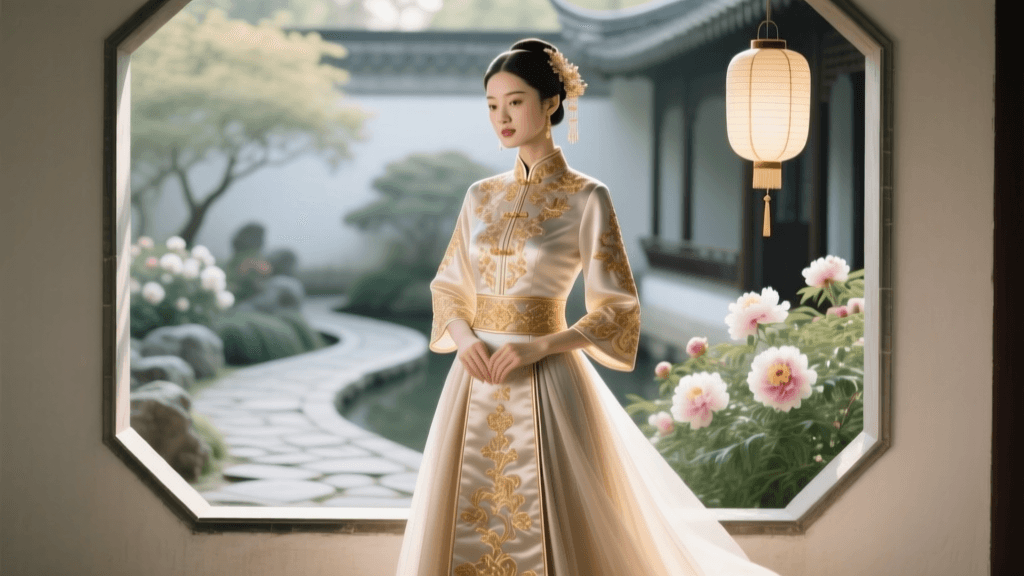
Despite its ancient appearance, the Xiuhefu is actually a modern invention. It was popularized by the 2001 television drama 'Orange Turned Red' (橘子红了), where the protagonist, Xiuhe, wore a distinctive two-piece garment. Characterized by a loose-fitting, A-line pleated skirt (often inspired by the traditional Ming Dynasty mamianqun or horse-face skirt) and a wide-sleeved, relaxed-fit jacket, the Xiuhefu is incredibly forgiving and comfortable.
The embroidery on a Xiuhefu is typically vibrant, featuring colorful silk threads alongside gold and silver accents. Motifs often include peonies for wealth, lotuses for purity, and pomegranates for fertility. Because of its relaxed silhouette, it is the most popular choice for brides who are pregnant or those who prioritize comfort during the physically demanding morning tea ceremonies. The flared sleeves also create a dramatic, romantic effect in wedding photography when the bride fans them out.
Qungua (裙褂): The Cantonese Masterpiece of Density
The Qungua (also known as Kwa or Kua) originates from the Cantonese and Chaoshan regions and is the gold standard for traditional Southern Chinese weddings. Unlike the flowing Xiuhefu, the Qungua consists of a straight, tailored jacket and a straight, A-line skirt. The defining feature of the Qungua is its embroidery density, which is measured by the percentage of the silk base covered by metallic threads. As noted by The Metropolitan Museum of Art, Chinese silk embroidery and the use of metallic threads represent centuries of specialized regional craftsmanship that elevates textiles to the level of fine art.
The Qungua is graded by its embroidery density:
- Xiao Wu Fu (小五福): 50% density. Lighter, more red silk visible.
- Zhong Wu Fu (中五福): 60-70% density. A balanced mix of red and gold.
- Da Wu Fu (大五福): 80% density. Heavily embroidered, very luxurious.
- Gua Huang (褂皇): 95-100% density. The pinnacle of Qungua craftsmanship. The base silk is entirely obscured by intricate gold and silver *Panjin* thread work. A single Gua Huang can take a master artisan over a year to complete by hand.
Hanfu (汉服): The Historical Ming Dynasty Revival
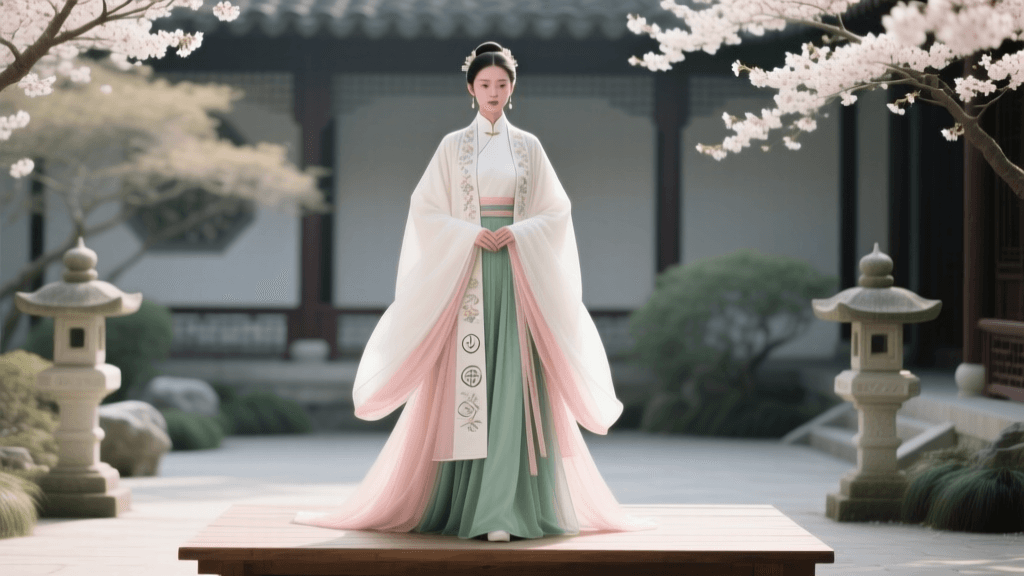
For brides seeking strict historical accuracy, Ming Dynasty-inspired Hanfu is the ultimate choice. The traditional Ming bridal ensemble is known as Fengguan Xiapei (凤冠霞帔), translating to 'Phoenix Crown and Cloud Cape.' The garment typically features a structured, high-collared or round-collared robe in deep crimson, dark blue, or green, adorned with woven gold patterns (zhijin).
The Xiapei is a heavy, embroidered stole draped over the shoulders and weighted at the ends with jade or gold pendants to ensure it hangs perfectly straight. The ensemble is completed with the elaborate Fengguan (phoenix crown), a breathtaking headdress featuring kingfisher feather art (tian-tsui), gold filigree, and swaying pearl tassels. Recognizing the deep roots of such textile arts, UNESCO has inscribed Chinese sericulture and silk craftsmanship on the Representative List of the Intangible Cultural Heritage of Humanity, highlighting the global importance of preserving these ancient weaving and embroidery techniques.
Comprehensive Comparison Chart
| Feature | Xiuhefu (秀禾服) | Qungua (裙褂) | Ming Hanfu (汉服) |
|---|---|---|---|
| Silhouette | Loose, A-line skirt, flared sleeves | Tailored jacket, straight/A-line skirt | Structured robe, wide sleeves, layered |
| Embroidery | Colorful silk, moderate gold/silver | Dense gold/silver metallic thread | Woven gold (zhijin), silk brocade |
| Weight & Comfort | Lightweight, highly comfortable | Heavy, stiff, structured | Heavy, requires posture support |
| Best For | Tea ceremony, mobility, pregnancy | Formal banquets, Cantonese traditions | Historical enthusiasts, grand entrances |
| Avg. Custom Cost | $1,500 - $4,500 | $3,000 - $50,000+ (Gua Huang) | $2,000 - $8,000 |
Practical Guide: Timelines, Costs, and Fittings
The Bridal Measurement and Fitting Timeline
Ordering traditional Chinese bridal wear requires a much longer lead time than purchasing a standard Western gown, especially if you opt for bespoke embroidery. Follow this strict timeline to avoid rush fees and fitting disasters:
- 9 to 12 Months Prior: Finalize your garment style and place your bespoke order. If ordering a high-density Qungua (Da Wu Fu or Gua Huang), you must order at least 14 months in advance, as the embroidery is done entirely by hand.
- 6 Months Prior: Submit your precise measurements. Do not attempt to lose or gain weight drastically after this point, as the structured nature of the Qungua and Hanfu leaves zero margin for error.
- 3 Months Prior: First fitting (if local) or receive progress photos/video calls from your tailor. This is the time to adjust the sleeve length or skirt hem.
- 1 Month Prior: Final fitting. Bring your exact wedding shoes (including the heel height) and undergarments. The hem of a Xiuhefu or Hanfu should graze the top of your shoe without dragging.
The 8 Crucial Measurements
When submitting your specs to a tailor in China or a specialized boutique abroad, provide these exact measurements in centimeters:
- Bust: Measured around the fullest part, wearing your intended bridal bustier.
- Waist: Measured at the narrowest point (natural waistline).
- Hips: Measured around the fullest part of the buttocks.
- Shoulder Width: Bone to bone across the back.
- Sleeve Length: From the shoulder bone down to the wrist bone (Xiuhefu) or knuckles (Hanfu).
- Jacket Length: From the base of the neck to the desired hemline (usually just below the hips for Qungua).
- Skirt Length (Hollow-to-Hem): From the natural waist down to the floor, factoring in your exact heel height.
- Armhole Depth: Crucial for the Qungua to ensure you can lift your arms to serve tea without the entire jacket riding up.
Budgeting for Your Ceremonial Garment
Brides must decide between renting and buying. Renting is highly practical and cost-effective, typically ranging from $300 to $800 USD for a weekend, depending on the garment's grade and the boutique's location. However, many brides choose to purchase their Qungua or Xiuhefu as a family heirloom to pass down to future generations.
If purchasing, budget an additional $200 to $400 for professional steaming, archival boxing, and preservation after the wedding. Silk and metallic threads are highly susceptible to humidity and oxidation; storing your garment in a standard plastic dry-cleaning bag will cause the silver threads to tarnish and the silk to yellow within months. Always use acid-free tissue paper and a breathable cotton garment bag.
Accessorizing and Cultural Etiquette
The garment is only half the equation. Traditional Chinese bridal attire requires specific structural undergarments and accessories to achieve the correct silhouette. For the Xiuhefu, a voluminous petticoat is mandatory to give the A-line skirt its signature bell shape. For the Qungua, seamless, nude, high-waisted shaping briefs are recommended, as the straight skirt leaves no room for visible panty lines.
When it comes to jewelry, avoid modern diamond pieces during the tea ceremony. Instead, invest in traditional 24K gold jewelry. The Long Feng Zhuo (Dragon and Phoenix bangles) are a staple gift from the groom's parents. When wearing a Hanfu, hair must be styled in a traditional updo secured with gold or jade hairpins (buy pins with at least three prongs for secure grip in thick hair), and a jade pendant should be worn at the waist to weigh down the robe's overlapping lapels.
'The beauty of Chinese bridal attire lies not just in the gold thread, but in the silent blessings woven into every motif. When a mother helps her daughter into a Qungua, she is wrapping her in centuries of ancestral protection and hope.'
Ultimately, whether you choose the romantic flow of the Xiuhefu, the metallic brilliance of the Qungua, or the historical majesty of the Hanfu, your ceremonial attire will serve as a breathtaking bridge between your heritage and your future. By understanding the craftsmanship, respecting the timelines, and preparing your measurements with precision, you ensure that your wedding day attire is nothing short of a masterpiece.