Yukata and Jinbei: A Guide to Casual Japanese Summer Wear
Introduction to Japanese Casual Summer Wear
When discussing traditional Japanese clothing, the intricate, multi-layered silk kimono often dominates the global imagination. However, the true heartbeat of Japan’s sartorial heritage lies in its everyday and casual garments. As the sweltering summer months approach, the Japanese archipelago undergoes a vibrant wardrobe shift. Formal silks are packed away, replaced by breathable, lightweight cottons designed for comfort, mobility, and seasonal celebration. For modern residents and travelers alike, understanding casual Japanese summer wear is essential for participating in local festivals, enjoying fireworks displays, or simply lounging in traditional comfort.
Yukata: The Iconic Summer Robe
The yukata is arguably the most recognized piece of casual Japanese clothing. According to the Japan Guide, the yukata originated during the Heian period (794-1185) as a simple linen bathrobe worn by nobility. Over centuries, as cotton became widely available during the Edo period, it evolved into the everyday casual wear of the common people. Today, the yukata is an unlined, T-shaped robe made primarily of cotton or cotton-blend fabrics. It is the standard attire for summer matsuri (festivals), bon odori (traditional dances), and hanabi (fireworks) events. Unlike formal kimono, the yukata does not require the complex layering of undergarments (nagajuban) or the elaborate, stiff obi belts, making it highly accessible for beginners and foreigners.
Practical Guide: Buying and Sizing a Yukata
Purchasing your first yukata requires an understanding of traditional Japanese sizing, which differs significantly from Western apparel standards. Most ready-made yukata are sold in a 'Free Size' (F), which generally fits individuals between 155 cm and 165 cm (5'1' to 5'5') in height. The most critical measurement is the mitake (back length). To calculate your ideal mitake, subtract 30 cm from your total height. For example, if you are 170 cm tall, your ideal yukata length is roughly 140 cm. When wearing the garment, the hem should rest right at your ankles.
In terms of cost, a standard, mass-produced cotton yukata set (which often includes the obi belt and geta sandals) ranges from 3,000 to 8,000 JPY ($20 to $55 USD) at department stores or online retailers like Rakuten and Amazon Japan. High-end, artisan-dyed yukata from regions like Arimatsu can cost upwards of 30,000 JPY ($200 USD).
Jinbei: The Ultimate Loungewear and Festival Gear
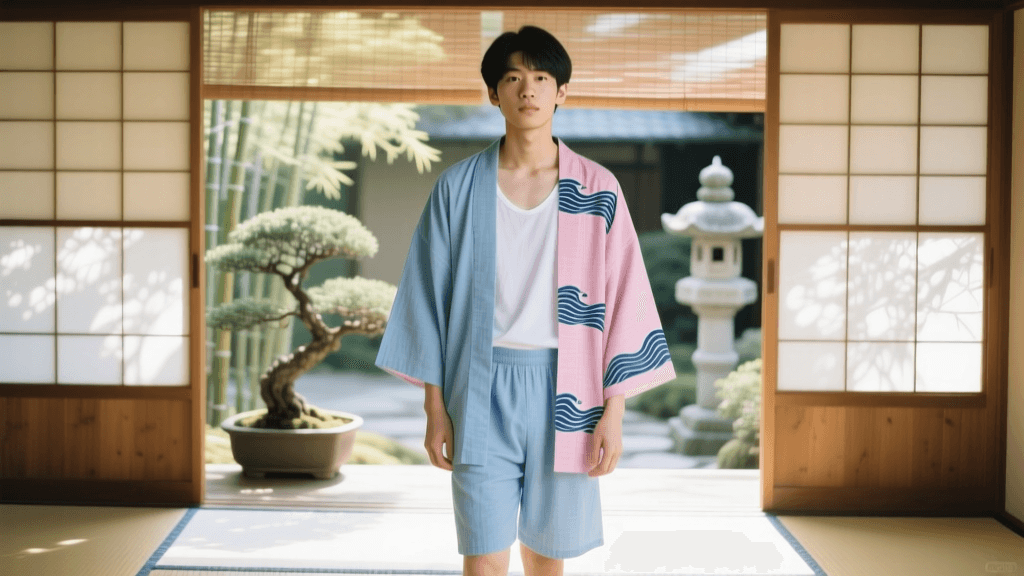
While the yukata is the queen of summer festivals, the jinbei is the undisputed king of casual lounging and neighborhood strolls. The jinbei is a two-piece garment consisting of a short-sleeved, wrap-style top and matching shorts. Historically worn by men and children, the jinbei has seen a massive surge in popularity among women over the last decade, with modern designs featuring vibrant floral prints, lace trims, and ruffled hems. The defining feature of the jinbei is its side slits (machi) and the woven tie-strings that secure the top. These design elements allow for maximum airflow, making it the ultimate garment for Japan's notoriously humid summers. As noted by cultural commentators at Tofugu, the jinbei represents a perfect synthesis of traditional aesthetics and modern, practical loungewear.
Jinbei Sizing and Price Guide
Jinbei sizing is generally based on height and waist measurements. Women's sizes typically range from S (150-155 cm) to L (160-165 cm), while men's sizes can extend up to LL or 3L for heights over 180 cm. Because the shorts feature an elastic or drawstring waist, they are highly forgiving. A standard cotton jinbei set costs between 2,500 and 6,000 JPY ($17 to $40 USD). For those seeking premium quality, look for jinbei crafted from wazarashi (traditional Japanese cotton crepe) or linen blends, which offer superior moisture-wicking properties and a beautiful, textured drape.
Comparison: Yukata vs. Jinbei vs. Samue
To help you choose the right garment for your daily activities, here is a structured comparison of Japan's most popular casual traditional wear.
| Garment | Pieces | Primary Fabric | Best Occasion | Avg Cost (USD) | Ease of Wearing |
|---|---|---|---|---|---|
| Yukata | 1 (Robe) | Cotton / Poly | Festivals, Fireworks, Ryokan | $25 - $60 | Moderate (Requires obi tying) |
| Jinbei | 2 (Top & Shorts) | Cotton / Linen | Lounging, Casual Strolls, Sleep | $15 - $40 | Very Easy (Tie strings) |
| Samue | 2 (Top & Pants) | Cotton / Hemp | Crafting, Temple Work, Home | $40 - $90 | Very Easy (Drawstrings) |
Mastering the Casual Obi Knot
The most intimidating aspect of wearing a yukata for beginners is tying the obi (sash). For casual, everyday wear, you do not need to master the complex, rigid knots used in formal kimono styling. Women typically opt for the bunko-musubi (library knot), which resembles a simple butterfly bow. To tie a basic bunko-musubi using a pre-tied or soft cotton obi: wrap the obi around your waist twice, ensuring it is snug but comfortable. Tie a simple square knot at the front, arrange the fabric into two loops and two tails, and then carefully rotate the entire knot to the center of your back. Men have it even easier; they use a narrow, stiff cotton kaku-obi, wrapping it tightly around the hips (below the navel) and securing it with a simple, flat knot at the back or slightly off-center.
Essential Accessories for Everyday Summer Wear
No traditional outfit is complete without the proper accessories. For footwear, geta (wooden clogs) are the standard pairing for yukata. When buying geta, ensure the hanao (thong straps) are made of soft, padded cotton to prevent blisters during long festival walks. For a more comfortable, modern alternative, many opt for setta (leather-soled sandals) or even minimalist leather sandals that bridge the gap between traditional and contemporary fashion. To carry your essentials, use a kinchaku (a small, drawstring pouch made of matching cotton). Finally, to combat the intense summer heat, carry an uchiwa (a rigid, round paper fan) or a sensu (a folding fan), both of which are often sold as coordinated accessories in summer pop-up shops across Japan.
Care and Maintenance
One of the greatest advantages of casual summer wear is its ease of maintenance. Unlike silk kimono, which require expensive professional dry cleaning (maru-arai), cotton yukata and jinbei can be washed at home. Always use a gentle cycle with cold water and a mild detergent. To prevent the fabric from stretching or tearing, fold the garment neatly and place it inside a mesh laundry bag before washing. Never tumble dry; instead, reshape the garment while damp and hang it in the shade to dry, as direct sunlight can fade the vibrant indigo and botanical dyes. When storing your summer garments for the winter, wrap them in tatoushi (breathable paper wrappers) to protect them from moisture and pests.
Conclusion
Embracing casual Japanese traditional wear is about more than just aesthetics; it is a deeply immersive way to experience the rhythm of Japanese life. Whether you are navigating the crowded, lantern-lit streets of a Kyoto matsuri in a crisp cotton yukata, or enjoying a quiet evening on your balcony in a breezy jinbei, these garments offer a perfect blend of historical continuity and everyday practicality. By understanding the proper sizing, styling, and care of these textiles, you can seamlessly integrate the beauty of Asian traditions into your daily wardrobe.
For further historical context on the evolution of the T-shaped robe, the Metropolitan Museum of Art provides excellent insights in their exhibition archives on Japanese dress.