Ryukyuan Bingata and Ainu Attus: Indigenous Textile Guide
Beyond the Yamato: Japan's Indigenous Textile Heritage
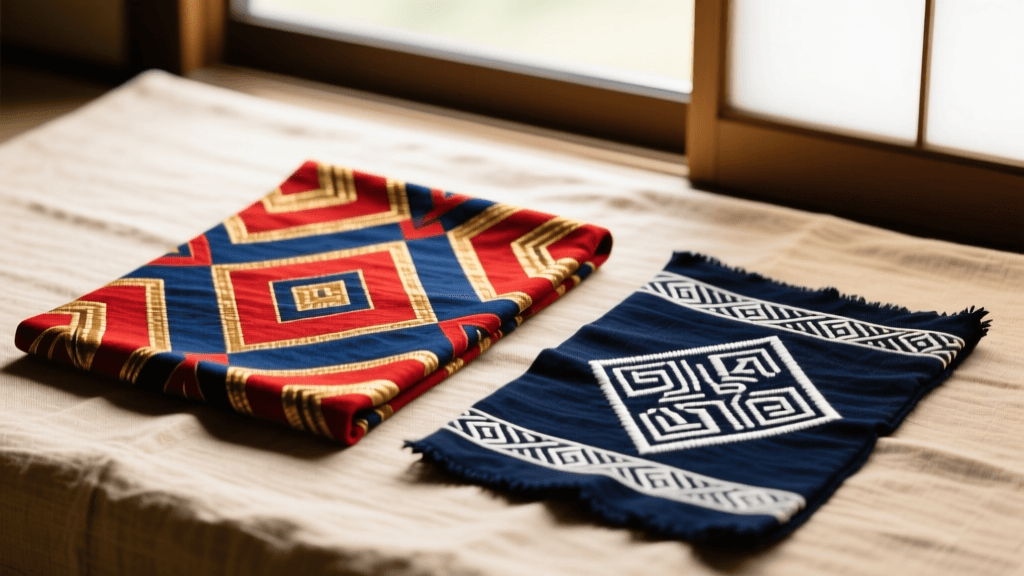
When the world thinks of traditional Japanese clothing, the mind immediately conjures the elegant silk kimono, the intricate weaving of Nishijin, and the refined aesthetics of the Yamato majority. However, the Japanese archipelago is home to distinct indigenous and ethnic minority groups whose sartorial traditions tell vastly different stories of climate, spirituality, and historical trade. In the southern subtropical islands of Okinawa, the Ryukyuan people developed the vibrant, resist-dyed textiles known as Bingata and the structured elegance of Ryusou. Meanwhile, in the northern, snow-swept expanses of Hokkaido, the Ainu people crafted resilient, elm-bark garments called Attus, adorned with protective geometric embroidery.
For collectors, cultural enthusiasts, and travelers, understanding and acquiring these indigenous garments offers a profound connection to Japan's diverse heritage. This comprehensive guide explores the craftsmanship, cultural significance, and practical acquisition of Ryukyuan and Ainu traditional dress, providing actionable advice for those looking to invest in these extraordinary textiles.
Ryukyuan Ryusou and the Vibrant Art of Bingata
The Ryukyu Kingdom (1429-1879) was a thriving maritime hub that connected Japan, China, and Southeast Asia. This unique geopolitical position birthed Ryusou, the traditional clothing of the Ryukyuan aristocracy. Unlike the restrictive, tightly bound mainland kimono, Ryusou features wider sleeves, a looser fit, and lighter fabrics suited for a subtropical climate. The most iconic textile associated with Ryukyuan dress is Bingata, a stunning resist-dyeing technique characterized by bold, contrasting colors and dynamic motifs.
The Craftsmanship of Bingata and Bashofu
Bingata relies on hand-carved mulberry paper stencils (katagami) and a rice-paste resist. Artisans apply vibrant pigments—historically derived from minerals and plants like cinnabar, gamboge, and indigo—directly onto the fabric. According to the Okinawa Prefectural Museum & Art Museum, the motifs often feature southern flora, fauna, and Chinese-influenced clouds and waves, reflecting the kingdom's rich diplomatic history.
Another vital Ryukyuan textile is Bashofu, a lightweight, breathable fabric woven from the fibers of the Japanese fiber banana plant. Bashofu is highly prized for its durability and cooling properties, making it the perfect base for summer Ryusou.
Actionable Advice: Acquiring Ryukyuan Textiles
If you are looking to purchase authentic Bingata or Ryusou, be prepared for a wide range of prices depending on the artisan, material, and complexity of the dye.
- Entry-Level Accessories: Small items like coin purses, table runners, or hachimaki (headbands) typically cost between ¥3,000 and ¥8,000 ($20 - $55 USD).
- Mid-Range Garments: A modern, machine-assisted Bingata cotton yukata or a silk Obi (sash) ranges from ¥40,000 to ¥120,000 ($270 - $800 USD).
- Heirloom Pieces: A fully hand-dyed, silk Bingata kimono created by a recognized Living National Treasure or master artisan can cost anywhere from ¥500,000 to over ¥2,000,000 ($3,300 - $13,000+ USD).
Where to Buy: Visit historic studios in Naha, such as Chinen Bingata or Eiho Bingata. These studios often offer workshops (approx. ¥5,000 for a 2-hour stenciling class on a tote bag) and sell direct-to-consumer pieces with certificates of authenticity.
Ainu Attus and the Spiritual Geometry of Hokkaido
The Ainu, the indigenous people of Hokkaido, Sakhalin, and the Kuril Islands, possess a deeply animistic culture where every element of nature houses a kamuy (spirit). Their traditional clothing, primarily the Attus, was designed to withstand harsh, freezing winters while serving as a spiritual shield.
Weaving Attus and Embroidering Moreu
Attus is a robust, water-resistant cloth woven from the inner bark of the Manchurian elm (ohyo) tree. The bark is stripped, soaked, split into fine threads, and woven on a backstrap loom. The resulting fabric is incredibly durable and stiffens slightly with use, molding to the wearer's body.
Over the cotton undergarments or directly onto the Attus, Ainu women apply moreu (embroidery) and appliqué. The patterns are not merely decorative; they are deeply spiritual. The most prominent motif is the aiushi (thorn) pattern, featuring sharp, geometric angles and spirals. These thorns are believed to catch and ward off evil spirits, protecting the wearer's vital organs and joints.
Actionable Advice: Acquiring Ainu Textiles
Authentic, traditionally woven Attus is rare and highly labor-intensive, making it a premium collector's item. The town of Nibutani in Biratori, Hokkaido, is the undisputed epicenter of this craft.
- Modern Accessories: Neckties, bookmarks, and small pouches featuring authentic Nibutani-Attus weaving or Ainu embroidery cost between ¥2,500 and ¥10,000 ($17 - $65 USD).
- Cotton Robes (Kapur Mintara): Vintage or newly crafted cotton robes with intricate appliqué work range from ¥30,000 to ¥80,000 ($200 - $530 USD).
- Authentic Elm-Bark Attus: A fully traditional, hand-woven elm bark robe can exceed ¥150,000 to ¥300,000 ($1,000 - $2,000 USD) due to the months of labor required to process the bark.
Where to Buy: The Upopoy National Ainu Museum and Park in Shiraoi is the premier destination for ethical, verified Ainu crafts. Their official shop guarantees that items are made by indigenous artisans. Additionally, the Nibutani Ainu Culture Museum in Biratori offers direct access to local weaving cooperatives.
Comparative Analysis: Ryukyuan vs. Ainu Textiles
Understanding the distinct characteristics of these two indigenous textiles is crucial for collectors and enthusiasts. Below is a structured comparison to guide your purchasing decisions.
| Feature | Ryukyuan Bingata / Ryusou | Ainu Attus / Moreu |
|---|---|---|
| Region of Origin | Okinawa and the Ryukyu Islands (Subtropical) | Hokkaido and Northern Territories (Subarctic) |
| Primary Base Material | Silk, Cotton, Banana Fiber (Bashofu) | Elm Bark (Ohyo), Cotton, Nettle |
| Decoration Technique | Stencil Resist-Dyeing (Bingata), Weaving | Backstrap Weaving, Appliqué, Chain-stitch Embroidery |
| Common Motifs | Peonies, Koi, Dragons, Clouds, Water | Aiushi (Thorns), Brackets, Spirals, Geometric Shields |
| Entry-Level Cost | ¥3,000 - ¥8,000 (Small accessories) | ¥2,500 - ¥10,000 (Small accessories) |
| Heirloom Garment Cost | ¥500,000 - ¥2,000,000+ (Master Silk Kimono) | ¥150,000 - ¥300,000+ (Traditional Elm Bark Robe) |
| Cultural Function | Aristocratic status, court ceremonies, festivals | Winter survival, spiritual protection, Iomante ceremonies |
Practical Guide: Sizing, Purchasing, and Care
Acquiring indigenous Japanese garments requires an understanding of traditional sizing, international shipping logistics, and specialized textile care.
Sizing and Measurements
Unlike Western clothing, traditional Japanese garments are generally measured in standard units of tans (bolt widths). For Ryusou, the width of the sleeves and the body panels are cut from standard loom widths (approx. 36-40 cm). Because Ryusou is worn with a sash rather than tightly tied with an Obi, it is highly forgiving in terms of waist and hip measurements. The critical measurement is the yuki (center-back to wrist length), which should ideally match your arm span divided by two, plus a few centimeters for ease. For Ainu Attus, robes are typically designed as wrap garments or pull-over tunics. Because the elm bark fabric lacks drape and stretch, sizing is primarily based on shoulder width and overall length. Most artisan cooperatives sell Attus in 'One Size' wrap formats, but custom commissions require precise shoulder-to-hem measurements.
Shipping and Customs
When purchasing directly from studios in Okinawa or Hokkaido, request shipping via Japan Post EMS (Express Mail Service). EMS is reliable, fully tracked, and typically costs between ¥2,500 and ¥5,000 ($17 - $33 USD) for a standard garment box, arriving in North America or Europe within 5 to 10 business days. Always declare the items accurately on customs forms; textiles made from natural plant fibers (like elm bark or banana) are generally permitted, but ensure no untreated seeds or wood elements are attached, which could trigger agricultural inspections.
Specialized Care Instructions
Indigenous textiles require meticulous care to preserve their structural integrity and vibrant pigments.
- Bingata Care: Never wash authentic silk Bingata at home. The rice-paste resist and mineral pigments can bleed if exposed to improper pH levels. Use a specialized kimono cleaning service (kimono arai) that understands resist-dyed silks. Store folded with acid-free tatou paper in a dark, climate-controlled drawer to prevent UV fading.
- Attus Care: Elm bark Attus should never be submerged in water, as this can cause the fibers to rot or become excessively brittle. Instead, use a soft-bristled brush to remove dust. Air the garment out on a dry, shaded day twice a year. If the fabric becomes too stiff, traditional Ainu practitioners sometimes gently flex the joints of the garment by hand to soften the fibers over time.
Conclusion
The sartorial traditions of the Ryukyuan and Ainu peoples are vital, living testaments to Japan's rich ethnic diversity. Whether you are drawn to the sun-drenched, vibrant stencils of Okinawan Bingata or the resilient, spiritually fortified elm-bark weaves of Hokkaido's Attus, investing in these garments supports indigenous artisans and preserves centuries of ancestral knowledge. By understanding the materials, motifs, and proper care techniques, collectors and enthusiasts can ensure these extraordinary textiles continue to tell their stories for generations to come.