Japanese Kimono Dress Codes: Formal Rules & Etiquette
The Language of Silk: Understanding Kimono Etiquette
The traditional Japanese kimono is far more than a beautiful garment; it is a complex, highly codified system of visual communication. In Japan, what you wear, how you wear it, and when you wear it speaks volumes about your social standing, your marital status, the season, and your relationship to the host of an event. Navigating the intricate web of kimono dress codes can seem daunting to both newcomers and seasoned enthusiasts, but mastering these rules is essential for showing proper respect in formal settings.
At the heart of Japanese fashion etiquette is the concept of TPO: Time, Place, and Occasion. Unlike Western formalwear, which often relies on a simple binary of 'black tie' or 'white tie,' Japanese traditional clothing operates on a nuanced spectrum of formality. This spectrum is dictated by fabric type, pattern placement, the presence of family crests (kamon), and the choice of accessories. Whether you are attending a Shinto wedding, participating in a traditional tea ceremony, or simply exploring the streets of Kyoto, understanding these foundational rules ensures you are dressed appropriately and respectfully.
The Hierarchy of Formality: Decoding Kimono Types
Women's kimono formality is primarily determined by the garment's pattern, color, and the wearer's marital status. The highest levels of formality are reserved for close family members at weddings or imperial court functions, while lower tiers are suitable for parties, cultural events, and daily wear. Below is a comprehensive guide to the primary types of formal and semi-formal kimono.
| Kimono Type | Formality Level | Target Wearer | Key Features & Measurements | Ideal Occasions |
|---|---|---|---|---|
| Kurotomesode | Highest (First Formal) | Married Women | Black silk, 5 crests, pattern only below the obi. | Mother of the bride/groom at weddings. |
| Furisode | Highest (First Formal) | Unmarried Women | Swinging sleeves (up to 114cm long), vibrant all-over patterns. | Coming of Age Day, attending weddings as a guest. |
| Irotomesode | High (Second Formal) | Married Women | Colored background, 3 to 5 crests, pattern below the obi. | Close relatives' weddings, formal receptions. |
| Homongi | High (Second Formal) | All Women | 1 to 3 crests, continuous 'eba' pattern flowing across seams. | Wedding guest, formal parties, award ceremonies. |
| Tsukesage | Semi-Formal | All Women | 0 to 1 crest, patterns do not cross seams, mostly below waist. | Tea ceremonies, graduation ceremonies, nice dinners. |
| Komon | Casual | All Women | No crests, repeating all-over micro-patterns. | Shopping, casual dining, theater outings. |
The Significance of Kamon (Family Crests)
The number of kamon (family crests) dyed into the silk is a strict indicator of formality. Five crests (itsutsumon) denote the highest level of formality, found on Kurotomesode and formal mourning wear. Three crests (mitsumon) are standard for Homongi and Irotomesode, while one crest (hitotsumon) is often seen on Tsukesage or highly formal casual wear. The placement is also standardized: one on the back of the neck, two on the chest/collarbones, and two on the outer sleeves.
Seasonal Rules: Koromogae and Motif Timing
Japanese culture is deeply intertwined with the changing of the seasons, and kimono etiquette reflects this through a practice known as Koromogae (the changing of the wardrobe). Historically, and still observed by traditionalists today, the wardrobe transitions on two specific dates:
- June 1st: Transition from lined kimono (awase) to unlined, breathable summer kimono (hitoe), and eventually to sheer, gauze-like fabrics (usumono) in July and August.
- October 1st: Transition back to lined awase kimono to prepare for the cooler autumn and winter months.
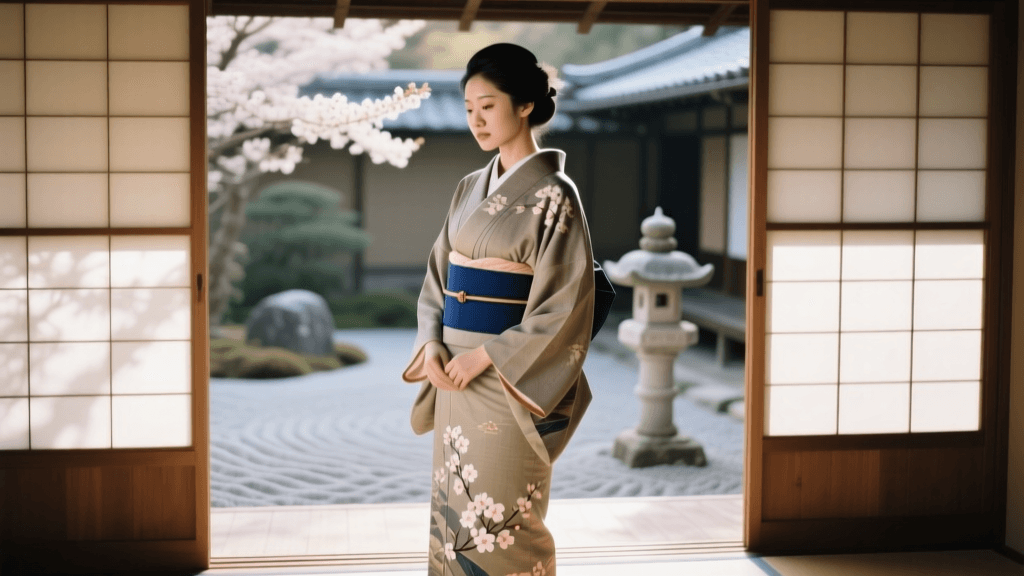
Beyond fabric weight, motif timing is a critical rule of etiquette. In Japanese aesthetics, you should wear seasonal motifs just before they occur in nature, anticipating the season rather than lagging behind it. For example, cherry blossom (sakura) motifs should be worn in late March and early April. Once the actual petals begin to fall in mid-April, wearing cherry blossoms is considered late and a breach of etiquette. Similarly, autumn maple leaves and chrysanthemums are worn in late September and October, not in the dead of winter.
The Architecture of the Outfit: Obi and Accessories
A kimono is only half the equation; the accessories elevate or downgrade the formality of the entire ensemble. The obi (sash) is the most crucial component.
- Maru Obi / Fukuro Obi: The most formal obi. A Fukuro obi is typically 31 cm wide and 4.5 meters long, made of heavy, opulent brocade silk. It is tied in complex, structured knots like the Otaiko (drum knot) or the elaborate Fukura-suzume (sparrow knot) for Furisode.
- Nagoya Obi: Invented in the 1920s for ease of dressing, this obi is pre-folded and narrower at the ends. It is the standard for semi-formal Tsukesage and Komon, perfect for tea ceremonies and cultural classes.
- Hanhaba Obi: A half-width (15 cm) casual obi used exclusively with Yukata or casual wool/cotton kimono.
Footwear also follows strict rules. Formal occasions demand Zori (flat, vinyl or brocade-covered sandals) worn with pristine white Tabi (split-toe socks). Geta (wooden clogs) are generally reserved for casual wear, summer festivals, and Yukata. Wearing bare feet or colored tabi with a formal kimono is a major faux pas.
Occasion-Specific Guidelines and Practical Costs
When attending specific events, the TPO rules become even more rigid. Here is a practical breakdown of what to wear and what to expect regarding costs.
Weddings (Kekkonshiki)
If you are a guest, unmarried women should opt for a vibrant Furisode or a tasteful Homongi. Married women should wear an Irotomesode or a subdued Homongi. Crucial Rule: Never wear white (reserved for the bride) and avoid solid black (reserved for funerals). Animal prints or leather accessories are taboo, as they evoke the imagery of killing, which is inauspicious for a wedding.
Tea Ceremonies (Chakai)
Tea ceremonies require modesty and respect for the host's utensils. Avoid overly long Furisode sleeves, which might knock over a tea bowl. A Tsukesage or an elegant, understated Komon with a Nagoya obi is ideal. Jewelry, especially rings and bracelets, must be removed before entering the tea room to prevent scratching the historic ceramics.
Mourning and Funerals (Mofuku)
Mourning attire is strictly codified. Immediate family wears solid black silk mourning kimono (Mofuku) with five crests, a black obi, and black accessories. Extended family and friends may wear subdued, dark-colored Iromuji (solid color kimono) with a black or dark grey obi to show respect without outshining the immediate family.
Practical Costs: Buying vs. Renting
Authentic silk kimono are an investment. A new, custom-tailored Homongi can cost anywhere from ¥300,000 to ¥1,000,000 ($2,000 to $7,000 USD). Maintenance is also a factor; professional dry cleaning (maru-arai) for a silk kimono costs between ¥8,000 and ¥15,000 per garment. For tourists or those attending a single event, the rental market is highly developed. Renting a full formal set (including dressing services and hair styling) typically ranges from ¥8,000 to ¥25,000 ($55 to $170 USD) for the day, making it an accessible option for experiencing high-formality attire without the long-term financial commitment.
Institutional Preservation and Modern Learning
The preservation of these intricate dress codes is supported by major cultural institutions globally and within Japan. The Victoria and Albert Museum's extensive Asian textile collections provide incredible historical context on how kimono construction and motifs have evolved from the Edo period to the modern era. Similarly, the Kyoto National Museum houses national treasures of Japanese textiles, offering profound insights into the aristocratic layering systems and historical dyeing techniques that inform today's etiquette. For those planning to experience kimono culture firsthand in Japan, the Japan National Tourism Organization (JNTO) offers excellent regional guides on where to find reputable rental shops, traditional artisan workshops, and culturally significant events where proper attire is celebrated.
Conclusion
Mastering kimono etiquette is a lifelong journey that deepens one's appreciation for Japanese culture. By respecting the rules of TPO, understanding the seasonal shifts of Koromogae, and carefully selecting the appropriate obi and accessories, you do more than just wear a beautiful garment. You participate in a living tradition, showing profound respect for the artisans who wove the silk and the culture that continues to cherish it.