Regional Japanese Garments: Okinawan Bingata to Ainu Attus
Introduction to Japan's Regional Garment Diversity
When the world thinks of Japanese traditional clothing, the mainstream image is almost exclusively the mainstream silk kimono of Kyoto and Tokyo. However, Japan's rich topographical and historical landscape has birthed a stunning array of regional and ethnic minority garments. From the tropical, vibrant dyeing techniques of the Ryukyuan Kingdom in Okinawa to the rugged, nature-woven textiles of the indigenous Ainu people in Hokkaido, regional Japanese garments tell a story of climate, trade, and cultural resilience. For collectors, cultural enthusiasts, and fashion historians, understanding these prefecture-level variations is essential. This guide explores the craftsmanship, cultural significance, and practical purchasing advice for Japan's most iconic regional textiles.
The Ryukyuan Kingdom: Okinawan Bingata and Bashofu
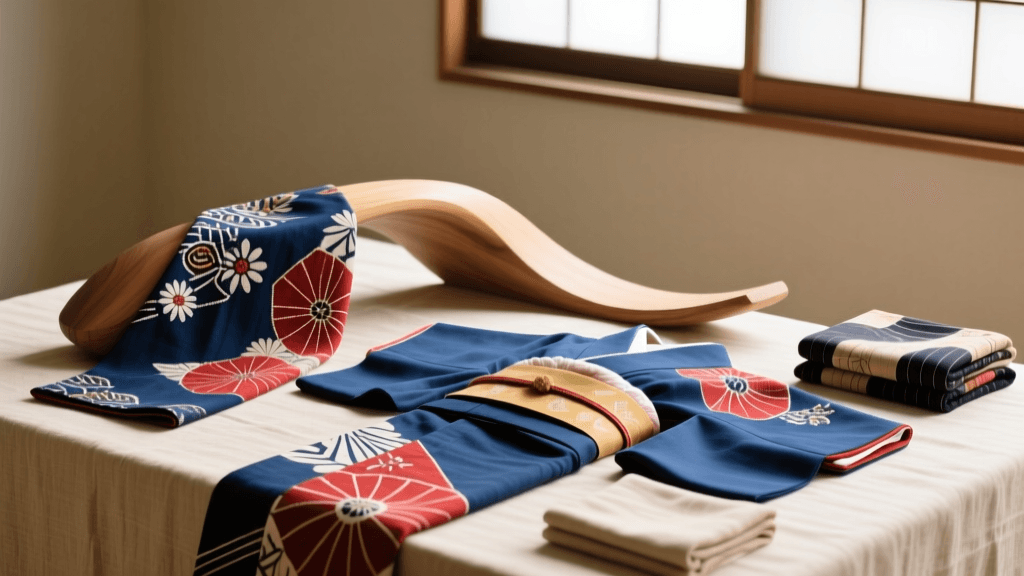
Okinawa, once the independent Ryukyu Kingdom, developed a textile culture heavily influenced by trade with China, Southeast Asia, and mainland Japan. The most famous of these is Bingata, a vibrant resist-dyeing technique characterized by bold colors—primarily yellow, red, and blue—and motifs featuring tropical flora, fauna, and ocean waves.
Craftsmanship and Cultural Significance
Traditional Bingata was historically reserved for royalty and the upper classes, with specific colors denoting rank. Yellow was the highest, reserved for the king, while blue and red were worn by nobility. The process involves applying a rice-paste resist to stenciled patterns on silk, hemp, or cotton, followed by meticulous hand-painting of pigments. According to the Kogei Japan traditional crafts database, the intricate stencil cutting and multi-layered shading require decades of mastery. Another notable Okinawan textile is Bashofu, a lightweight, breathable fabric woven from the fibers of the Japanese fiber banana plant, perfectly suited for the humid subtropical climate.
Practical Buying Guide: Okinawan Textiles
- Product Focus: For everyday wearability, a Bingata haori (jacket) or obi (sash) is highly recommended. Full kimono are often reserved for stage performances or weddings.
- Costs: An authentic, hand-dyed Bingata obi ranges from ¥150,000 to ¥350,000 ($1,000 - $2,400 USD). Vintage Bashofu kimono can exceed ¥500,000 due to the rarity of the weaving technique.
- Timing: Custom orders from artisans in Naha or Shuri take between 3 to 6 months, as the paste must dry naturally and pigments are set through multiple washings.
The Northern Frontier: Ainu Attus and Morew
In the northernmost prefecture of Hokkaido, the indigenous Ainu people developed a garment tradition entirely distinct from the mainland's silk-weaving culture. Ainu clothing is deeply spiritual, designed not only for warmth in harsh winters but also to protect the wearer from malevolent spirits through intricate embroidery.
Materials and Motifs
The foundational garment is the Attus, woven from the inner bark of the elm tree (ohyo). The bark is harvested, soaked, and split into fine threads, resulting in a durable, water-resistant fabric ideal for hunting and daily labor. Over the Attus or imported cotton, Ainu women would apply Morew (cotton appliqué) and embroidery. The Upopoy National Ainu Museum and Park highlights that the signature swirling patterns (moreu) and thorn-like motifs (aiushi) are strategically placed at the collar, cuffs, and hem to trap evil spirits and protect the wearer's soul.
Practical Buying Guide: Ainu Garments
- Product Focus: Authentic vintage Attus are fragile and best suited for museum display. For practical use, seek out modern Ainu artisans who create contemporary accessories, such as elm-bark woven bags, embroidered collars, or modern haori featuring traditional Morew patterns.
- Costs: Hand-embroidered cotton collars or small woven bags range from ¥15,000 to ¥45,000 ($100 - $300 USD). Full ceremonial garments are rarely sold commercially and are usually commissioned directly from community elders.
- Where to Buy: The official craft shops at Upopoy in Shiraoi, Hokkaido, or specialized indigenous craft fairs in Sapporo are the most ethical sources, ensuring proceeds support Ainu communities.
Mainland Masterpieces: Amami Oshima and Kaga Yuzen
While Kyoto's Nishijin and Kyo-Yuzen dominate the mainstream kimono market, regional mainland prefectures produce some of the most technically complex and highly prized textiles in the world.
Amami Oshima Tsumugi (Kagoshima Prefecture)
Originating from the Amami Islands in Kagoshima, Oshima Tsumugi is a mud-dyed silk pongee famous for its subtle, intricate kasuri (ikat) patterns and deep, lustrous black color. The black dye is achieved through a remarkable chemical reaction: silk threads dyed with the tannin-rich techigi (ironwood) tree are repeatedly submerged in iron-rich rice paddy mud. As documented by Kogei Japan's Oshima Tsumugi archives, this process must be repeated dozens of times to achieve the signature deep black, which is remarkably colorfast and softens beautifully with age.
Kaga Yuzen (Ishikawa Prefecture)
In Kanazawa, Ishikawa Prefecture, Kaga Yuzen offers a stark contrast to the stylized, graphic patterns of Kyoto. Kaga Yuzen is celebrated for its te-yuzen (hand-painted) realism. Artisans use the bokashi (gradation) technique to paint botanical motifs with astonishing realism, often including mushikui (insect-bitten leaves) to reflect the transient beauty of nature. The color palette, known as Kaga Gosai, relies on deep indigos, ochres, and muted greens.
Comparative Guide: Regional Textiles at a Glance
When investing in regional Japanese garments, understanding the baseline costs, materials, and lead times is crucial for buyers and collectors.
| Region / Prefecture | Garment / Textile | Primary Material | Average Cost (USD) | Custom Lead Time |
|---|---|---|---|---|
| Okinawa | Bingata Obi / Kimono | Silk / Hemp | $800 - $3,500 | 3 - 6 Months |
| Hokkaido | Morew Embroidery / Attus | Cotton / Elm Bark | $100 - $1,500 | N/A (Artisan/Vintage) |
| Kagoshima | Oshima Tsumugi | Silk Pongee | $2,500 - $10,000+ | 6 - 12 Months |
| Ishikawa | Kaga Yuzen | Silk Crepe | $1,500 - $8,000 | 4 - 8 Months |
Practical Sizing and Measurement Guide
Unlike Western clothing, traditional Japanese garments are not sized by S, M, or L. They are tailored based on specific body measurements, primarily height and hip width. When commissioning or purchasing regional garments, you must understand three key metrics:
- Mitake (Back Length): Measured from the base of the neck to the desired hemline. For a standard woman (approx. 160cm tall), the mitake is usually between 120cm and 130cm. Regional garments like the Okinawan summer kimono are often worn slightly shorter to prevent hem drag in humid weather.
- Yuki (Sleeve Span): The distance from the center of the back of the neck, over the shoulder, to the wrist. A standard women's yuki is around 64cm to 68cm. Ainu Attus garments traditionally feature shorter, narrower sleeves to facilitate manual labor and hunting.
- Katahaba (Shoulder Width): The width from the center back to the edge of the shoulder. This, combined with the sleeve width (sodehaba), makes up the Yuki measurement.
Actionable Advice: If buying vintage regional kimono from auction houses or antique shops in Kanazawa or Naha, always ask for the shintaku (new tailoring dimensions) and mitake. Vintage garments from the Showa era often have shorter yuki measurements (around 60-62cm) due to the shorter average height of the historical population.
Care and Maintenance for Regional Textiles
Regional garments require specialized care due to their unique dyes and fibers:
- Bingata (Okinawa): The rice-paste resist and natural pigments can be sensitive to harsh alkaline detergents. Always dry clean Bingata silk, and avoid prolonged exposure to direct sunlight, which can fade the vibrant yellows and reds.
- Attus (Hokkaido): Elm bark fiber is highly susceptible to mold in humid environments. Store Ainu textiles in a cool, dry place with desiccants, and gently brush the surface with a soft-bristled brush to remove dust. Never machine wash or soak Attus.
- Oshima Tsumugi (Kagoshima): While the mud-dye is incredibly colorfast, the silk pongee weave can warp if washed improperly. Specialized kimono cleaners (arai-hari) must be used to unpick, wash, and re-stretch the fabric on wooden boards to maintain its geometric kasuri alignment.
Conclusion
Exploring Japan's regional garments is a journey through the nation's diverse microclimates and indigenous histories. Whether you are drawn to the tropical brilliance of Okinawan Bingata, the spiritual protection of Ainu Morew, or the understated luxury of Kagoshima's mud-dyed silk, these prefecture-level traditions offer a profound alternative to the standard kimono. By understanding the specific measurements, ethical sourcing channels, and care requirements, collectors and wearers can help preserve these extraordinary textile arts for future generations.