Kimono Tanmono Zero-Waste Construction Techniques 2026
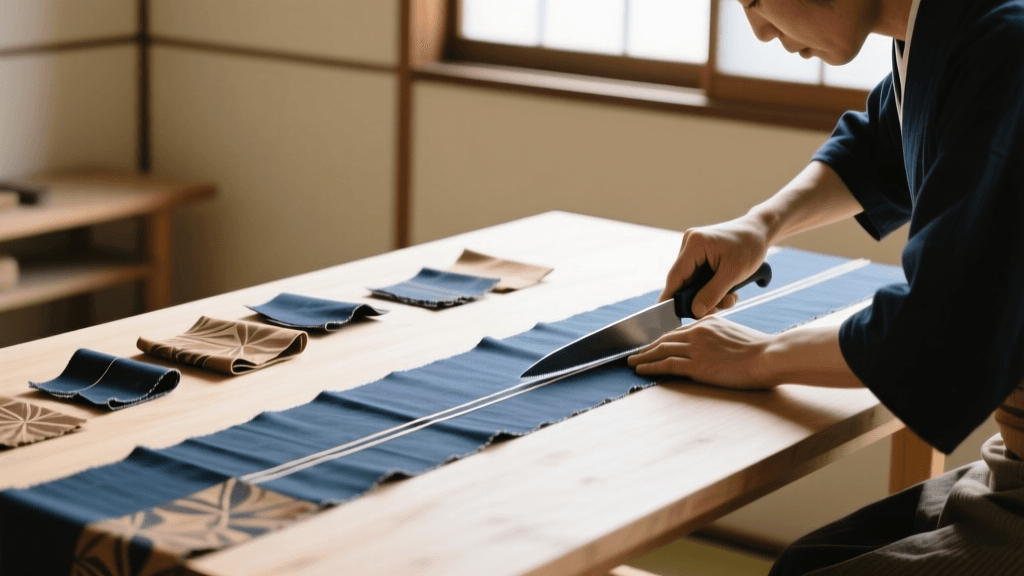
The Philosophy of Tanmono: Zero-Waste Before It Was a Trend
As the global fashion industry faces stringent environmental regulations and a massive consumer shift toward circularity in 2026, designers are desperately searching for historical blueprints that eliminate textile waste. Long before the term 'zero-waste pattern cutting' entered the modern sustainable fashion lexicon, Japanese artisans perfected the ultimate closed-loop garment system: the kimono. At the heart of this system is the tanmono, a standardized bolt of fabric that dictates the entire construction process. According to the Victoria and Albert Museum, the kimono's structural genius lies not just in its aesthetic drape, but in its mathematical precision, ensuring that every single thread of the woven bolt is utilized in the final garment without generating off-cuts.
For modern makers, tailors, and sustainable fashion students in 2026, understanding the tanmono construction method is no longer just an exercise in historical appreciation; it is a vital masterclass in spatial geometry, fabric conservation, and modular garment design. By deconstructing the traditional techniques of straight-line cutting and hidden seam allowances, contemporary creators can adapt these centuries-old methods to modern wardrobes, drastically reducing the 15% to 20% fabric waste typical in Western pattern drafting.
Anatomy of the Tanmono Bolt: Measurements and Yield
The foundation of kimono construction is the tanmono bolt. Unlike Western fabric bolts that are typically woven to widths of 115cm (45 inches) or 150cm (60 inches), a traditional kimono tanmono is woven to a very specific, narrow width. This dimension is historically rooted in the constraints of the traditional backstrap loom and the average shoulder width of the human body. The entire bolt is consumed to create exactly one adult kimono, leaving absolutely zero scraps behind.
| Feature | Traditional Tanmono Bolt | Standard 2026 Western Bolt | Zero-Waste Adaptation Strategy |
|---|---|---|---|
| Width (Haba) | 36cm - 38cm (approx. 14-15 inches) | 115cm - 150cm (45-60 inches) | Cut 150cm fabric into four 37.5cm strips parallel to the selvedge. |
| Length | 11.5m - 12m (approx. 12.5-13 yards) | Varies (usually sold by the meter) | Purchase exactly 12 meters of mid-weight linen or cotton for practice. |
| Selvedge Usage | Both selvedges are retained and folded inward. | Selvedges are usually cut off and discarded. | Use selvedges as built-in seam finishes to eliminate overlocking/serging. |
| Pattern Pieces | 8 main rectangular panels (no curves). | 20+ curved pieces with complex armholes. | Draft modular, boxy silhouettes using only orthogonal lines. |
As noted by The Metropolitan Museum of Art, the preservation of the selvedge is a critical component of this technique. Because the edges of the tanmono are tightly woven and finished on the loom, the interior seams of a kimono do not require serging, zig-zag stitching, or pinking shears. The raw edges are simply folded inward, or the selvedges are aligned, creating a naturally enclosed seam that prevents fraying while maintaining a lightweight drape.
Deconstructing the Panels: The 8-Piece Puzzle
Western tailoring relies on carving shapes out of wide fabric, creating negative space (scraps) around curved armholes, necklines, and waistlines. Kimono construction is additive and linear. The 12-meter tanmono bolt is cut into eight primary rectangular panels. Because there are no curved seams, the structural shaping of the kimono is achieved entirely through the way the fabric is folded, draped, and tied with the obi (sash).
The Core Panels
- Migoro (Body Panels): Two long panels that form the front and back of the garment. They are cut to the full length of the wearer's height plus an allowance for the ohashori (the waist tuck).
- Okumi (Front Overlap Panels): Two shorter panels attached to the front edges of the migoro to create the overlapping front closure, essential for the traditional left-over-right wrapping style.
- Sode (Sleeves): Two rectangular panels that are folded in half to create the iconic deep, pouch-like sleeves. The sleeve is attached to the body with a straight seam, leaving the underarm open for ventilation and movement.
- Eri and Tomoeri (Collars): The remaining fabric is cut into the main collar and the protective neckband, utilizing the final fractions of the bolt.
By laying out these panels sequentially along the length of the bolt, the artisan ensures that the warp threads run continuously from the hem to the shoulder and down the back. This continuous grain line gives the kimono its distinctive, heavy, vertical drape, a characteristic highly sought after in 2026 avant-garde fashion collections.
The Secret of the Kise: Seam Allowances and Resizing
Perhaps the most brilliant construction technique in kimono making is the kise. In Western garment construction, seam allowances are typically pressed open or serged together and permanently locked. If the wearer's body changes, the garment cannot be easily let out. The kimono, however, is designed for a circular lifecycle, anticipating that it will be unpicked, washed, and re-tailored multiple times over decades.
When sewing the straight seams (using a traditional running stitch called namishiro), the artisan does not press the seam allowance flat. Instead, the seam allowance is folded over the seam line by exactly 1 to 2 millimeters. This tiny fold, the kise, serves three critical functions:
- Thread Protection: It hides the structural sewing thread beneath the fold of the fabric, protecting it from friction and wear against the body or outer layers.
- Structural Give: It creates a microscopic amount of 'give' in the seam, allowing the silk to stretch slightly under tension without snapping the thread.
- Future Resizing: Because the seam allowance is substantial (often 2cm to 3cm at the side seams) and only lightly tacked, a future tailor can completely unpick the garment, shift the seam line outward or inward to adjust the width, and re-sew it without losing fabric integrity.
'The true mastery of kimono construction is not found in the cutting, but in the folding of the seam. The kise ensures that the garment is never truly finished; it is merely resting between wearers.' — Traditional Kyoto Artisan Philosophy
Adapting Tanmono Construction for Western Fabrics in 2026
While sourcing an authentic, hand-woven silk tanmono bolt can be cost-prohibitive for everyday practice (with premium 2026 market prices often exceeding $800 per bolt), modern makers can brilliantly simulate this technique using standard Western fabrics. The Ellen MacArthur Foundation frequently highlights the importance of designing for disassembly and zero-waste, making the tanmono adaptation a highly relevant exercise for contemporary design students.
Step-by-Step Adaptation Guide
To practice zero-waste kimono construction using a standard 150cm (60-inch) wide bolt of mid-weight linen or cotton (priced around $15 to $25 per yard in 2026), follow these steps:
- Calculate the Yield: A 150cm width can be divided into exactly four strips of 37.5cm. This perfectly mimics the traditional 38cm tanmono width.
- Rip, Don't Cut: Instead of using scissors, snip the selvedge and rip the fabric along the grain line. This guarantees that your 'mock tanmono' strips are perfectly on-grain, which is vital for the proper drape of the sleeves and body panels.
- Preserve the Selvedge: Treat the newly ripped edges as your interior seam allowances, and keep the original factory selvedges intact to serve as the finished edges of your sleeves and hem.
- Mock the Kise: When pinning your seams, do not align the raw edges perfectly. Offset the top layer by 2mm before sewing your running stitch. After sewing, fold the allowance over the seam line and lightly baste it down to train the fabric.
The Circular Lifecycle: Arai-Hari and Modern Sustainability
The construction of the kimono is intrinsically linked to its maintenance. The traditional cleaning method, arai-hari, involves completely unpicking the garment into its original eight rectangular panels, washing the fabric as flat sheets, stretching it on bamboo frames to dry and remove wrinkles, and then re-sewing it. Because the panels are straight rectangles, this process is remarkably efficient.
In 2026, as the fashion industry grapples with the end-of-life phase of garments, the arai-hari concept offers a profound alternative to the modern 'throwaway' culture. Designers are now creating modular, straight-seamed outerwear and dresses that can be easily disassembled. By utilizing the tanmono layout, a damaged section of a garment can be replaced, or the entire textile can be reconfigured into a completely different silhouette without the complex puzzle of curved pattern pieces.
Sourcing and Material Recommendations for Makers
For those looking to begin their journey into zero-waste Asian dress construction, selecting the right material is crucial. Silk crepe (chirimen) is traditional but notoriously difficult for beginners due to its slippery nature and high shrinkage rate during washing.
For 2026 beginners, we recommend sourcing mid-weight European linen or high-thread-count cotton sateen. These fabrics hold a crease well, making the kise fold easier to press and maintain. When purchasing vintage tanmono bolts from online Japanese auction sites or specialized textile importers, always verify the haba (width). Bolts woven prior to the mid-20th century may be as narrow as 34cm, which will require complex gusset additions for modern, broader-shouldered wearers. Always aim for a minimum width of 36cm to ensure the front overlap (okumi) provides adequate coverage when wrapped.
By mastering the straight-line geometry, the hidden kise folds, and the modular panel layout of the tanmono, modern sewists and designers can unlock a timeless, zero-waste methodology. It is a powerful reminder that true sustainability in fashion is not just about the materials we choose, but the fundamental geometry of how we cut them.