Sourcing Authentic Silk Hanbok Online: 2026 Buyer's Guide
The 2026 Landscape of Online Hanbok Shopping
The global renaissance of traditional Asian garments has reached a new zenith in 2026, with the Korean hanbok leading the charge in both cultural appreciation and modern fashion integration. As international consumers become more educated about textile heritage, the demand has shifted dramatically away from mass-produced, polyester "costume" versions toward authentic, artisan-crafted silk garments. According to cultural heritage insights published by the official Korean government portal, the preservation and global export of traditional textile crafts have become a major cultural priority, resulting in better digital infrastructure for international buyers seeking genuine articles.
Shopping for a traditional hanbok online requires navigating a complex web of global marketplaces, proxy services, and specialized boutiques. Unlike Western fashion, where standardized sizing and fabric descriptions are universal, purchasing a hanbok demands an understanding of Korean garment anatomy, seasonal textiles, and precise measurement conversions. This comprehensive 2026 guide will equip you with the knowledge needed to source authentic silk hanbok online, ensuring your investment honors the centuries-old traditions of Korean craftsmanship.
Understanding the Anatomy of a Hanbok Set
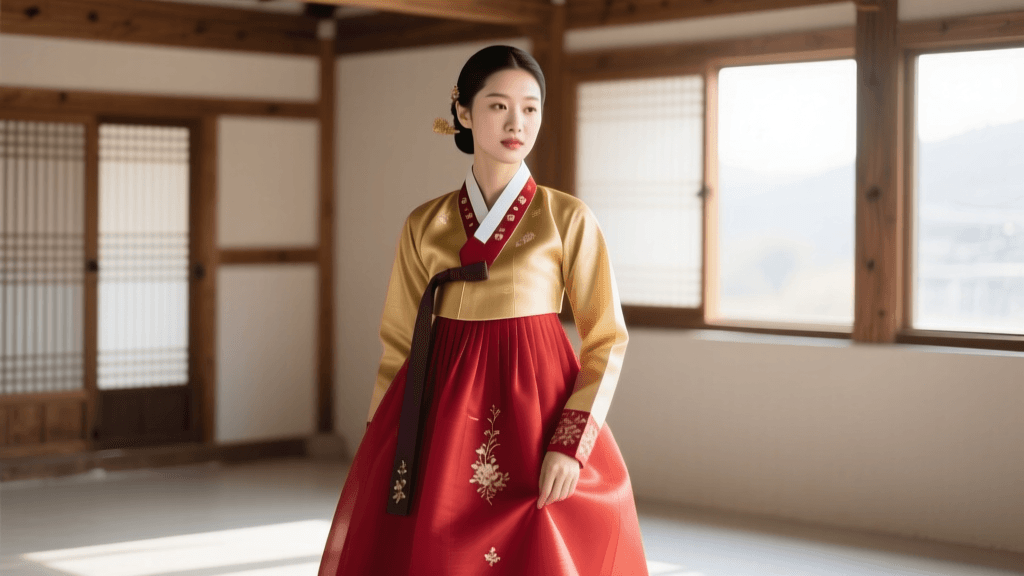
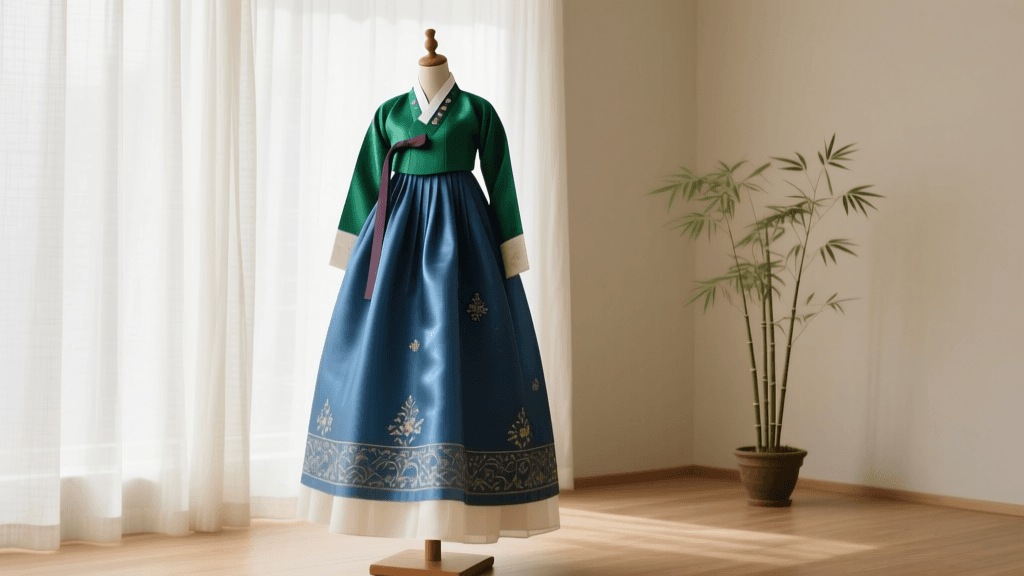
Before navigating online storefronts, it is crucial to understand what constitutes a complete hanbok set, as listings often sell components separately. A traditional women’s hanbok consists primarily of the jeogori (the short, structured jacket) and the chima (the voluminous, high-waisted wrap skirt). For men, the ensemble includes the jeogori and baji (roomy, tied trousers).
When browsing online boutiques in 2026, pay close attention to the dongjeong (the crisp white collar that frames the face) and the goreum (the long, flowing chest ties). High-end artisans hand-stitch the dongjeong to ensure it remains rigid and pristine, a detail that separates true traditional wear from fast-fashion approximations. Furthermore, many premium online listings will offer optional accessories such as the magoja (an outer jacket) or durumagi (a long overcoat), which are essential for formal winter wear and ceremonial occasions.
Top Online Marketplaces for Authentic Hanbok
Gmarket Global and Direct Korean E-Commerce
Gmarket Global remains one of the most reliable gateways for international buyers to access domestic Korean retailers. In 2026, their integrated global shipping tiers have made it easier than ever to purchase directly from established Seoul-based ateliers. The advantage of using Gmarket is access to domestic Korean brands like Sonjjang and Saimdang, which specialize in jeontong hanbok (traditional hanbok) crafted from 100% Myungju (silk). Buyers must be prepared to use browser translation extensions, as product descriptions and sizing charts are predominantly in Hangul. However, the authenticity and pricing are vastly superior to Western-facing middlemen.
Pinkoi and Artisan Platforms
For those seeking modernized yet authentic interpretations, Pinkoi has emerged as a premier marketplace for independent Asian designers. While it features many contemporary fusion pieces, Pinkoi’s strict vetting process for "Heritage Artisans" ensures that sellers using traditional silk-weaving techniques and natural dyeing methods are clearly verified. When shopping here, look for the 2026 "Certified Traditional Craft" badge on seller profiles, a feature introduced to help international buyers distinguish between genuine textile artists and drop-shippers.
Specialized Proxy Services
If you have your eye on a specific boutique located in Seoul’s Bukchon Hanok Village or the Dongdaemun specialized textile markets, proxy services like Buyee or Delivered Korea are indispensable. These services allow you to purchase from domestic-only Korean websites, Naver Smart Stores, and even Instagram-based ateliers. You simply paste the URL into the proxy dashboard, and their local warehouse receives, inspects, and consolidates your garments before shipping them internationally via DHL or EMS.
Decoding Fabrics: Myungju Silk vs. Synthetic Blends
The most critical aspect of sourcing an authentic hanbok online is verifying the fabric. The Korea Tourism Organization frequently highlights the importance of traditional textiles in cultural tourism, noting that genuine hanbok relies heavily on specific regional weaves.
- Myungju (명주): A premium, tightly woven silk that offers a beautiful, subtle luster and excellent structural integrity. It is the gold standard for formal jeogori and chima.
- Sa (사): A lightweight, breathable silk gauze traditionally worn in the humid Korean summer. High-quality Sa features intricate open-weave patterns that catch the light beautifully.
- Gap (갑): Woven from ramie fiber, this fabric is not silk but is highly prized for summer hanbok due to its crisp, cooling properties and translucent elegance.
- Synthetic Blends: Often labeled as "poly-silk" or simply "polyester." While these are affordable (often under $80 USD for a full set) and easy to wash, they lack the breathability, drape, and historical accuracy of natural fibers.
When reading Korean product descriptions, look for the characters "실크 100%" (100% Silk) or "명주" (Myungju). If the price for a full silk set seems too good to be true (e.g., under $150 USD in 2026), you are likely looking at a high-sheen polyester blend.
Mastering Hanbok Sizing and Measurements
Unlike Western clothing, traditional hanbok is not sized by standard S, M, L metrics. Instead, it relies on specific bodily measurements to ensure the jeogori fits comfortably across the shoulders and the chima sits correctly above the bust. The Cultural Heritage Administration of Korea emphasizes that proper fit is essential to maintaining the garment’s historical silhouette. Below is a standard conversion and measurement guide for ordering custom or made-to-measure hanbok online in 2026.
| Measurement Term (Korean) | English Equivalent | How to Measure for Online Ordering | Standard Adult Range (cm) |
|---|---|---|---|
| 가슴 (Gaseum) | Chest / Bust | Measure around the fullest part of the bust. For hanbok, add 2-3 cm for ease. | 85 - 105 cm |
| 허리 (Heori) | Waist | Measure the high waist, just under the bust where the Chima skirt will tie. | 70 - 90 cm |
| 팔길이 (Ppal-gili) | Sleeve Length | Measure from the base of the neck, over the shoulder, to the wrist bone. | 65 - 80 cm |
| 총장 (Chong-jang) | Total Skirt Length | Measure from the high waist (under bust) down to the ankle bone. | 100 - 125 cm |
Pro Tip for 2026 Buyers: Most high-end online ateliers offer a "made-to-order" option. Always provide your exact measurements in centimeters rather than inches to avoid conversion errors by the tailors in Seoul. Additionally, specify if you plan to wear modern undergarments or traditional padding (sokjeoksam), as this alters the required chest and waist allowances.
Red Flags: Spotting Fast-Fashion Knockoffs
As the popularity of K-dramas and historical media continues to drive global demand, the market has been flooded with counterfeit or "costume-grade" hanbok. To protect your investment, watch out for these red flags when browsing online marketplaces:
- Machine-Embroidered Goreum: Traditional goreum (ties) and geumbak (gold leaf printing) should be applied by hand or via specialized artisan heat-pressing. If the gold patterns look pixelated or the embroidery has loose, synthetic threading, it is a mass-produced knockoff.
- Zippers on the Chima: An authentic traditional chima is a wrap skirt secured by long ties. If an online listing features a skirt with an elastic waistband and a side zipper, it is a modernized costume piece, not a traditional garment.
- Stiff, Unlined Jeogori: High-quality silk jeogori are fully lined (often with a contrasting silk or high-grade cotton) to provide structure and opacity. Unlined, single-layer jackets made of stiff synthetic fabrics are a hallmark of cheap tourist-shop inventory.
Shipping, Customs, and Garment Care
When ordering authentic silk hanbok from South Korea, expect shipping times to range from 7 to 14 days via EMS or DHL. Be aware that luxury silk garments may incur customs duties depending on your country’s import thresholds for textiles. Always request that the seller declare the accurate value and mark the item as "Traditional Cultural Apparel" to facilitate smoother customs processing.
Once your hanbok arrives, proper care is paramount to preserve the integrity of the Myungju silk and the geumbak gold leaf. Never machine wash or hand wash authentic silk hanbok. Water will cause the silk to warp, shrink, and lose its structural stiffness, while the gold leaf will instantly flake away. Always take the garment to a professional dry cleaner who has experience with delicate, traditional Asian textiles.
For storage, avoid wire hangers, which will distort the shoulders of the jeogori. Instead, fold the garments carefully along their natural seams and wrap them in a traditional bojagi (wrapping cloth) or acid-free tissue paper. Store the wrapped ensemble in a cool, dry cedar chest or breathable cotton bag to protect the natural fibers from humidity and moths, ensuring your authentic hanbok remains a pristine piece of wearable history for decades to come.