Kabuki, Noh & Bunraku Theater Kimono Costumes Guide 2026
The Enduring Legacy of Japanese Theatrical Wardrobes
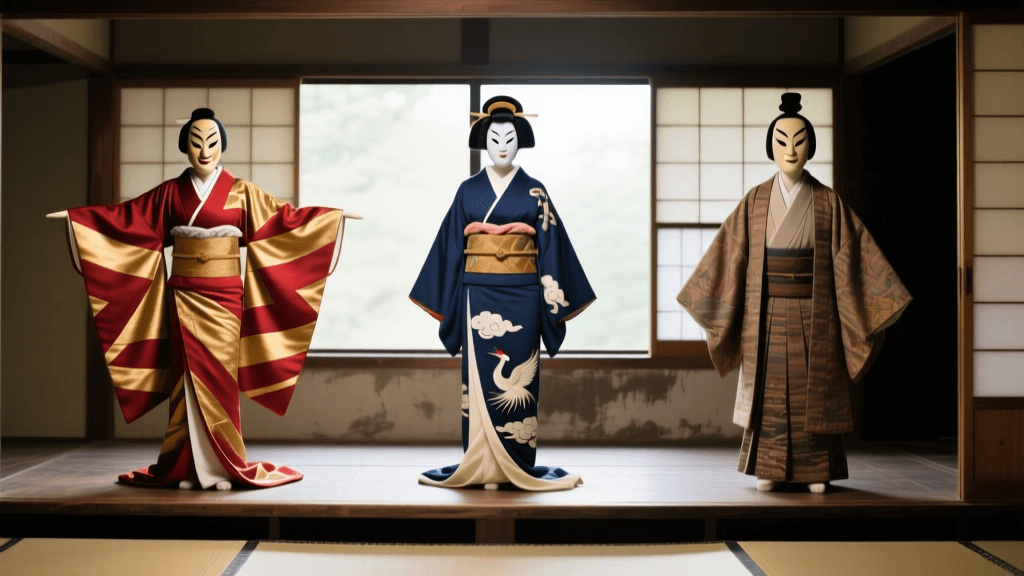
In 2026, the intersection of traditional Japanese performing arts and textile craftsmanship remains one of the most fascinating subjects for garment historians, cultural enthusiasts, and vintage collectors. The kimono, while a staple of everyday historical dress, reaches its most dramatic and technically complex iterations on the stages of Kabuki, Noh, and Bunraku theaters. Far from mere clothing, these garments are engineered performance tools, laden with symbolism, structural ingenuity, and centuries of aesthetic philosophy. As preservation technologies advance and global interest in Asian traditions surges this year, understanding the distinct sartorial languages of Japan's three major theatrical forms offers profound insight into the nation's cultural soul.
Kabuki: The Spectacle of Color and Quick-Changes
Kabuki theater is synonymous with visual extravagance, dynamic movement, and larger-than-life characters. The costumes, known as isho, are designed to be seen from the back rows of grand venues like Tokyo's Kabukiza Theatre, where single-act tickets in 2026 remain an accessible entry point for tourists and locals alike. Kabuki kimono are characterized by their bold color palettes, oversized motifs, and immense physical weight.
The Engineering of the Onnagata Wardrobe
Male actors playing female roles (onnagata) wear some of the most spectacular garments in Japanese theater. The outer robe, or uchikake, is heavily padded at the hem to create a sweeping, elegant silhouette that glides across the stage. These garments can weigh up to 15 kilograms, requiring immense physical strength from the actor. The textiles are often lavishly embroidered with gold and silver threads, utilizing the renowned Nishijin-ori weaving techniques of Kyoto.
Hiki-Nuki: The Art of the Quick Change
One of the most thrilling aspects of Kabuki costuming is the hiki-nuki (pulling out) technique. During a dramatic climax, stage assistants (kurogo) pull specific basting threads on the actor's kimono. In a fraction of a second, the outer garment falls away or transforms, revealing a completely different kimono underneath that reflects a sudden change in the character's emotion, status, or supernatural nature. This requires precise tailoring and specialized basting that differs entirely from standard kimono construction.
Noh: The Restrained Elegance of Yugen
If Kabuki is an explosion of color, Noh theater is a masterclass in subtlety and restraint. Governed by the aesthetic principle of yugen (profound, mysterious grace), Noh costumes (shozoku) prioritize texture, weaving quality, and symbolic resonance over overt theatricality. According to the Japan Arts Council National Noh Theatre, the garments are treated with immense reverence, often passed down through generations of acting families.
Karaori and Surihaku Masterpieces
The quintessential Noh garment for female or aristocratic roles is the karaori (Chinese weave), a short jacket with a stiff, brocade-like texture that stands away from the body, creating a sculptural silhouette. The weaving is so dense and intricate that it resembles embroidery. Another vital textile is the surihaku, a robe featuring designs imprinted with gold or silver leaf. The subtle way the stage lighting catches the metallic leaf as the shite (main actor) slowly shifts their posture is a hallmark of Noh's mesmerizing visual language.
The Collar as an Emotional Conduit
Because Noh actors wear carved wooden masks that obscure their facial expressions, the kimono collar becomes a vital tool for emotional communication. By subtly adjusting the angle of the collar—pulling it slightly back to expose the nape of the neck, or hunching the shoulders to bury the chin—the actor conveys sorrow, joy, or demonic rage. The stiffness and precise folding of the Noh kimono are therefore engineered to facilitate these micro-movements.
Bunraku: Miniature Masterpieces for the Puppet Stage
Ningyo Johruri Bunraku, recognized by UNESCO as an Intangible Cultural Heritage, presents a unique sartorial challenge: dressing puppets that are roughly one-half to two-thirds the size of a human. Despite their scaled-down proportions, Bunraku kimono are not toys; they are constructed from the same luxurious, authentic silks and brocades used in human theater.
Structural Illusions and Puppeteering
A Bunraku puppet is operated by three puppeteers. The lead puppeteer (omo-zukai) controls the head and right arm, while the others manage the left arm and legs. The kimono must be meticulously stuffed and draped to simulate the human form, including the illusion of breathing and the natural pooling of fabric at the feet. The interior of the garment is fitted with specialized bamboo hoops and padding that allow the puppeteers to manipulate the sleeves and hem with fluid, lifelike grace. In 2026, the National Bunraku Theatre in Osaka continues to showcase these marvels, where the interplay of authentic Yuzen-dyed silk and masterful manipulation creates a deeply moving illusion of life.
Comparative Analysis: Stage Garments at a Glance
To truly appreciate the diversity of Japanese theatrical costuming, it is helpful to compare the functional and aesthetic requirements of each art form side by side.
| Feature | Kabuki | Noh | Bunraku |
|---|---|---|---|
| Primary Aesthetic | Extravagant, bold, dynamic | Subtle, sculptural, symbolic | Realistic, scaled, fluid |
| Garment Weight | Extremely heavy (up to 15kg) | Moderate, stiffly structured | Lightweight, heavily padded interior |
| Key Textile | Nishijin-ori, heavy Yuzen dye | Karaori brocade, Surihaku leaf | Scaled authentic silks, crepes |
| Movement Function | Hiki-nuki quick-changes, sweeping hems | Collar manipulation, slow posture shifts | Simulated breathing, sleeve fluttering |
| Color Palette | High contrast, vivid reds, golds, blacks | Muted tones, metallic accents, pastels | Varied, matching historical human dress |
Preservation, Exhibitions, and the 2026 Collector Market
As we navigate 2026, the preservation of these extraordinary garments has entered a new era. Institutions like the Kyoto Costume Institute and the Shochiku Kabuki Bito archives are utilizing advanced spectral imaging and AI-assisted climate control to monitor the degradation of Edo-period natural dyes and metallic threads. This technology allows conservators to detect microscopic fungal growth or silk protein breakdown before visible damage occurs.
Acquiring Theatrical Textiles
For serious collectors of Asian traditions, acquiring authentic vintage stage kimono is a prestigious but costly endeavor. While standard vintage kimono can be found in Tokyo's secondhand markets for under ¥50,000, authenticated Kabuki or Noh stage garments command premium prices. A verified mid-Showa era Noh karaori jacket typically starts around ¥1,500,000, while elaborate, documented Kabuki uchikake worn by legendary 20th-century actors can easily exceed ¥5,000,000 at specialized auction houses in Kyoto and Tokyo.
For those who wish to experience the craftsmanship without the collector's price tag, 2026 offers unprecedented access to high-quality replica workshops in Kanazawa and Kyoto. These ateliers offer bespoke weaving and embroidery services, allowing enthusiasts to commission a single surihaku panel or a Kabuki-style obi using traditional techniques, bridging the gap between historical stagecraft and modern wearable art. Whether viewed under the dramatic spotlights of the Kabukiza or studied in the quiet archives of a preservation society, the kimono of Japanese theater remain unparalleled triumphs of textile engineering and cultural storytelling.