Sourcing Authentic Kanjeevaram Silk Sarees Online 2026
The Digital Renaissance of Handloom in 2026
The landscape of purchasing traditional Asian garments has undergone a massive transformation over the last few years. In 2026, the e-commerce sector for heritage textiles is more robust than ever, allowing global buyers to source authentic garments directly from artisan communities. However, this digital accessibility has also led to a surge in sophisticated powerloom replicas flooding online marketplaces. For the discerning buyer, sourcing an authentic Kanjeevaram silk saree online requires a blend of cultural knowledge, technical verification, and an understanding of trusted digital storefronts.
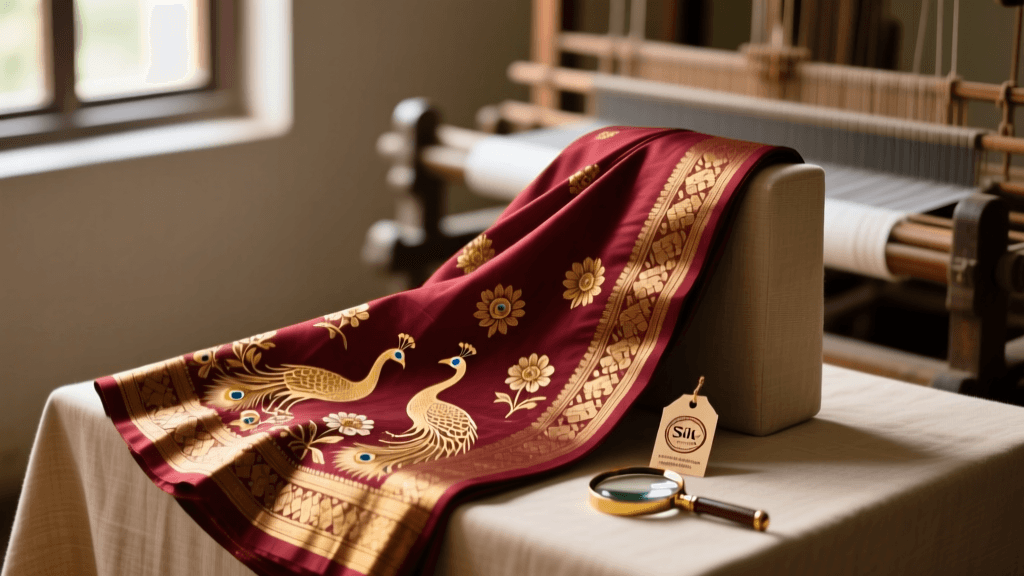
Kanjeevaram (or Kanchipuram) silk sarees are the crown jewels of South Indian traditional wear. Originating from the temple town of Kanchipuram in Tamil Nadu, these garments are renowned for their heavy mulberry silk, vibrant contrasting colors, and intricate zari work. As we navigate the 2026 online shopping ecosystem, distinguishing between a handwoven masterpiece and a mass-produced synthetic imitation is the most critical skill a buyer can develop.
The Anatomy of a True Kanjeevaram Saree
Before adding an item to your digital cart, it is essential to understand the structural hallmarks of a genuine Kanjeevaram. Unlike many other silk sarees, a traditional Kanjeevaram is woven in three separate parts: the body, the border, and the pallu (the decorative end piece).
The Korvai and Petni Techniques
The border and the body are often in contrasting colors. In an authentic handloom piece, these are interlocked using a highly complex technique known as Korvai. If you examine the joint where the border meets the body, you will see a distinct, slightly jagged interlocking pattern. Powerloom fakes, which are woven in a single continuous piece, often rely on printed borders or synthetic glued joints that lack this structural integrity.
Similarly, the Petni technique is used to attach the pallu to the body. This requires the weaver to interlock the warp threads of the pallu with the body threads, creating a seamless yet distinct transition. Understanding these structural elements is crucial when reviewing high-resolution macro images provided by premium online sellers in 2026.
Top Trusted Online Marketplaces for 2026
When shopping for heritage garments, the platform you choose is just as important as the product itself. Here are the most reliable online marketplaces and direct-to-consumer platforms for sourcing authentic Kanjeevaram silk sarees this year.
1. Co-optex (Tamil Nadu Handloom Weavers' Cooperative Society)
For buyers prioritizing authenticity and ethical sourcing over modern UI/UX, the official Co-optex online portal remains the gold standard. Operating under the state government, Co-optex sources directly from registered weaver cooperatives. In 2026, their digital catalog has been vastly improved, offering detailed zoom functionalities that allow buyers to inspect the Korvai joints and zari purity. Prices here are heavily regulated, ensuring you pay fair market value without the inflated markups of boutique resellers.
2. Tilfi and Jaypore
Curated boutique platforms like Tilfi and Jaypore have bridged the gap between rural weavers and global urban consumers. Tilfi, while historically famous for Banarasi weaves, has expanded its Kanjeevaram roster significantly in 2026, offering exclusive artisan collaborations. Jaypore provides a highly vetted selection of heritage sarees, complete with detailed artisan stories and guaranteed Silk Mark certification. These platforms are ideal for international buyers, as they handle complex export logistics, customs, and secure global shipping.
3. Heritage Brand Portals (Nalli & Sundari Silks)
Legacy brick-and-mortar giants like Nalli and Sundari Silks have fully optimized their e-commerce operations. Shopping through their official 2026 web portals guarantees authenticity, as they maintain strict in-house quality control teams that reject any saree failing the zari and silk purity tests. They frequently offer virtual styling consultations, allowing you to drape the saree digitally using augmented reality before purchasing.
4. Vetting Instagram and WhatsApp Sellers
Social commerce is booming, with many master weavers now selling directly via Instagram and WhatsApp. While this offers access to exclusive, freshly woven pieces, it carries the highest risk. Only purchase from social sellers who provide a scannable NFC-enabled Silk Mark tag, offer video calls to show the saree in natural sunlight, and have a documented history of verifiable customer reviews.
Authenticity Checklist: Handloom vs. Powerloom
Use the following comparison chart to evaluate the product descriptions and images provided by online sellers. If a listing contradicts the authentic traits listed below, proceed with extreme caution.
| Feature | Authentic Handloom Kanjeevaram | Powerloom Replica / Fake |
|---|---|---|
| Zari Composition | Pure silver wire flattened and electroplated with gold. Tarnishes gracefully over decades. | Synthetic plastic threads coated in metallic paint. Shines unnaturally and peels over time. |
| Border Joining (Korvai) | Interlocked by hand; features a distinct, slightly irregular zigzag color transition. | Woven continuously or printed; the border transition is perfectly straight or artificially dyed. |
| Weight & Drape | Heavy (typically 600g to 1.2kg). Stiff initially but softens beautifully with wear. | Lightweight (under 400g). Flimsy drape and lacks the structural body of pure mulberry silk. |
| Price Range (2026) | ₹18,000 to ₹2,50,000+ ($215 to $3,000+ USD) depending on zari density. | ₹2,500 to ₹6,000 ($30 to $75 USD). Anything cheaper than ₹12,000 is highly suspicious. |
| Certification | NFC-embedded Silk Mark tag and GI (Geographical Indication) label. | Missing tags, or features easily forged printed QR codes that redirect to generic sites. |
Decoding the Silk Mark and GI Tags in 2026
The most vital tool in your online shopping arsenal is the Silk Mark. According to the Silk Mark Organisation of India, this is the only government-backed assurance of 100% pure silk. In 2026, the organization has fully transitioned to NFC-embedded holographic tags. When you receive your saree, you can tap your smartphone against the tag to instantly verify its unique serial number on the central government database. If an online seller claims their saree is pure silk but cannot provide a clear image of the physical Silk Mark tag attached to the garment, abandon the purchase immediately.
Additionally, genuine Kanjeevaram sarees carry the Geographical Indication (GI) tag, which legally protects the weaving techniques specific to the Kanchipuram region. The Ministry of Textiles Handloom Portal actively monitors and updates the registry of authorized cooperative societies and master weavers who are permitted to use the GI label. Cross-referencing a seller's claimed cooperative registration number with the government portal is a highly effective way to weed out fraudulent middlemen.
Caring for Your Investment
Once you have successfully navigated the online marketplaces and secured an authentic Kanjeevaram, proper maintenance is essential to preserve its value and structural integrity. The Craft Council of India emphasizes that handloom silks are living textiles that require specific environmental conditions to thrive.
- Storage: Never store your saree in plastic covers, as this traps moisture and causes the pure zari to oxidize and turn black prematurely. Instead, wrap the saree in a clean, unbleached muslin or pure cotton cloth.
- Folding: Change the fold lines every three months. Continuous pressure on the same creases will cause the heavy silk fibers to tear along the fold lines over time.
- Pest Control: Avoid naphthalene balls or chemical mothballs, which can react with the metallic zari and cause irreversible discoloration. Use natural alternatives like dried neem leaves, cedar blocks, or whole cloves placed in the corners of your storage cabinet.
- Cleaning: For the first few years, dry cleaning is recommended to maintain the stiff, crisp finish of the new silk. If you must wash it at home later, use a mild, pH-neutral reetha (soapnut) solution and avoid wringing the fabric. Always dry it in the shade, as direct sunlight will bleach the vibrant natural dyes.
Final Thoughts on Digital Sourcing
Sourcing an authentic Kanjeevaram silk saree online in 2026 is a highly rewarding endeavor that connects you directly with centuries of South Asian textile heritage. By prioritizing government-certified cooperatives, leveraging modern NFC verification technology, and understanding the intricate anatomy of the Korvai weave, you can confidently build a collection of genuine, investment-grade traditional garments from anywhere in the world.