2026 Guide to Authentic Hutsul & Maramureș Embroidered Blouses
The Enduring Legacy of Carpathian Textile Arts
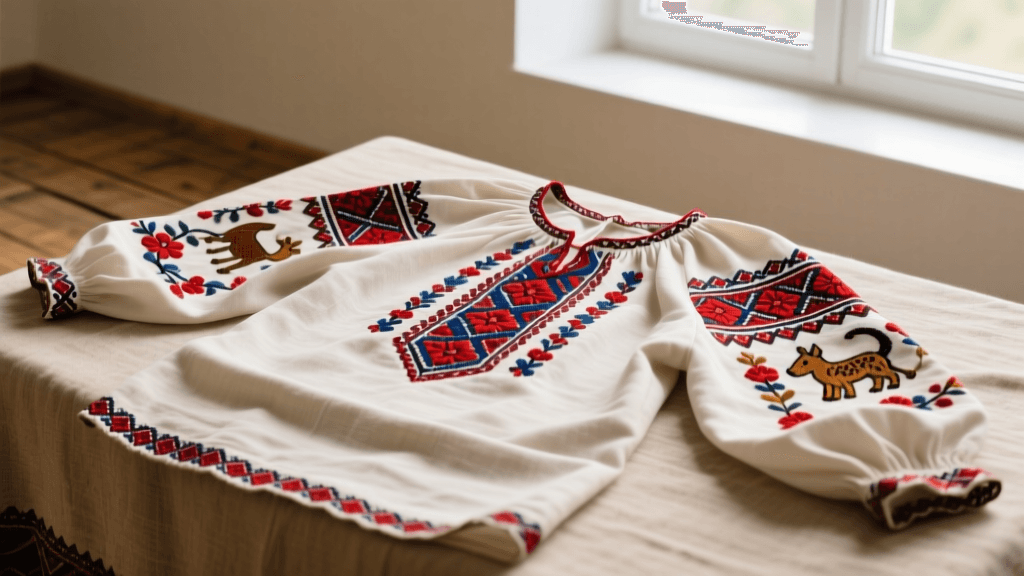
The Carpathian Mountains have long served as a cradle for some of Europe's most intricate and symbolically rich textile traditions. As we navigate the global fashion landscape in 2026, the demand for slow, heritage-driven garments has reached unprecedented heights. Among the most coveted pieces are the traditional embroidered blouses of the Hutsul region in Ukraine and the Maramureș county in Romania. Known respectively as the vyshyvanka and the ie, these garments are far more than mere clothing; they are wearable manuscripts of Slavic and Balkan folklore, encoding centuries of protective magic, agricultural cycles, and familial lineage into every stitch.
For collectors, cultural preservationists, and ethical fashion enthusiasts, sourcing authentic pieces in 2026 requires a nuanced understanding of regional variations, material integrity, and the modern cooperative structures that support rural artisans. This comprehensive guide will equip you with the knowledge to identify, authenticate, and ethically acquire genuine Hutsul and Maramureș embroidered blouses, ensuring your investment supports the living heritage of Eastern Europe.
Comparative Analysis: Hutsul vs. Maramureș Traditions
While geographically adjacent and sharing certain Carpathian cultural overlaps, the embroidery traditions of the Hutsulshchyna and Maramureș regions possess distinct visual and structural signatures. Understanding these differences is critical for accurate attribution and fair valuation in today's market.
| Feature | Hutsul (Ukraine) | Maramureș (Romania) |
|---|---|---|
| Primary Colors | Vibrant orange, deep red, black, and yellow | Monochromatic black, deep burgundy, or navy on white |
| Base Fabric | Handwoven hemp or unbleached linen | Finely woven white linen or sheer hemp-cotton blends |
| Dominant Motifs | Geometric stars, solar crosses, rhombuses | Curvilinear botanicals, vines, subtle geometric accents |
| Signature Stitch | Nyz (reverse cross-stitch) and cutwork | Punctul românesc (Romanian stitch) and drawn thread |
| 2026 Artisan Price | $280 - $550+ USD | $220 - $480+ USD |
Decoding the Motifs: Symbols of Protection and Fertility
Before purchasing a vintage or newly commissioned piece, it is essential to understand the visual language embroidered into the fabric. In both Slavic and Balkan traditions, motifs were never purely decorative; they served as apotropaic (evil-averting) talismans.
- The Rhombus (Sown Field): Ubiquitous in Hutsul designs, the rhombus divided into four smaller squares with dots represents a plowed and sown field, symbolizing agricultural fertility, prosperity, and the continuation of the family line.
- The Sun Star (Rozha): Often found on the chest and cuffs to protect the body's most vulnerable pulse points, this eight-pointed star represents solar energy, life force, and the triumph of light over darkness.
- The Tree of Life: More prevalent in Maramureș and broader Balkan traditions, this motif connects the underworld, the earthly realm, and the heavens, often stylized with symmetrical leaves or birds perching on its branches.
- Hops and Vines: Flowing, continuous wave patterns found on Romanian ie sleeves represent eternal life, youth, and the unbroken flow of generations.
Mastering the Stitches: Nyz, Zavolikannya, and Punctul Românesc
The true value of a Carpathian blouse lies in the technical mastery of its execution. Machine embroidery, which flooded the market in the early 2020s, lacks the tactile depth and structural integrity of hand-stitched work. The Hutsul nyz stitch is worked from the reverse side of the fabric, requiring the artisan to count threads flawlessly to create a positive geometric pattern on the front. This technique results in a dense, almost tapestry-like texture that is highly durable.
Conversely, the Maramureș punctul românesc (Romanian stitch) is a highly complex, interlaced stitch that creates a raised, braided effect on the surface of the fabric. It is incredibly labor-intensive, with a single sleeve panel taking upwards of eighty hours to complete. When inspecting a piece, look for the slight, organic irregularities in thread tension that are the undeniable hallmarks of human craftsmanship.
The 2026 Authentication Checklist for Buyers
With the rise of AI-generated textile patterns and mass-produced replicas, authenticating handwoven garments requires a meticulous approach. Use this checklist when evaluating a potential acquisition:
- Examine the Reverse Side: Authentic nyz or cross-stitch work will look nearly as neat on the back as on the front, with no long, floating threads or messy knots. Machine embroidery often leaves a chaotic web of backing threads.
- The Burn Test (For Vintage Pieces): If permitted, extract a single microscopic thread from an inner seam and burn it. Hand-spun linen or hemp will smell like burning leaves and turn to fine ash. Synthetic blends will melt into hard plastic beads.
- Assess the Dye Penetration: Traditional natural dyes (derived from onion skins, madder root, or walnut husks) penetrate the fiber unevenly, giving the thread a rich, variegated depth. Modern aniline dyes appear flat and uniformly saturated.
- Check for Provenance Tags: In 2026, many verified artisan cooperatives utilize blockchain-backed NFC tags sewn into the hem, which, when scanned, provide the artisan's name, village, and the exact hours logged on the garment.
Sourcing Ethically: Navigating the 2026 Artisan Market
The ethical sourcing landscape has evolved significantly. Buying directly from rural artisans or verified cooperatives ensures that the economic benefits of the global slow-fashion movement reach the communities preserving these endangered techniques. According to cultural preservation initiatives tracked by the Smithsonian Center for Folklife and Cultural Heritage, direct-to-consumer cooperative models have increased artisan wages by over 40% since the early 2020s, incentivizing younger generations to learn the craft.
For Romanian pieces, the National Museum of the Romanian Peasant in Bucharest remains an authoritative hub. Their affiliated artisan networks and seasonal fairs are the gold standard for acquiring authenticated Maramureș blouses. For Ukrainian Hutsul textiles, look for cooperatives based in the Ivano-Frankivsk and Chernivtsi oblasts that partner with international cultural heritage NGOs. Always request a certificate of authenticity that details the specific village of origin, the artisan's name, and the material composition.
Preservation and Care for Handwoven Linens
Investing in a handmade Carpathian blouse is an investment in a textile heirloom. Proper care is non-negotiable to preserve the structural integrity of hand-spun fibers and natural dyes.
- Washing: Never use a washing machine. Hand wash in cool water (maximum 30°C or 86°F) using a pH-neutral, enzyme-free detergent designed for delicate natural fibers. Do not soak for more than ten minutes to prevent natural dyes from bleeding.
- Drying: Never wring or twist the fabric, as this will break the linen fibers and distort the embroidered tension. Roll the garment in a clean, dry cotton towel to press out excess moisture, then lay it flat on a drying rack away from direct sunlight.
- Ironing: Iron the garment while it is still slightly damp. Always iron on the reverse side over a thick, padded cotton cloth to prevent crushing the raised embroidery stitches.
- Storage: Store folded in acid-free tissue paper inside a breathable cotton pillowcase. Avoid plastic bins, which trap moisture and promote mildew. Include blocks of untreated cedar to deter textile moths naturally.
Modern Styling: Integrating Heritage Pieces into 2026 Wardrobes
The beauty of the vyshyvanka and the ie lies in their versatility. In 2026, the most sophisticated approach to styling these garments is through juxtaposition. Rather than wearing them with traditional heavy wool skirts or wide peasant trousers, integrate them into a modern, tailored silhouette.
Pair a monochromatic Maramureș blouse with high-waisted, wide-leg linen trousers and minimalist leather loafers for an elevated summer aesthetic. A vibrant, heavily embroidered Hutsul tunic can be belted over a sleek, midi-length slip dress or worn unbuttoned as a light layering piece over a fine-gauge merino turtleneck in the autumn. By treating these garments as high-art statement pieces rather than historical costumes, you honor their craftsmanship while seamlessly weaving Eastern European heritage into your contemporary life.