2026 Guide To Antique Sarasa & Kinran Kimono Trade
The Legacy of the Silk and Spice Routes in Japanese Textiles
The history of the Japanese kimono is deeply intertwined with global commerce. While Japan is often perceived through the lens of its isolated Edo period (1603–1867), the reality of its textile evolution reveals a vibrant network of international exchange. According to the UNESCO Silk Roads Programme, the maritime and overland trade routes that connected Asia, the Middle East, and Europe facilitated a profound cross-pollination of aesthetics, techniques, and raw materials. For modern collectors, curators, and heritage fashion enthusiasts in 2026, understanding these historical imports is essential for authenticating, valuing, and preserving antique garments.
Long before the Meiji Restoration opened Japan's borders to the West, the port of Nagasaki served as a tightly controlled but highly influential conduit for foreign goods. Dutch, Portuguese, and Chinese merchants brought exotic fabrics that captivated the Japanese elite. These imported textiles were not merely worn; they were studied, deconstructed, and meticulously reverse-engineered by domestic artisans. Today, the antique kimono market in 2026 places a massive premium on garments that feature these historical trade-route motifs and imported materials, particularly Indian Sarasa and Chinese Kinran brocades.
Understanding Sarasa: The Indian Chintz Influence
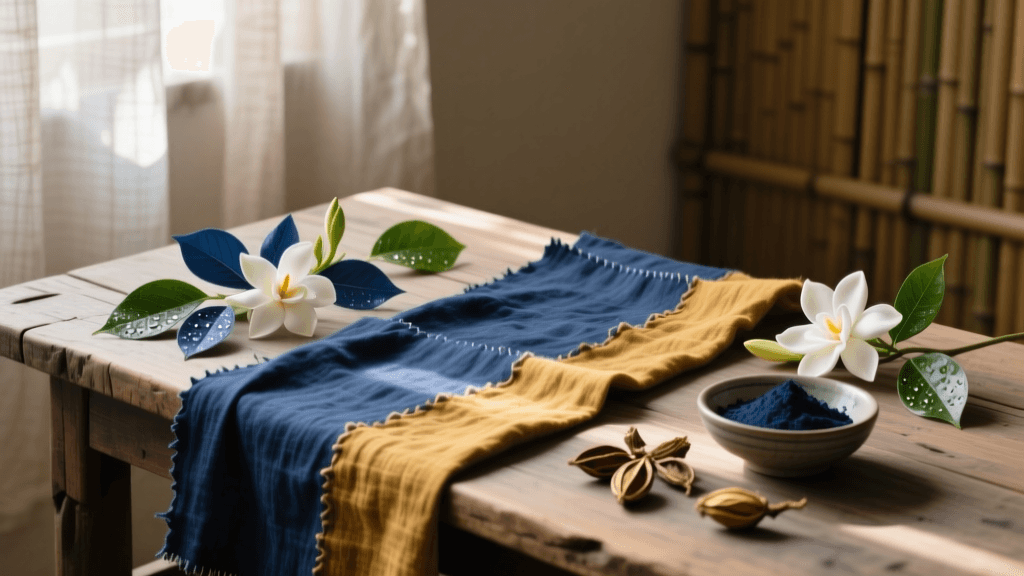
Sarasa refers to the Japanese adaptation and importation of Indian chintz and calico cottons. Originating primarily from the Coromandel Coast of India, these vibrantly dyed, block-printed, and mordant-painted cottons were introduced to Japan via Portuguese traders in the late 16th century, and later dominated by the Dutch East India Company (VOC). The Victoria and Albert Museum's Japanese Kimono collection highlights how these foreign cottons were initially treated as precious commodities, far more valuable than domestically produced hemp or ramie.
Because imported Sarasa was so expensive, it was rarely used for entire outer garments during the Edo period. Instead, it was strategically utilized for the linings of luxurious uchikake (wedding overcoats), the collars of kosode, and as fukusa (ceremonial covers) in the tea ceremony. The distinctive Sarasa palette—featuring deep madder reds, rich indigo blues, and turmeric yellows—along with its exotic floral and geometric motifs, became a status symbol.
By the late Edo and early Meiji periods, Japanese dyers began producing domestic imitations of Sarasa using traditional katazome (stencil dyeing) techniques. In 2026, distinguishing between genuine imported Coromandel Sarasa, early domestic hand-painted imitations, and later Meiji-era roller-printed versions is a critical skill for serious collectors. Genuine 17th and 18th-century imports exhibit a distinct lack of uniformity in their mordant application, resulting in a vibrant, slightly organic bleeding of colors that modern reproductions fail to capture.
Kinran and Ginran: Chinese Brocades in Nishijin Weaving
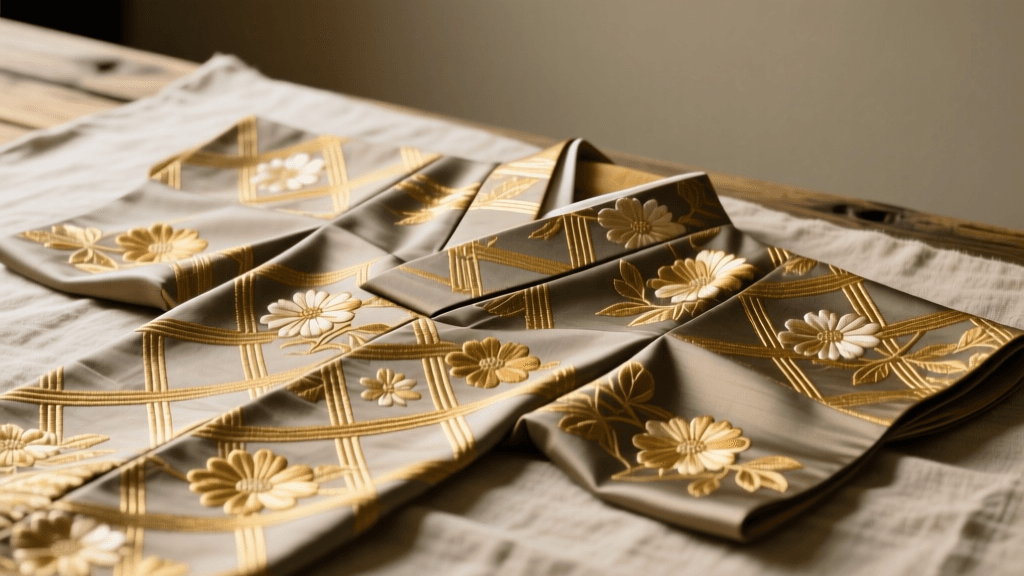
While cotton Sarasa arrived via maritime spice routes, luxurious silk brocades flowed into Japan through the broader Silk Road network and direct trade with Ming and Qing dynasty China. Known in Japan as Kinran (gold brocade) and Ginran (silver brocade), these heavy, intricately woven textiles were initially imported for use by Buddhist clergy and the aristocracy.
The true turning point for Kinran occurred within the context of the Japanese tea ceremony. Tea masters like Sen no Rikyu prized imported Chinese textiles, categorizing them as meibutsugire (famous fabrics). These brocades were cut into small squares to create shifuku (storage bags) for precious tea bowls. Recognizing the immense domestic demand, the weavers of Kyoto's Nishijin district began to study and replicate these Chinese imports. By the 18th century, Nishijin-ori had not only matched the quality of Chinese Kinran but had developed uniquely Japanese motifs, blending imported weaving structures with native aesthetic sensibilities.
In the 2026 antique market, Nishijin-woven Kinran kimono and obi (sashes) that feature historical Chinese-inspired motifs—such as the mythical qilin, stylized peonies, and cloud bands—are highly sought after. Collectors specifically look for the use of genuine hikihaku (hand-cut gold or silver leaf applied to lacquered paper and woven into the weft), a technique that defines high-end historical brocades and distinguishes them from 20th-century synthetic metallic thread alternatives.
2026 Market Guide: Sourcing Antique Trade-Route Textiles
The market for antique kimono has evolved significantly by 2026. Driven by a global surge in sustainable heritage fashion and a renewed interest in textile conservation, garments featuring verifiable trade-route origins command top tier pricing. Sourcing these pieces requires navigating both physical antique markets in Japan and specialized international auction houses.
Below is a comprehensive pricing and sourcing guide for 2026, reflecting current market valuations for textiles influenced by historical imports.
| Textile Type | Historical Origin / Era | 2026 Avg. Antique Price (USD) | Best Sourcing Location in 2026 |
|---|---|---|---|
| Edo-Period Imported Sarasa | India (Coromandel) / 17th C. | $1,500 - $4,200 | Kyoto Toji Temple Antique Market (Specialty Dealers) |
| Meiji Nishijin Kinran Obi | Japan (Chinese Motif) / Late 19th C. | $800 - $2,500 | Online Japanese Auction Houses (Verified Sellers) |
| Taisho Domestic Sarasa Haori | Japan (Roller-Printed) / 1920s | $350 - $750 | Tokyo Oedo Antique Market |
| Edo Meibutsugire Tea Fukusa | China / Japan / 18th C. | $600 - $1,800 | Specialized Kyoto Tea Ceremony Estate Sales |
When sourcing in 2026, buyers should utilize emerging AI-assisted textile authentication apps that analyze weave density and dye spectrums via smartphone macro-lenses. These tools, widely adopted by the Textile Society of America and independent appraisers, help verify the age of metallic threads and natural dyes before making high-value purchases.
Authentication: Identifying Genuine Imports vs. Domestic Reproductions
As the value of trade-route textiles has risen, so has the sophistication of modern reproductions. To ensure you are acquiring a genuine historical piece in 2026, focus on the following authentication markers:
- Dye Penetration and Mordants: Genuine Edo-period Indian Sarasa was dyed using complex mordant processes. Examine the reverse side of the fabric. True historical chintz will show significant dye penetration, whereas later domestic Japanese stencil-printed imitations (katazome) will often have a stark white reverse side due to the resist-paste surface application.
- Selvage Marks and Weave Width: Imported Chinese silks and Indian cottons were woven on looms that produced different fabric widths than traditional Japanese tanmono (bolts). If a kimono features awkward, asymmetrical seam placements or pieced-together back panels, it is a strong indicator that the garment was constructed from repurposed, narrower foreign trade cloth rather than domestic bolt fabric.
- Metallic Thread Composition: For Kinran brocades, use a jeweler's loupe to inspect the gold threads. Pre-1900s Japanese and Chinese brocades utilized hikihaku—gold leaf pressed onto mulberry paper and cut into strips. Later 20th-century reproductions use extruded synthetic films or wrapped metal wires, which reflect light much more harshly and lack the organic, matte luminosity of historical paper-based gold.
2026 Preservation Techniques for Historical Textiles
Owning a piece of global textile history comes with the responsibility of rigorous preservation. Trade-route textiles, particularly those combining Japanese silk with imported metallic threads or heavy cotton linings, are highly susceptible to environmental degradation. In 2026, museum-grade preservation has become accessible to private collectors through smart-home technology and advanced archival materials.
Proper climate control is not just about comfort; it is the primary defense against the chemical breakdown of historical dyes and the shattering of weighted silks.
Follow these 2026 best practices for preserving your Sarasa and Kinran garments:
- IoT Climate Monitoring: Utilize wireless IoT hygrometers inside your storage cabinets or display cases. Maintain a strict relative humidity (RH) of 45-55% and a stable temperature of 65-68°F (18-20°C). Fluctuations in humidity cause metallic paper threads in Kinran to warp and snap, while high humidity promotes mold on organic cotton Sarasa.
- Archival Storage Solutions: Never hang antique Kinran obi or heavy Sarasa-lined kimono on standard hangers; the sheer weight of the imported brocades and dense cottons will cause the silk warp threads to tear over time. Store garments flat, folded gently along their original seam lines, interleaved with unbuffered, acid-free tissue paper. Replace this tissue annually to prevent acid migration.
- UV and Light Management: Historical madder and indigo dyes used in Sarasa are notoriously fugitive. If displaying these garments, ensure your display case features UV-filtering acrylic glazing. In 2026, smart-glass technology allows collectors to tint display cases to block 99% of UV rays when the room is unoccupied, preserving the vibrancy of the textiles for future generations.
Conclusion
The kimono is far more than an isolated symbol of Japanese tradition; it is a canvas that records centuries of global interaction. From the vibrant, spice-route cottons of Indian Sarasa to the opulent, Silk Road-inspired brocades of Nishijin Kinran, these textiles tell the story of a nation deeply engaged with the wider world. As we navigate the 2026 antique market, armed with advanced authentication tools and modern preservation techniques, we do more than collect beautiful garments. We act as custodians of a rich, interconnected global heritage, ensuring that the legacy of the historical textile trade continues to be studied, admired, and preserved.