Chinese Natural Plant Dyes 2026: Eco-Friendly Dyeing Guide
The Renaissance of Chinese Botanical Dyes in 2026
As the global fashion industry accelerates its transition toward circularity and zero-waste production in 2026, traditional Asian textile practices are experiencing a profound renaissance. Among the most impactful of these ancient methodologies is the use of Chinese natural plant dyes, historically known as Cao Mu Ran (grass and wood dyes). For centuries, artisans across China utilized local flora to color silk, hemp, and cotton, achieving complex, vibrant hues that synthetic chemicals have struggled to replicate without severe environmental costs. Today, modern eco-textile innovators and Hanfu enthusiasts are returning to these botanical roots, merging ancient wisdom with 2026 sustainability standards to create garments that are as kind to the earth as they are visually stunning.
The shift away from synthetic azo dyes is no longer just a niche preference; it is an industry mandate. According to the Ellen MacArthur Foundation, the transition to circular fashion models requires the elimination of toxic chemical inputs and the drastic reduction of water pollution. Chinese natural dyeing offers a viable, scalable solution. By utilizing agricultural byproducts and sustainably harvested botanicals, artisans can achieve remarkable colorfastness while ensuring that their dye baths are entirely biodegradable and safe for local water systems.
Top 3 Traditional Chinese Dye Plants for Modern Sustainability
To build a sustainable, eco-friendly dyeing practice in 2026, it is essential to understand the botanical properties, extraction methods, and environmental footprints of traditional Chinese dye plants. Below are the three most prominent plants utilized in contemporary eco-textile studios.
1. Chinese Indigo (Polygonum tinctorium / Ban Lan Gen)
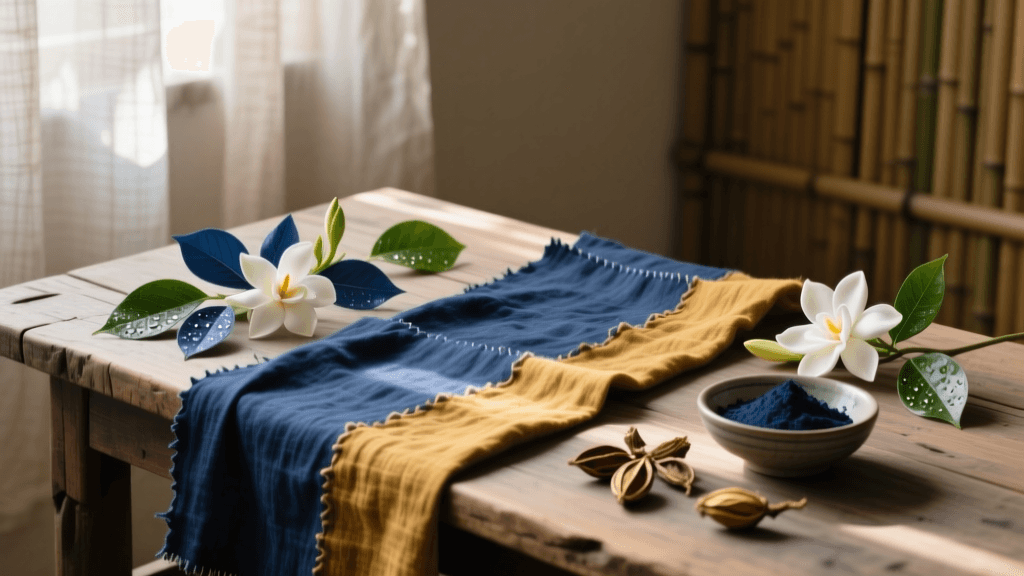
While indigo is used globally, Chinese indigo (Polygonum tinctorium) holds a unique place in Asian textile history. Unlike synthetic indigo, which relies on petrochemicals and heavy reducing agents like sodium dithionite, natural Chinese indigo is processed through a biological fermentation method. In 2026, eco-dyers utilize modern temperature-controlled fermentation vats that maintain the ideal 25°C to 30°C range, using organic rice wine and wood ash lye to reduce the indigotin pigment. This cold-water process drastically cuts energy consumption compared to heat-dependent synthetic dyes. The resulting blues range from pale sky to deep, almost black-navy, and the exhausted dye vat can be safely composted or used as a nitrogen-rich fertilizer for gardens.
2. Gardenia (Gardenia jasminoides / Zhi Zi)
Gardenia fruit has been prized in China since the Han Dynasty for its brilliant, sunlit yellow hues. The active coloring compound, crocin, is a highly effective direct dye, meaning it bonds readily to protein fibers like silk and wool without the need for a metallic mordant. This is a massive advantage for eco-friendly dyeing, as it eliminates the need for alum or iron, further reducing the chemical load of the dye bath. In modern 2026 applications, gardenia is often combined with a natural pH modifier, such as citrus acid or ash water, to shift the yellow into vibrant greens or warm golds. The dried fruits are typically simmered at 80°C for 45 minutes to extract the maximum pigment yield.
3. Madder Root (Rubia cordifolia / Qian Cao)
For deep, enduring reds, Chinese madder root is unparalleled. Containing the chemical compound alizarin, madder requires a mordant to bind to cellulose fibers like cotton or linen. However, modern sustainable practices have replaced harsh chemical mordants with bio-based alternatives, such as tannin-rich pomegranate rinds or symplocos (a naturally alum-accumulating plant native to Asia). Madder dyeing is a slow, deliberate process that rewards patience. By carefully controlling the temperature—never exceeding 70°C to prevent the extraction of dull brown pigments—dyers can achieve brilliant corals, rich crimsons, and deep burgundies that are highly resistant to UV fading.
Step-by-Step Eco-Friendly Dyeing Process (2026 Best Practices)
Achieving professional, colorfast results with natural dyes requires precision and adherence to modern eco-protocols. Here is a streamlined, water-conscious guide to dyeing 500 grams of organic silk or cotton using Chinese botanicals.
- Step 1: Bio-Enzyme Scouring: Skip the harsh soda ash of the past. In 2026, use a plant-based bio-enzyme scouring agent (10g per 5 liters of water) at 50°C for 60 minutes. This removes natural waxes and oils from the fiber, ensuring even dye absorption while keeping the wastewater entirely non-toxic.
- Step 2: Eco-Mordanting (If Required): For cellulose fibers using madder, pre-mordant with a 15% weight-of-fabric (WOF) solution of symplocos leaf extract. Simmer at 60°C for one hour. Leave the fabric in the bath as it cools overnight to maximize fiber bonding without additional energy input.
- Step 3: Low-Liquor Extraction: Traditional recipes often call for massive amounts of water. Modern eco-dyers use a 10:1 liquor ratio (10 parts water to 1 part fabric). For gardenia, use 100g of dried fruit per 500g of fabric. Simmer the plant material in 5 liters of water, strain, and repeat the extraction once more to ensure full pigment utilization before composting the spent botanicals.
- Step 4: The Dye Bath: Introduce the wet, pre-mordanted fabric to the extracted dye bath. Maintain a gentle 60°C heat for 45 minutes, stirring continuously with a wooden dowel to prevent splotching. Turn off the heat and allow the fabric to steep until the bath reaches room temperature.
- Step 5: Closed-Loop Rinsing: Rinse the dyed garment in a series of three cold-water baths. Instead of letting this water run down the drain, use it to water acid-loving garden plants, as the slightly acidic, tannin-rich water is highly beneficial for soil health.
Comparison Chart: Chinese Natural Dyes vs. Synthetic Dyes
Understanding the environmental and practical differences between traditional botanical dyes and modern synthetic alternatives is crucial for sustainable garment production. The table below highlights why natural dyes are dominating the eco-fashion space in 2026.
| Feature | Chinese Natural Plant Dyes | Conventional Synthetic Dyes |
|---|---|---|
| Source Material | Renewable botanicals, agricultural byproducts | Petrochemicals, coal tar derivatives |
| Toxicity | Non-toxic, biodegradable, skin-safe | Often contains heavy metals, azo compounds |
| Water Footprint | Low (closed-loop systems, reusable baths) | High (requires massive volumes for rinsing) |
| Energy Requirement | Low to Medium (cold fermentation, low heat) | High (prolonged boiling and high-heat fixing) |
| Wastewater Impact | Nutrient-rich, safe for composting/irrigation | Requires intensive chemical treatment plants |
| Color Character | Complex, multi-tonal, living patina | Flat, uniform, artificial brightness |
Sourcing Sustainable Dye Materials and Industry Standards
As the demand for natural dyes surges, ensuring the ethical and sustainable sourcing of raw materials is paramount. Overharvesting wild plants like madder or wild indigo can lead to local ecological depletion. In 2026, reputable dye studios and Hanfu manufacturers partner with certified organic farms that practice regenerative agriculture. When purchasing raw dye materials or pre-dyed garments, look for certifications from the ZDHC (Zero Discharge of Hazardous Chemicals) Roadmap, which ensures that the entire supply chain, from farm to finished textile, adheres to strict environmental and chemical management guidelines.
Furthermore, the cultural integrity of these garments must be respected. The history of Chinese textiles is deeply intertwined with social status, philosophy, and regional identity. As noted by the Metropolitan Museum of Art's Heilbrunn Timeline of Art History, the colors and weaving techniques of traditional Chinese garments were historically regulated and carried profound symbolic meaning. By reviving these natural dyeing techniques today, modern artisans are not merely adopting an eco-friendly trend; they are actively preserving a vital piece of intangible cultural heritage.
Conclusion: The Future of Eco-Friendly Asian Traditions
The integration of Chinese natural plant dyes into contemporary fashion and traditional Hanfu production represents a perfect synthesis of past and future. By leveraging the unique properties of indigo, gardenia, and madder, and combining them with 2026's advanced bio-enzymes and water-saving protocols, we can create garments that honor Asian traditions while fiercely protecting the planet. Whether you are an independent textile artist, a sustainable fashion brand, or a cultural enthusiast, embracing Cao Mu Ran is a powerful step toward a more vibrant, circular, and culturally rich future in global fashion.