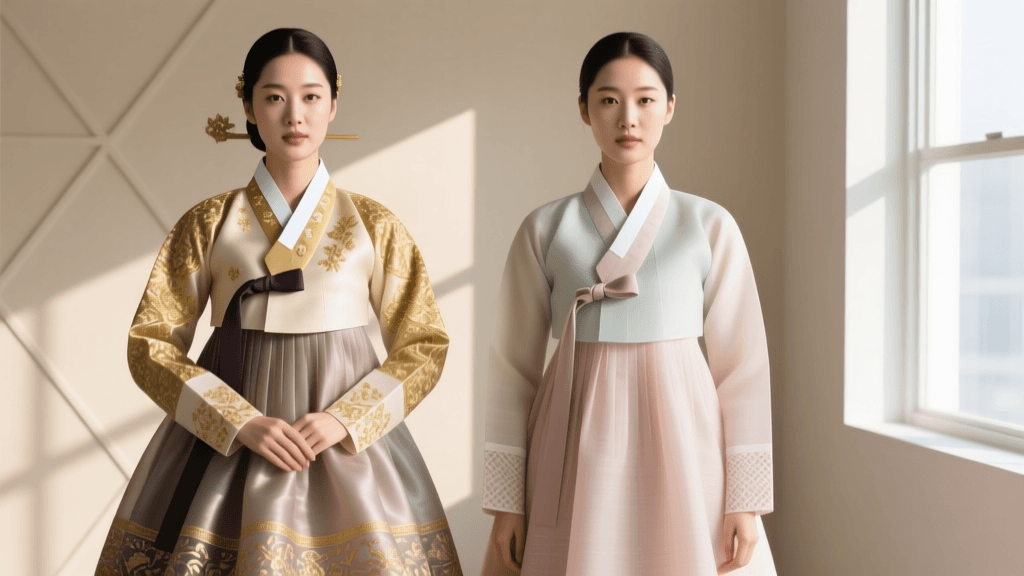
Chinese Fashion History Research 2026: 3D Drape & Kesi Weaving
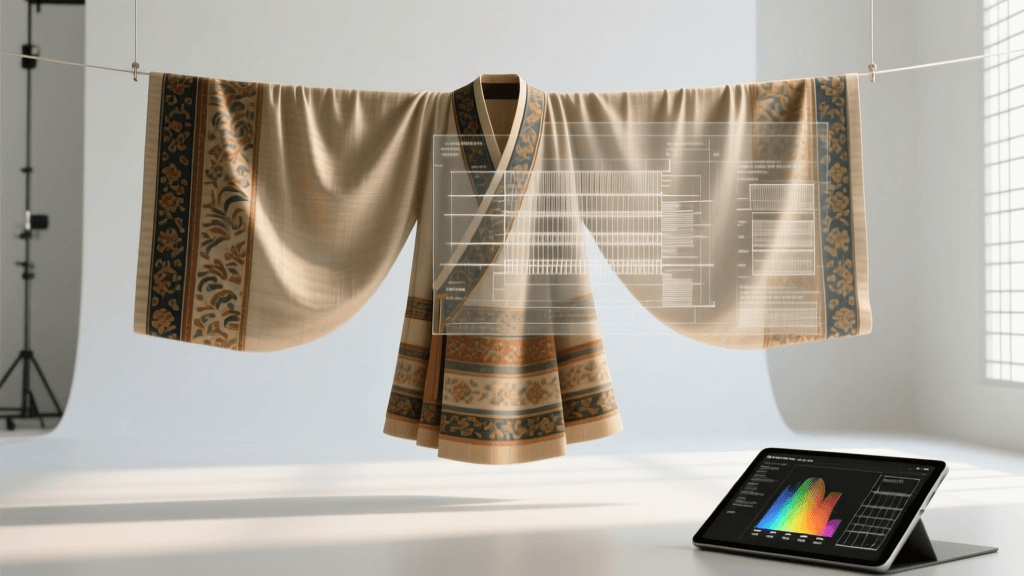
The Evolution of Chinese Fashion History Education in 2026
In 2026, the academic study of Chinese fashion history has transcended traditional art history and visual analysis to become a rigorous, interdisciplinary field merging materials science, digital engineering, and cultural anthropology. Universities across Asia and the globe are no longer treating historical garments merely as static museum artifacts; instead, they are analyzed as complex, dynamic data sets. This paradigm shift is particularly evident in the study of ancient weaving techniques and the physical behavior of historical textiles. For students and researchers navigating the 'Asian Traditions' category today, understanding the intersection of ancient craftsmanship and modern technology is no longer optional—it is the foundation of contemporary textile scholarship.
The modern curriculum emphasizes empirical data collection, utilizing advanced physics engines to simulate how ancient fabrics moved, breathed, and interacted with the human body. This empirical approach has revolutionized our understanding of historical silhouettes, moving beyond two-dimensional paintings and rigid museum mannequins to fully articulate the kinetic reality of traditional Chinese dress. As we progress through the 2026 academic year, the integration of AI-driven textile simulation and multispectral imaging has opened unprecedented avenues for researching fragile, centuries-old garments without risking physical degradation.
Digital Archiving and the Preservation of Ancient Textiles
The foundation of modern Chinese fashion research relies on high-fidelity digital archiving. In the past, researchers had to rely on physical access to fragile garments, which was often restricted due to conservation concerns. Today, institutions utilize multispectral imaging and micro-CT scanning to capture the internal structure of historical weaves. These technologies allow academic teams to map the exact twist-per-meter of ancient silk threads and identify faded botanical dyes that are invisible to the naked eye.
Foundational resources, such as the Metropolitan Museum of Art's extensive silk archives and historical timelines, provide crucial baseline data that modern researchers build upon. By cross-referencing these established historical records with new digital scans of excavated textiles from the Silk Road, university labs are creating open-source databases of historical fabric properties. These databases include precise measurements of warp and weft density, thread thickness, and weave structures, enabling students to digitally reconstruct lost textiles with mathematical accuracy.
3D Fabric Drape Analysis: Quantifying Historical Silhouettes
Drape analysis has become a cornerstone of 2026 academic curricula in Chinese fashion history. The 'drape' of a fabric—how it folds, falls, and flows under the influence of gravity—is dictated by its physical properties, including bending stiffness, shear hysteresis, and surface friction. Understanding these properties is vital for accurately recreating the fluid, minimalist aesthetics of Song Dynasty garments or the structured, voluminous silhouettes of the Tang Dynasty.
Researchers now use the Kawabata Evaluation System for Fabrics (KES-FB) to physically test modern replicas of historical silks, feeding this empirical data into 3D simulation software. This allows academics to visualize how a specific historical robe would have moved during a traditional tea ceremony or a court procession. By quantifying the drape coefficient of ancient fabrics, students can definitively prove how historical tailoring techniques, such as the strategic placement of flat seams and the use of uncut fabric widths, were engineered to maximize the natural flow of the silk.
Methodology Comparison: Traditional vs. Digital Research
| Research Parameter | Traditional Methodology (Pre-2020) | 2026 Digital Methodology |
|---|---|---|
| Drape Coefficient | Visual estimation from static paintings and photographs. | KES-FB physical testing combined with real-time 3D physics engine simulation. |
| Shear Stiffness | Destructive testing of small, detached historical fragments. | Non-invasive micro-tensile scanning and algorithmic property mapping. |
| Pattern Reconstruction | Hand-drawn extrapolation based on surviving garment fragments. | AI-driven predictive modeling trained on multispectral imaging databases. |
| Kinetic Movement | Theatrical costuming and live model approximation. | Motion-capture driven avatar simulations with accurate fabric mass and gravity. |
Algorithmic Pattern Reconstruction and AI Assistance
One of the most exciting developments in 2026 is the use of machine learning to reconstruct damaged or incomplete historical patterns. Many excavated garments from the Han and Tang dynasties are fragmented, with large sections of the textile lost to time. Previously, historians had to guess the continuity of a motif based on artistic conventions of the era. Today, academic departments utilize generative AI models trained specifically on verified, intact Chinese textile patterns.
By inputting the surviving fragments into these specialized neural networks, researchers can generate highly probable reconstructions of the missing sections. These AI models understand the mathematical symmetry, repeat structures, and cultural motifs inherent in traditional Chinese design, such as the 'baotai' (treasure terrace) or 'yunwen' (cloud patterns). This technology not only aids in visual reconstruction but also helps computer scientists and weavers program modern digital Jacquard looms to reproduce these complex, continuous patterns for academic study and museum displays.
Reviving Song Dynasty Kesi Through Academic Inquiry
Kesi, translated as 'cut silk,' is a highly complex tapestry weaving technique that reached its zenith during the Song Dynasty. Characterized by its ability to replicate the brushstrokes of traditional Chinese paintings, Kesi features slits between color blocks that give the fabric its namesake 'cut' appearance. In 2026, academic research into Kesi has moved beyond art appreciation into structural engineering and material science.
University labs are investigating the structural integrity of Kesi, analyzing how the discontinuous weft threads affect the overall tensile strength and drape of the garment. Access to global archives, such as the Victoria and Albert Museum's comprehensive Asian collections, provides students with high-resolution structural references necessary for this deep-dive analysis. Researchers are currently experimenting with algorithmic loom programming to map the exact sequence of weft interlocking required to recreate Song Dynasty masterpieces. This academic inquiry is vital for preserving the intangible cultural heritage of Kesi, ensuring that the mathematical logic of the weave is documented for future generations of artisans.
Bridging Academia and the Xin Zhongshi Movement
The Xin Zhongshi (New Chinese Style) movement has dominated the global fashion landscape in 2026, blending traditional Chinese elements with contemporary streetwear and haute couture. However, the commercial boom has also led to widespread historical inaccuracies and cultural appropriation. This is where academic research plays a critical, corrective role.
Leading fashion institutes now offer specialized modules that bridge historical research with modern design application. Students are taught to apply their findings from 3D drape analysis and Kesi structural research to create Xin Zhongshi garments that are historically grounded yet functionally modern. For instance, understanding the exact shear stiffness of traditional Xiangyunsha (gambiered Canton gauze) allows designers to engineer modern silhouettes that respect the fabric's natural limitations, preventing the tearing and warping that often occurs when historical fabrics are forced into Western pattern-making blocks. Academic spin-offs and industry collaborations are now the primary drivers of authentic, high-quality Xin Zhongshi design, ensuring that the commercial market remains tethered to rigorous historical truth.
Essential Tools for the 2026 Textile Historian
For students and independent researchers entering the field of Chinese fashion history in 2026, mastering a specific suite of digital and physical tools is essential. The modern textile historian must be as proficient in software engineering as they are in dynastic chronologies.
- CLO 3D (Version 7.2 or later): The industry standard for 3D garment simulation. Academic licenses are heavily utilized in university programs to simulate the drape of historical silks. Students can import custom fabric physics data derived from KES-FB testing to see accurate simulations of ancient robes. The CLO Virtual Fashion education initiative provides extensive tutorials tailored for historical reconstruction.
- Kawabata Evaluation System (KES-FB): While expensive and typically housed in university materials science labs, understanding how to operate this hardware to measure bending, shear, and compression is mandatory for graduate-level textile research.
- Shima Seiki SDS-ONE APEX4: Essential for researchers focusing on knitwear and complex weave structures. This system allows academics to digitally simulate the interlocking threads of ancient tapestries before committing to physical loom sampling.
- Multispectral Imaging Software (e.g., ENVI or open-source QGIS plugins): Used in conjunction with specialized camera hardware to analyze the spectral reflectance of historical dyes, allowing researchers to identify the exact botanical origins of colors used in Ming Dynasty official robes.
- Python for Textile Data Analysis: Basic proficiency in Python is increasingly required to manage large datasets of weave structures and to train custom machine learning models for pattern reconstruction and motif classification.
Conclusion: The Future of Asian Traditions in Academia
The landscape of Chinese fashion history education in 2026 is a testament to the power of interdisciplinary collaboration. By merging the meticulous, time-honored craftsmanship of ancient weavers with the cutting-edge capabilities of 3D simulation, AI, and materials science, academia is preserving the soul of Asian traditions in a highly quantifiable, accessible format. As the Xin Zhongshi movement continues to evolve and global interest in traditional Asian garments deepens, the rigorous, data-driven research emerging from today's university labs will serve as the vital bridge connecting the ancient Silk Road to the digital frontiers of tomorrow's fashion industry.