Top Hanfu Robes For Qigong And Meditation In 2026
The Intersection of Heritage Garments and Mindful Movement
In 2026, the global wellness industry has fully embraced the concept of 'somatic dressing'—the understanding that what we wear directly impacts our nervous system, posture, and physical movement. For practitioners of traditional Chinese wellness arts like Qigong, Tai Chi, and seated meditation, the wardrobe is not merely an aesthetic choice; it is a functional tool that facilitates mind-body alignment. Hanfu, the traditional clothing system of the Han Chinese, offers a profound synergy with these ancient practices. Unlike modern compression-based athleisure, which often restricts the lymphatic system and limits diaphragmatic expansion, authentic Hanfu silhouettes prioritize volume, drape, and breathability. This comprehensive guide explores the best Hanfu styles, sustainable fabrics, and precise tailoring considerations to elevate your meditation and Qigong practice in 2026.
Why Garment Fit Matters for Qi Circulation
In traditional Chinese medicine and internal martial arts, the concept of Song (松) is paramount. Often translated as 'relaxation' or 'loosening,' Song refers to a state where the body is entirely free of unnecessary muscular tension, allowing Qi (vital energy) and blood to circulate unimpeded through the meridians. According to the National Center for Complementary and Integrative Health, the gentle, flowing movements of Qigong and Tai Chi are specifically designed to cultivate this exact state of physical and mental ease. When practicing these arts, wearing tight waistbands, restrictive shoulder seams, or synthetic, non-breathable fabrics creates physical micro-tensions that disrupt the mind-body connection. Hanfu, with its historic flat-cut construction and lack of Western-style darts or structured armholes, naturally accommodates the wide, circular arm movements and deep abdominal breathing required in Qigong without ever pulling or binding against the skin.
Top 3 Hanfu Silhouettes for Qigong and Meditation
1. The Song Dynasty Beizi (褙子)
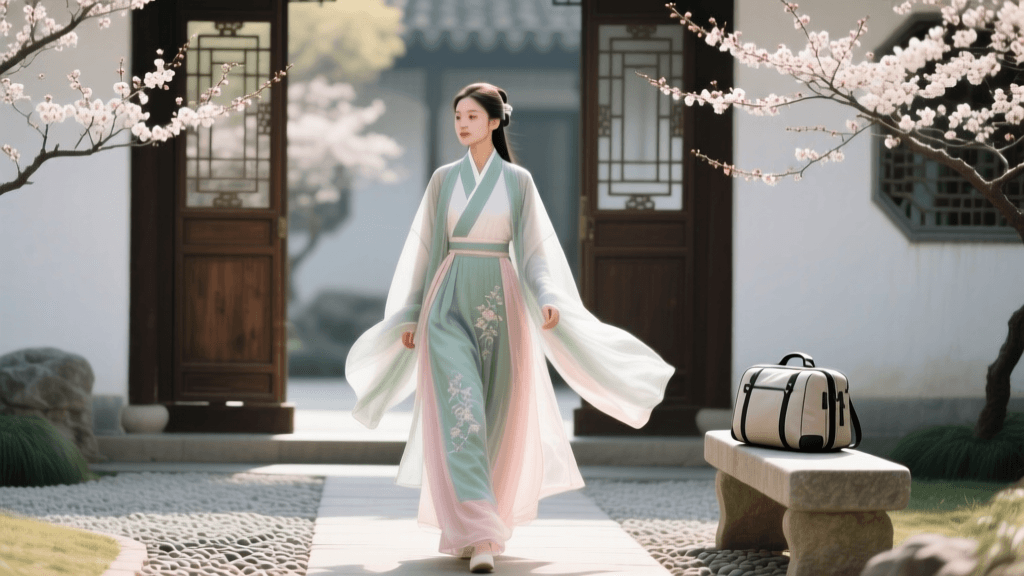
The Beizi is a long, open-front coat featuring lateral slits that extend up to the armpit or waist. For Qigong practitioners in 2026, the Beizi remains unparalleled in its functional design. The open front allows for maximum chest expansion during deep abdominal breathing exercises. Furthermore, the lateral slits ensure that when you sink into a low horse stance (Ma Bu) or perform sweeping arm movements like 'Parting the Wild Horse's Mane,' the fabric glides over the body without pulling at the shoulders or riding up the torso. Modern tailors are currently offering Beizi crafted from lightweight, organic ramie, making it an ideal, breezy outer layer for morning outdoor Tai Chi sessions in humid climates.
2. The Ming Dynasty Daopao (道袍)
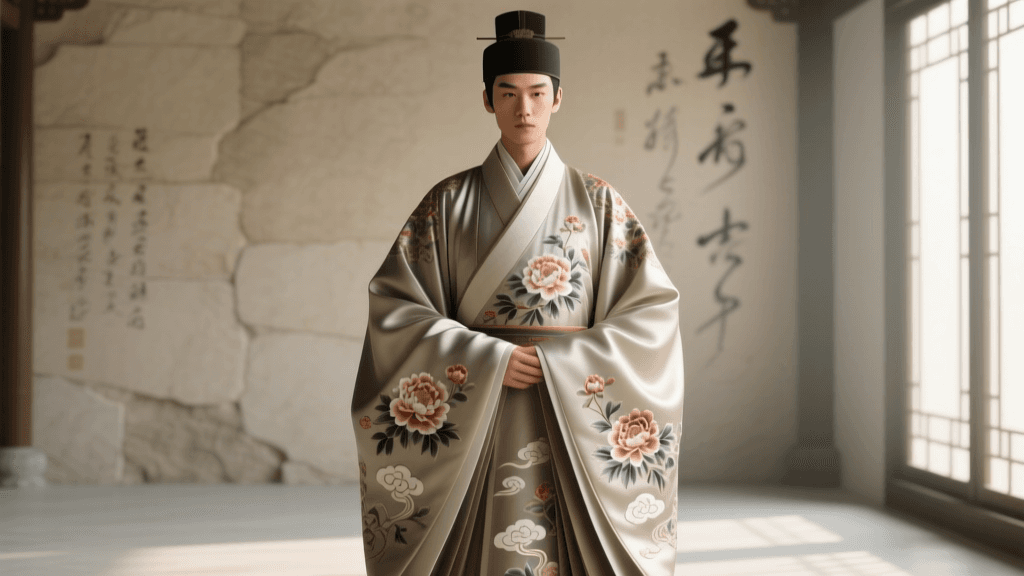
Translating to 'Daoist robe,' the Daopao features voluminous wide sleeves and an ingenious interior tie system. This internal structure secures the garment firmly without the need for external belts or sashes that might dig into the abdomen and restrict the lower Dantian during seated meditation. The wide sleeves create a 'bellows' effect; as you raise and lower your arms in practices like 'Ba Duan Jin' (The Eight Brocades), air circulates within the sleeves, providing a gentle, cooling sensation that aids in thermoregulation and keeps the practitioner focused on the movement rather than body heat.
3. The Wei-Jin Era Wide-Sleeved Ruqun
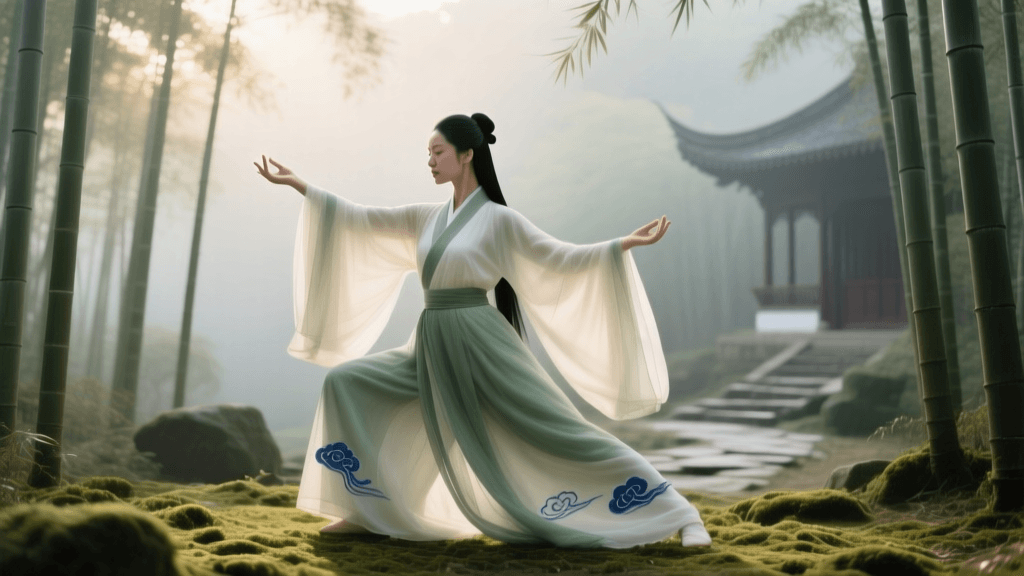
Characterized by its ethereal, sweeping lines and dramatic, flowing sleeves, the Wei-Jin style is heavily favored by those who practice moving meditation or slow-flow Tai Chi. The high-waisted skirt (Qun) sits comfortably above the navel, avoiding any pressure on the body's primary energy center, while the loose, cross-collared tunic (Ru) drapes effortlessly over the shoulders, promoting a relaxed, upright spinal posture essential for energy alignment.
2026 Fabric Innovations and Eco-Friendly Dyeing
The year 2026 has seen a massive, necessary shift toward eco-friendly, heritage-inspired textiles and natural dyeing methods. For wellness practices, the skin-to-fabric interface is critical, as the pores open during Qigong and the skin becomes highly receptive.
- Xiangyunsha (Gambiered Canton Gauze): This traditional silk is dyed using yam juice and iron-rich river mud. The result is a fabric that is naturally cooling, antibacterial, and incredibly soft. It is the ultimate luxury textile for summer meditation retreats, as it repels moisture while nourishing the skin.
- Organic Hemp and Ramie Blends: Hemp has been used in Chinese clothing for millennia. Modern 2026 enzymatic processing techniques have eliminated the historical scratchiness of raw hemp, resulting in a linen-like textile that wicks moisture away from the skin during vigorous Qigong sessions while maintaining a beautiful structural drape.
- Plant-Dyed Bamboo-Cotton: Contemporary Hanfu makers are integrating bamboo-cotton blends for inner garments (Zhongyi), dyed using natural botanicals like indigo, madder root, and tea leaves. These natural eco-friendly dyeing methods ensure that no harsh chemical mordants touch the skin during deep sweating, making the garments hypoallergenic and deeply aligned with the holistic philosophy of Chinese wellness.
Comparison Chart: Hanfu Styles for Wellness Practices
| Hanfu Style | Best Suited Practice | Recommended 2026 Fabric | Key Functional Feature |
|---|---|---|---|
| Song Dynasty Beizi | Outdoor Tai Chi, Standing Qigong | Organic Ramie | Lateral slits for deep stances |
| Ming Dynasty Daopao | Seated Meditation, Ba Duan Jin | Plant-Dyed Bamboo-Cotton | Internal ties, no abdominal pressure |
| Wei-Jin Ruqun | Moving Meditation, Slow Flow | Xiangyunsha Silk | High waist, unrestricted shoulder drape |
| Daoist Meditation Robe | Zhan Zhuang (Standing Pole) | Enzyme-Washed Hemp | Heavy drape for grounding and posture |
Sizing and Tailoring for Standing Meditation (Zhan Zhuang)
Proper measurements are vital for safety and focus. A hem that is too long will cause tripping during stepping forms or obscure the feet during standing meditation. The ideal hem for Qigong sits precisely at the mid-ankle, exposing the shoe but covering the ankle bone to keep the joints warm. Sleeve length should extend past the wrists to protect the meridians from wind-cold, but practitioners should utilize traditional bracers, known as Hushou, to tie back the excess fabric for practices that require precise hand mudras or martial applications. Additionally, ensuring the cross-collar sits flat against the sternum without gaping prevents drafts from hitting the chest cavity, a crucial consideration for outdoor morning practices.
The Psychological Anchor of Traditional Dress
Beyond the physical benefits, the act of wearing Hanfu serves as a powerful psychological anchor. Harvard Health Publishing notes that Tai Chi and Qigong are often described as 'meditation in motion,' offering profound, clinically proven benefits for stress reduction, balance, and cognitive focus. Similarly, the Mayo Clinic highlights that meditation requires a comfortable, distraction-free environment to effectively clear the mind of jumbled thoughts and lower cortisol levels. Wrapping oneself in the historical weight and flowing grace of Hanfu acts as a somatic trigger, signaling to the brain that it is time to transition from the digital chaos of modern life into a state of ancient stillness. The deliberate ritual of tying the sash, adjusting the collar, and smoothing the fabric becomes a moving meditation in itself, grounding the practitioner before the first breath is even drawn.
Building Your 2026 Mindful Wardrobe
As the lines between historical preservation and modern wellness continue to blur, investing in high-quality, traditionally cut Hanfu is an investment in your holistic health. By prioritizing natural, eco-friendly dyed fabrics and selecting silhouettes that honor the body's natural mechanics, practitioners can experience Qigong and meditation exactly as the ancient masters intended: in a state of total, unencumbered flow.