Top 2026 Digital Tools for Chinese Fashion History Research
The 2026 Landscape of Chinese Fashion History Education
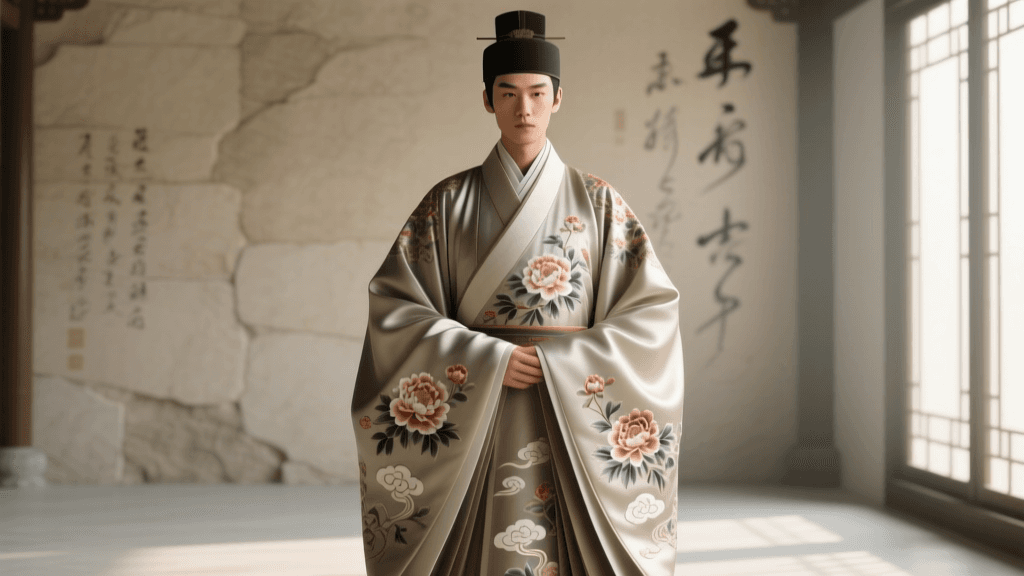
The academic study of Chinese fashion history has undergone a radical transformation in 2026. Gone are the days when researchers and students relied solely on static museum displays, fragile physical textiles, and two-dimensional sketches. Today, leading universities and cultural heritage institutions are leveraging advanced digital archiving, 3D garment simulation, and AI-driven material analysis to decode the intricate construction of historical Chinese clothing. This digital renaissance is not only preserving fragile artifacts but also democratizing access to traditional garment engineering for students, historians, and designers worldwide. According to the Metropolitan Museum of Art's Heilbrunn Timeline of Art History, understanding the structural nuances of Chinese dress requires a deep appreciation for the relationship between the textile, the loom, and the human form. In 2026, digital tools allow researchers to simulate this relationship with unprecedented physical accuracy, bridging the gap between ancient craftsmanship and modern technological analysis.
The Shift to Digital Archiving and 3D Reconstruction
Institutions such as the China National Silk Museum and Donghua University have pioneered the use of high-resolution photogrammetry and structured light scanning to create exhaustive digital twins of Ming and Qing dynasty garments. For academic researchers, this means access to exact seam placements, thread counts, and internal linings without the risk of degrading the original artifacts through physical handling. The International Council of Museums (ICOM) has heavily endorsed these non-invasive digital preservation methods in their 2026 guidelines, noting that 3D archiving is now the gold standard for textile conservation and educational dissemination. By utilizing these digital archives, students can virtually 'dissect' a 15th-century Mangpao (python robe) to understand its complex layering and structural reinforcements, a process that would be impossible with the physical artifact.
CLO 3D and the Art of Pingmian (Flat Cutting)
One of the most significant hurdles in Chinese fashion history education has been teaching the traditional Pingmian (flat pattern cutting) system. Unlike Western tailoring, which relies on darts and curved seams to mold fabric to the body's contours, traditional Chinese garments—such as the Shenyi (deep robe) or Ruqun (jacket and skirt)—are constructed using straight-grain, zero-waste geometric cutting. The fabric is folded, layered, and gusseted to create volume and drape naturally. In 2026, the latest iterations of CLO 3D have introduced specialized fabric physics engines capable of accurately simulating the unique drape of warp-faced silk damasks and lightweight silk gauzes (Luo). Through the CLO Virtual Fashion Education Portal, academic institutions now integrate these tools into their curricula, allowing students to draft historical patterns in a 2D workspace and instantly simulate the gravity, friction, and drape of the garment on a parametric avatar in 3D space.
Software Comparison Table for 2026 Academic Research
Selecting the right software is critical for historical accuracy. Below is a comparison of the primary digital tools utilized by fashion historians and textile researchers in 2026:
| Software / Tool | Primary Academic Use Case | Fabric Physics Accuracy (2026) | Learning Curve |
|---|---|---|---|
| CLO 3D | Pattern drafting, Pingmian simulation, drape analysis | Exceptional (Supports multi-layer silk weaves and zero-waste gussets) | Moderate |
| Marvelous Designer | Concept visualization, animation for museum displays | High (Optimized for real-time rendering and dynamic movement) | Low to Moderate |
| Blender (Cloth Sim) | Environmental context, artifact decay and aging simulation | Good (Requires manual node tweaking for historical damask textures) | Steep |
| AI Spectroscopy DBs | Non-destructive dye, mordant, and fiber identification | N/A (Data analysis and chemical mapping tool) | High (Requires chemistry background) |
AI-Driven Textile and Dye Analysis
Beyond structural simulation, 2026 has seen the integration of AI-assisted spectroscopy into the academic workflow. Historically, identifying the exact botanical or mineral origins of dyes on a 400-year-old garment required destructive sampling. Today, researchers use portable Raman spectroscopy and X-ray fluorescence (XRF) scanners linked to cloud-based AI databases. These tools can instantly identify the presence of safflower (honghua), indigo (dianlan), or madder root, alongside the specific metallic mordants used to fix the colors. This data is then fed into 3D rendering software to accurately recreate the original, unfaded vibrancy of the textile as it would have appeared during the Ming Dynasty, providing students with a true-to-life visual reference that transcends the brownish, oxidized hues of surviving museum pieces.
Step-by-Step Pipeline for Digital Hanfu Reconstruction
For graduate students and independent researchers embarking on a digital reconstruction project, adhering to a rigorous academic pipeline is essential for historical validity. The standard 2026 methodology includes the following steps:
- Artifact Photogrammetry and Sourcing: Begin by acquiring high-resolution 3D scans or detailed archival photographs from open-access museum databases. Map out the visible seam lines, grain directions, and border trims.
- Pattern Reverse-Engineering: Translate physical measurements into a 2D digital pattern using CAD software. Apply Pingmian principles, ensuring that all pattern pieces align with the straight grain of the virtual fabric to maintain historical zero-waste accuracy.
- Fabric Physics Calibration: Input KES-F (Kawabata Evaluation System) data into your simulation software. Calibrate the virtual fabric's bending rigidity, shear stiffness, and weight to match the specific historical textile, such as a heavy silk brocade versus a sheer ramie.
- Virtual Stress and Drape Testing: Simulate the garment on a historically accurate parametric avatar. Analyze how the garment pools at the hem, how the sleeves drape during movement, and where structural stress occurs at the underarm gussets.
- Peer Review and Open Access Export: Export the final reconstruction as an interactive 3D PDF or a WebGL file. Submit the digital asset and the accompanying pattern data to academic repositories for peer review and public education.
Bridging Academia and the Xin Zhongshi Movement
The rigorous academic research conducted in digital archives is not confined to the ivory tower; it is actively fueling the Xin Zhongshi (New Chinese Style) movement of 2026. Modern designers and fashion students are mining these historically accurate 3D simulations to extract traditional cutting techniques, collar constructions, and closure systems (such as the intricate Pankou knot buttons). By understanding the exact mechanics of historical garments through digital simulation, contemporary designers can adapt the Pingmian zero-waste philosophy into modern, sustainable fashion lines. This synergy between historical academia and modern design ensures that the intellectual heritage of Chinese fashion is not merely preserved as a relic of the past, but continues to evolve as a living, breathing design philosophy.
Conclusion
The integration of 3D simulation, AI material analysis, and digital archiving has fundamentally redefined Chinese fashion history education in 2026. By moving beyond static observation to interactive, physics-based reconstruction, researchers and students are uncovering the profound engineering and sustainable philosophies embedded in traditional Asian garments. As these digital tools continue to evolve, they promise to unlock even deeper insights into the Silk Road's textile exchanges and the enduring legacy of Chinese sartorial culture.