2026 Xin Zhongshi Workwear: Song Brocade & Mamianqun Guide
The Evolution of Xin Zhongshi in the 2026 Professional Wardrobe
The Xin Zhongshi (New Chinese Style) movement has decisively matured. As we navigate 2026, this aesthetic is no longer confined to avant-garde runway spectacles, niche heritage enthusiasts, or festive holiday wear. Instead, it has evolved into a sophisticated, highly wearable framework for the modern professional wardrobe. By seamlessly blending the structural elegance of traditional Chinese garments with the pragmatic demands of contemporary corporate and creative workspaces, Xin Zhongshi offers a powerful sartorial statement. It speaks to a deep appreciation for Asian heritage while embracing the cutting-edge textile innovations and tailoring techniques that define 2026 fashion.
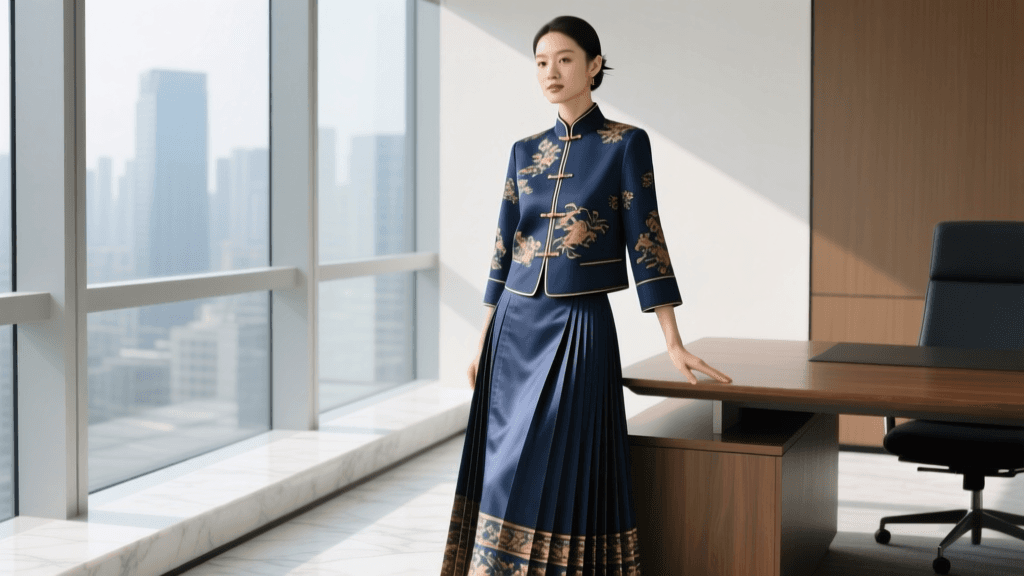
At the heart of this movement is the rejection of costume-like replication. Modern Xin Zhongshi is about distillation—taking the essence of historical garments and recontextualizing them for daily life. For the modern professional, two garments have emerged as the undisputed pillars of the 2026 Xin Zhongshi workwear capsule: the structured Song brocade jacket and the flowing, architectural Mamianqun (horse-face skirt). Together, they create a silhouette that commands respect in the boardroom while honoring centuries of Asian textile mastery.
Core Garment 1: The Modernized Song Brocade Jacket
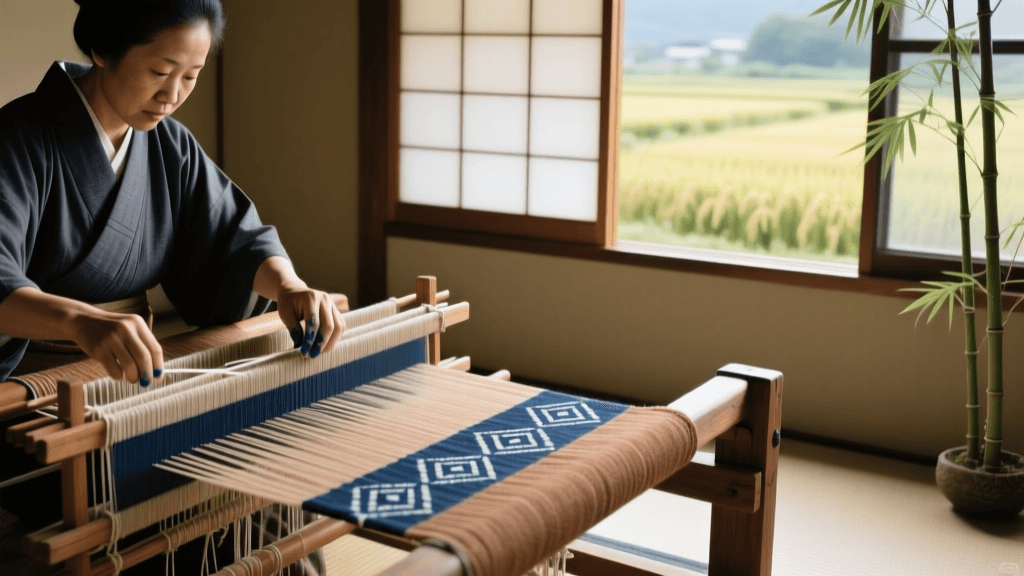
Originating in the Song Dynasty, Song brocade is historically renowned for its soft texture, subtle luster, and intricate geometric patterns. Unlike the heavier, more ostentatious brocades of later dynasties, Song brocade possesses a refined elegance that translates perfectly to modern tailoring. In 2026, heritage mills in Suzhou and Hangzhou have revolutionized this fabric by integrating nano-coating technologies, rendering the delicate silk blends stain-resistant and remarkably durable against the rigors of daily commuting.
The 2026 iteration of the Song brocade workwear jacket borrows the relaxed yet structured shoulder line of a Western blazer but incorporates traditional closure systems. However, the functional frog buttons (Pankou) of the past have been largely replaced by hidden magnetic snaps or sleek interior zippers, with the Pankou serving as intricate, non-functional decorative elements along the placket. This innovation ensures a smooth, gap-free closure that maintains a sharp, professional profile. The standard 2026 office jacket features a cropped length—typically hitting between 45cm and 50cm from the nape of the neck. This precise measurement is crucial, as it visually elongates the legs when paired with high-waisted skirts or trousers, adhering to the classic Chinese aesthetic principle of harmonious proportions.
Core Garment 2: The Mamianqun for the Corporate Sphere
The Mamianqun, historically characterized by its flat front and back panels with pleated sides, has undergone a radical transformation for the 2026 corporate environment. Traditionally secured by long fabric ties that wrapped around the waist, the modern office Mamianqun utilizes hidden side-zippers and structured waistbands reinforced with flexible memory polymers. This ensures the skirt sits securely at the natural waist without the bulk or constant readjustment associated with historical tie-closures.
For workwear, the 2026 Mamianqun favors subdued, structural fabrics. While pure silk remains popular for evening wear, the professional sphere has embraced wool-silk blends and high-density Tencel-silk mixes. These materials offer the characteristic heavy, architectural drape required to make the side pleats swing beautifully during movement, while providing the wrinkle-resistance necessary for long days at a desk or during business travel. The flat front panels (Ma) often feature subtle, tone-on-tone Jacquard weaves or minimalist embroidery at the hem, providing visual interest without violating conservative corporate dress codes.
2026 Textile Innovations and Sourcing Data
The success of the Xin Zhongshi workwear movement in 2026 relies heavily on material science. Below is a comparative analysis of the primary textiles utilized in this year's professional collections, highlighting the innovations that make heritage fabrics viable for daily office wear.
| Fabric Type | 2026 Textile Innovation | Drape & Structure | Est. Price Range (USD) | Best Office Application |
|---|---|---|---|---|
| Song Brocade (Silk/Cotton Blend) | Eco-friendly nano stain-resistant coating | Structured, holds shape | $350 - $600 | Tailored Blazer / Cropped Jacket |
| Mamianqun (Wool/Silk Mix) | Thermal-regulating wrinkle-free weave | Heavy, architectural A-line | $180 - $320 | Pleated Midi / Maxi Skirt |
| Xiangyunsha (Gambiered Silk) | Bio-enzyme softening for reduced stiffness | Fluid, lightweight, matte | $250 - $450 | Relaxed Blouse / Wide-Leg Trousers |
| Crepe-backed Satin (Tencel/Silk) | Enhanced tensile strength at stress points | Soft, fluid, high-sheen | $120 - $200 | Inner Camisole / Lining Garments |
Notably, the production of Xiangyunsha has seen massive sustainability upgrades in 2026. The traditional mud-dyeing process, which requires extensive river clay and sun-baking, has been optimized with closed-loop water filtration systems in Guangdong, reducing water waste by over 40% while maintaining the fabric's signature antimicrobial properties and rich, earthy patina.
Color Theory: The 2026 Xin Zhongshi Office Palette
To successfully integrate Xin Zhongshi into a professional environment, one must look beyond the traditional festive reds and imperial yellows. The 2026 palette is deeply rooted in classical Chinese color theory, focusing on muted, nature-inspired tones that project calm authority and sophistication.
- Qingbai (Celadon): A pale, greyish-green that serves as an excellent alternative to standard office navy or beige. It pairs beautifully with silver or white gold hardware.
- Yuebai (Moon White): Not a stark optical white, but a cool, faint blue-white reminiscent of moonlight on snow. Ideal for inner blouses and lightweight summer jackets.
- Zitan (Red Sandalwood): A deep, purplish-brown that replaces black for autumn and winter workwear. It adds warmth to the complexion and highlights the subtle gold threads often woven into Song brocade.
- Yachi (Tooth White / Ivory): A warm, soft off-white used extensively in Mamianqun skirts to provide a luminous base that contrasts elegantly with darker, structured jackets.
Tailoring and Fit: East Meets West
Traditional Chinese garments often rely on flat-cutting (pingmian caishu), which utilizes straight lines and minimizes fabric waste, resulting in a boxy, forgiving silhouette. Western tailoring, conversely, relies on darts and seams to contour the body. The 2026 Xin Zhongshi workwear aesthetic achieves a masterful compromise between these two philosophies.
Modern Song brocade jackets feature subtle princess seams or side-back darts that provide a slight taper at the waist, ensuring the garment does not overwhelm the wearer's frame. However, the shoulder construction remains relatively relaxed, avoiding the rigid, padded shoulders of 1980s power suits. The Mandarin collar (Lilong or Yuanling) has been lowered slightly in 2026, typically measuring between 2.5cm and 3cm in height. This prevents the collar from digging into the jawline or restricting neck movement, a common complaint with historical reproductions, making it entirely comfortable for long hours of desk work or video conferencing.
Footwear and Accessory Pairings
The quickest way to undermine a Xin Zhongshi outfit is to pair it with overly literal or costumey accessories. In 2026, the rule of thumb is grounded minimalism. For footwear, traditional cloth shoes are reserved for casual or home wear. In the office, the Mamianqun is best paired with square-toe leather loafers, minimalist leather ankle boots with a block heel, or sleek, pointed-toe mules. The footwear should be firmly rooted in contemporary Western design to anchor the traditional elements of the skirt and jacket.
Jewelry should be understated. A single piece of high-quality Hetian jade set in brushed 18k gold, worn as a pendant or a simple ring, provides a subtle nod to Asian heritage without appearing theatrical. Enamel hairpins, featuring modern geometric interpretations of plum blossoms or bamboo, are popular for securing hair in professional updos, replacing the loud, dangling tassels of historical hairpieces.
Care and Maintenance for Heritage Textiles
Investing in 2026 Xin Zhongshi workwear requires a commitment to proper garment care, particularly when dealing with specialized silks like Xiangyunsha and Song brocade. Despite modern nano-coatings, these fabrics remain sensitive to harsh chemicals.
Never use alkaline detergents or standard dry-cleaning solvents on Xiangyunsha, as they can strip the natural mud-dye and protein sericin that give the fabric its unique texture. Instead, utilize pH-neutral silk washes and cold water for spot cleaning. For Song brocade jackets, professional dry cleaning is recommended, but you must explicitly instruct the cleaner to use a gentle, silicone-based solvent rather than standard perc, which can degrade the metallic threads over time. When storing your Mamianqun, avoid wire hangers that will distort the pleats. Instead, fold the skirt along its natural crease lines and store it flat in a breathable cotton garment bag with natural cedar blocks to repel moisture and insects, ensuring your investment remains pristine for years to come.