Song Brocade Drawloom Weaving: 2026 Guide to Ancient Techniques
The Resurgence of Song Brocade in 2026
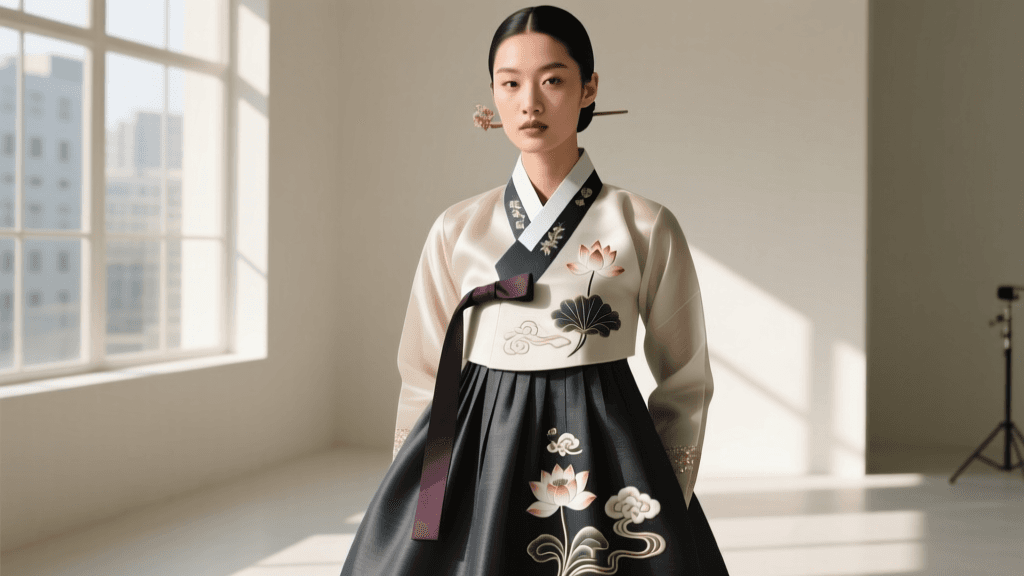
As the global fashion industry leans heavily into heritage craftsmanship, the Xin Zhongshi (new Chinese style) movement has reached unprecedented maturity in 2026. At the forefront of this sartorial renaissance is Song brocade, or Songjin, a textile celebrated for its mathematical precision, understated elegance, and complex structural integrity. Originally developed during the Song Dynasty (960–1279), this luxurious fabric was historically reserved for imperial garments and the mounting of prestigious calligraphy scrolls. Today, it is the undisputed centerpiece of high-end Xin Zhongshi couture.
According to The Metropolitan Museum of Art, Chinese silk weaving represents one of the most sophisticated technological achievements in ancient history, with brocade techniques requiring a mastery of geometry and tension that rivals early computer programming. In 2026, contemporary designers are moving away from mass-produced synthetic imitations, seeking out authentic, hand-loomed Song brocade to create garments that honor traditional Asian silhouettes while meeting modern aesthetic demands.
Anatomy of the Hua: Understanding the Traditional Drawloom
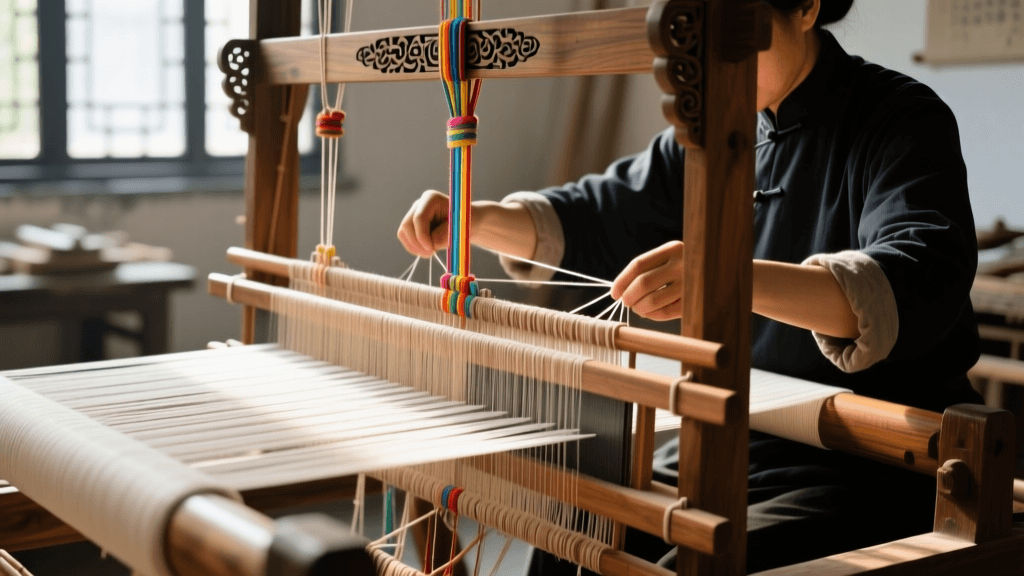
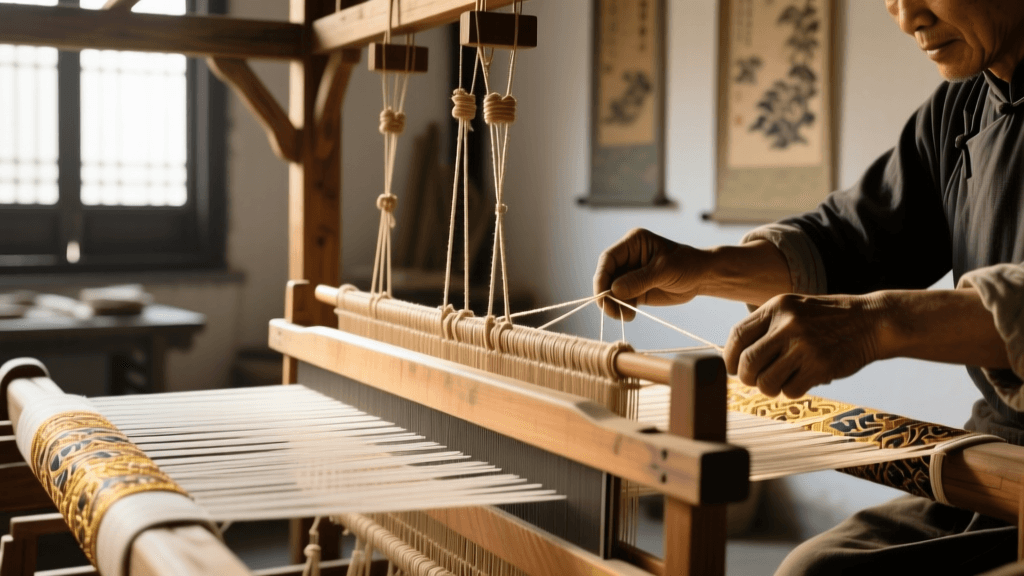
The creation of authentic Song brocade relies on the Hua loom, a complex wooden drawloom that has remained largely unchanged in its fundamental mechanics for centuries. Unlike standard treadle looms, the Hua loom requires a two-person operation: the weaver, who manages the shuttle and beaters, and the drawboy (or in modern 2026 boutique studios, an automated draw-attachment), who sits atop the loom's elevated tower, known as the hualou.
The structural genius of the Hua loom lies in its dual-warp system. It utilizes a ground warp for the foundational fabric structure and a binding warp to secure the intricate, multi-colored weft patterns. The warp threads are typically spun from premium 20/22 denier mulberry silk, renowned for its tensile strength and luminous sheen. The drawboy manipulates a series of knotted cords, known as the draw harness, which lifts specific warp threads to create the 'shed' through which the weft shuttle passes. This manual 'coding' of the pattern allows for the creation of massive, non-repeating geometric and floral motifs that define the Songjin aesthetic.
The "Tongjing Duanwei" Technique: Continuous Warp, Broken Weft
What truly separates ancient Chinese brocade weaving from European tapestry methods is the tongjing duanwei technique, which translates to 'continuous warp, broken weft.' As detailed by Encyclopedia Britannica in its comprehensive history of silk production, this method allows the weaver to introduce multiple colored weft threads only in the specific areas of the pattern where they are needed, rather than carrying them across the entire width of the fabric.
This discontinuous weft technique serves two critical purposes. First, it drastically reduces the weight and bulk of the fabric, resulting in a textile that drapes beautifully—a crucial factor for the flowing silhouettes of modern Xin Zhongshi robes and jackets. Second, it allows for the integration of highly specialized supplementary wefts, such as pianjin (flattened gold or silver foil strips wrapped around a silk core). By 'breaking' the weft, the artisan ensures that the metallic threads are only visible on the face of the fabric, maximizing their reflective brilliance while maintaining a soft, comfortable interior against the skin.
Traditional Hand-Loom vs. Modern Jacquard: A 2026 Comparison
For designers and collectors navigating the 2026 textile market, understanding the distinction between authentic Hua loom weaves and modern digital Jacquard reproductions is essential. While Jacquard looms can mimic the visual patterns of Song brocade, they cannot replicate the structural nuances of the tongjing duanwei technique.
| Feature | Hand-Woven Hua Loom (Authentic) | 2026 Digital Jacquard Loom (Replica) |
|---|---|---|
| Production Time | 2 to 3 weeks per meter | 2 to 4 hours per meter |
| Market Cost (USD) | $1,200 – $3,500 per meter | $80 – $150 per meter |
| Thread Density | 120–140 ends/cm (Highly compacted) | 90–110 ends/cm (Standardized) |
| Weft Flexibility | High (Discontinuous / Broken weft) | Low (Continuous weft float) |
| Metallic Thread Integration | Hand-wrapped silk core (Pianjin) | Synthetic metallic yarn (Lurex) |
| Primary Use Case | Haute Couture, Heirloom Garments, Art | Ready-to-Wear, Commercial Accessories |
The continuous weft of a Jacquard loom inevitably creates 'floats' on the reverse side of the fabric, making it heavier and less pliable. In contrast, the hand-woven Hua loom textile remains remarkably lightweight and structurally dynamic, justifying its premium positioning in the 2026 luxury market.
Sourcing Authentic Song Brocade for Xin Zhongshi Fashion
For designers operating in the 2026 market, sourcing authentic, hand-loomed Song brocade requires navigating the specialized ateliers of Suzhou, Jiangsu province—the historical and contemporary epicenter of Chinese silk weaving. The UNESCO Intangible Cultural Heritage registry recognizes the sericulture and silk craftsmanship of China, highlighting the meticulous, multi-generational knowledge required to operate these ancient looms.
When commissioning custom yardage for a Xin Zhongshi collection in 2026, expect a minimum lead time of 60 to 90 days. Authentic ateliers require time to 'tie up' the drawloom harness, a process of physically programming the loom with thousands of cotton cords that can take a master artisan up to two weeks for a single, complex geometric motif. Designers should request 'loom state' samples to verify the discontinuous weft structure before committing to full production runs. Authentic Songjin will feel slightly textured on the reverse side where the colored wefts are tied down, whereas a Jacquard replica will feel unnaturally smooth or feature long, snag-prone thread floats.
Preservation and Storage of Loom-Woven Silk
Owning a hand-woven Hua loom textile is an investment in cultural history, and proper maintenance is critical to preserving the integrity of the silk and metallic threads. The protein structure of mulberry silk is highly sensitive to environmental fluctuations, light exposure, and improper folding.
- Climate Control: Store garments in a climate-controlled environment maintaining a steady 50% relative humidity and a temperature of 65°F (18°C). High humidity will cause the metallic pianjin threads to oxidize and tarnish, while low humidity will make the silk fibers brittle.
- Light Exposure: Ultraviolet light is the primary enemy of natural silk dyes. Authentic Song brocade garments should never be displayed in direct sunlight. When not being worn, they must be kept in opaque, breathable cotton garment bags.
- Folding and Padding: Never hang heavy, multi-layered brocade garments on standard hangers, as the weight of the fabric will distort the warp tension over time. Instead, fold the garment using acid-free, unbuffered tissue paper to pad the folds. This prevents hard creases that can eventually lead to fiber fracture.
- Pest Deterrence: Avoid chemical mothballs, which can react with the metallic threads and leave permanent odors. Instead, utilize traditional camphor wood chests or sachets of dried lavender and mugwort, which naturally repel textile pests without compromising the silk's delicate protein structure.
By understanding the profound mechanics of the Hua drawloom and the brilliance of the tongjing duanwei technique, modern enthusiasts and designers can fully appreciate the engineering marvel that is Song brocade. As the Xin Zhongshi movement continues to elevate traditional Asian garments onto the global stage in 2026, the preservation and application of these ancient weaving techniques ensure that the legacy of Chinese textile mastery remains a living, breathing art form.