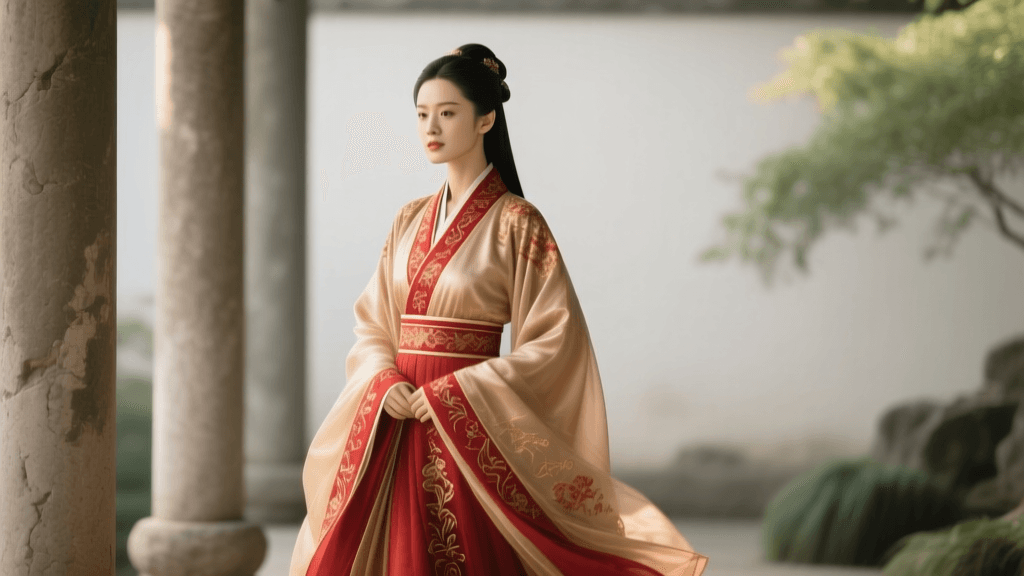
Sogdian Zandaniji Silk: 2026 Archaeological Dye Analysis
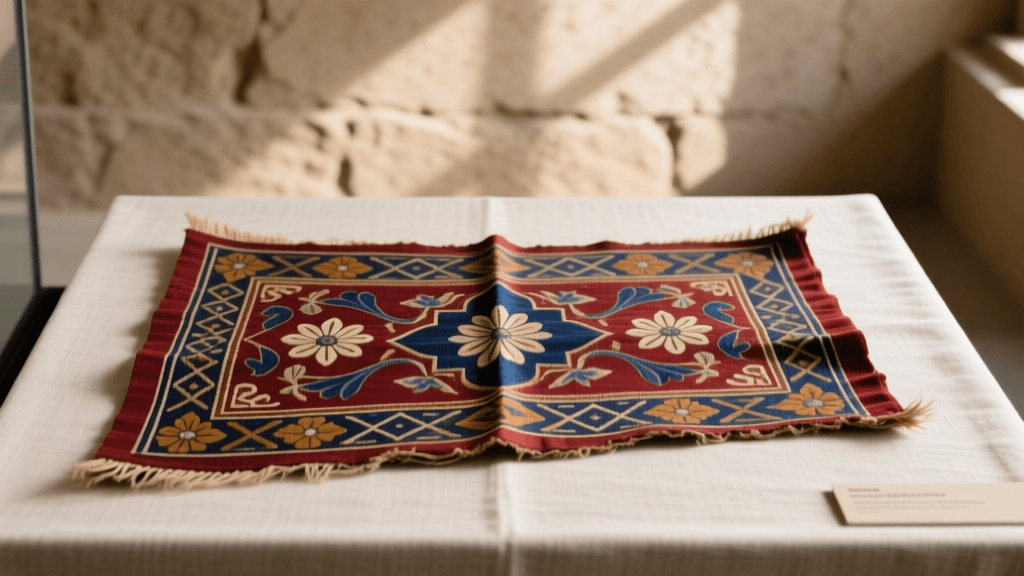
The Legacy of Zandaniji: Sogdian Silks in the Astana Tombs
The Silk Road was never merely a conduit for the exchange of physical goods; it was a vibrant superhighway of aesthetic, technological, and chemical innovation. As we navigate the textile research landscape of 2026, the intersection of archaeology and advanced material science has shed unprecedented light on one of the most fascinating textile phenomena of the ancient world: Zandaniji silk. Named after the village of Zandana near Bukhara in modern-day Uzbekistan, these luxurious weft-faced compound twills (samites) were highly prized by Sogdian merchants and Tang Dynasty elites alike.
The arid climate of the Turpan Depression in Xinjiang, China, has acted as a natural desiccant, preserving organic materials that would have otherwise perished. The Astana Cemetery, often referred to as the 'Underground Museum,' has yielded some of the most pristine examples of these Sogdian silks. In early 2026, a collaborative multispectral imaging project led by the Turpan Museum and international textile conservators has revolutionized our understanding of how these garments were dyed, woven, and traded across the Eurasian steppe.
The Enigma of the Weft-Faced Compound Twill
To understand the significance of the 2026 findings, one must first appreciate the structural mechanics of Zandaniji silk. Traditional Chinese silk weaving of the early periods was predominantly warp-faced, meaning the longitudinal threads dictated the pattern and color. In contrast, Sogdian and Persian weavers mastered the weft-faced compound twill, where the horizontal weft threads completely conceal the warp, allowing for broader, more intricate, and color-dense pictorial designs.
This structural difference was a major technological transfer along the Silk Road. By the mid-Tang Dynasty, Chinese weavers in regions like Sichuan and Chang'an had adapted their drawlooms to produce weft-faced silks, blending indigenous motifs with foreign structures. The UNESCO Silk Roads Programme has long highlighted this cross-pollination, but the 2026 structural analyses provide exact loom-tension data and heddle-routing sequences that were previously lost to history.
2026 Breakthroughs in Non-Invasive Dye Analysis
Historically, analyzing the dyes of ancient textiles required destructive sampling—snipping tiny threads to be dissolved and analyzed via High-Performance Liquid Chromatography (HPLC). However, the ethical standards of 2026 archaeological conservation strictly prohibit the destruction of rare artifacts. This year, the widespread adoption of Surface-Enhanced Raman Scattering (SERS) and Macro-X-Ray Fluorescence (MA-XRF) has allowed researchers to map dye molecules at the nanoscale without touching the fabric.
Recent scans of a confronting-boar pearl roundel silk from the Astana tombs revealed a complex, multi-layered dyeing process. The vibrant reds, previously assumed to be derived solely from local madder (Rubia tinctorum), were found to contain trace elements of lac dye (an insect-based resin from Southeast Asia), indicating a secondary trade route intersecting with the primary Silk Road. Furthermore, the deep blues in the background fields were achieved using a fermented indigo vat, but the 2026 MA-XRF scans detected an alum mordant mixed with iron, a specific chemical recipe that creates a unique, colorfast 'black-blue' resistant to the harsh desert UV exposure.
Tracing the Lapis Lazuli Pigments
One of the most startling discoveries published in early 2026 involves the use of ground lapis lazuli as a surface pigment rather than a dye. Researchers utilizing the International Dunhuang Project databases cross-referenced Astana textile scans with Dunhuang cave painting pigments. They discovered that the brilliant ultramarine highlights on the wings of the senmurv (a mythical bird-dog creature) motifs were painted onto the silk post-weaving using a binders made from animal glue and Bactrian camel milk, a localized adaptation of Persian miniature painting techniques applied to textile arts.
Technical Comparison: Legacy vs. 2026 Textile Analysis
The evolution of conservation technology has drastically altered how we interact with archaeological garments. Below is a comparison of traditional methodologies versus the non-invasive standards utilized in 2026.
| Analysis Technique | Invasiveness | Spatial Resolution | Primary Application in 2026 |
|---|---|---|---|
| Destructive HPLC-MS | High (Requires thread cutting) | Molecular (Bulk sample) | Legacy data verification; rarely permitted on new finds. |
| MA-XRF Scanning | Zero (Non-contact) | 50 micrometers | Mapping metallic mordants (iron, alum, tin) across entire garments. |
| SERS (Raman Spectroscopy) | Zero (Non-contact) | 1 micrometer | Identifying specific organic dye molecules (indigo, madder, lac) in situ. |
| Multispectral Imaging | Zero (Non-contact) | Sub-millimeter | Revealing faded under-drawings, lost patterns, and structural repairs. |
For a deeper dive into the conservation ethics guiding these modern methodologies, the Getty Conservation Institute provides extensive open-access guidelines on non-invasive spectroscopic techniques for fragile organic artifacts.
Decoding the Motifs: Pearl Roundels and Confronting Beasts
The visual language of Zandaniji silk is heavily rooted in Sasanian Persian and Sogdian iconography. The hallmark of these textiles is the 'pearl roundel'—a circular border made of pearl-like dots that encloses a central motif. Inside these roundels, one typically finds confronting animals: boars, ducks, rams, or mythical beasts. In 2026, AI-assisted pattern recognition has been deployed to catalog thousands of fragmented silk shards from the Astana and Loulan sites, revealing that the orientation of the animals (facing left vs. right) often denoted the specific weaving workshop or the intended rank of the garment's wearer in the Tang court.
The cultural translation of these motifs is equally fascinating. As Chinese weavers began producing their own versions of Zandaniji silk, the fierce Sasanian boars were gradually softened into more stylized, auspicious Chinese beasts, and the rigid pearl roundels evolved into the flowing, floral medallions that would define later Song Dynasty textiles. This morphological shift is perfectly captured in the 2026 digital archives, allowing historians to trace the exact decade-by-century assimilation of foreign aesthetics into the Chinese mainstream.
Reviving the Weave: Practical Guidance for 2026 Designers
The archaeological revelations of 2026 are not confined to academia; they are actively shaping the modern Xin Zhongshi (New Chinese Style) fashion movement. Contemporary designers and master weavers are utilizing the newly published structural data to recreate authentic weft-faced compound twills on modern electronic jacquard looms. For textile artists and fashion houses looking to replicate the drape, weight, and visual depth of Astana Zandaniji silks, the following technical specifications are recommended based on this year's reverse-engineering studies:
- Loom Programming: Utilize CAD software (such as Pointcarré or NedGraphics 2026 editions) to map a 3-end weft-faced compound twill structure. Ensure the warp binding points are set to a 1/2 twill progression to maximize weft coverage and create the characteristic smooth, tapestry-like face.
- Yarn Selection: Use 100% mulberry silk. For the warp, a tightly twisted 20/22 denier organzine (minimum 600 twists per meter) is required to withstand the high tension of concealing the warp. For the weft, use a softer, untwisted or lightly twisted 20/22 denier tram silk to ensure light reflection and color vibrancy.
- Density Settings: Aim for a warp density of 120 ends per inch (epi) and a weft density of 80 to 90 picks per inch (ppi). This high density is crucial for achieving the heavy, structured drape typical of 7th-century samites, which behaves more like a light upholstery fabric than modern chiffon or habotai.
- Dye Replication: To mimic the 2026-discovered 'black-blue' background, mordant your silk yarn with a 15% alum solution, followed by a 5% iron sulfate modifier before dipping in a natural fermented indigo vat. This will yield the deep, complex navy seen in the original Astana fragments.
Conclusion: The Enduring Threads of the Silk Road
The Silk Road was a crucible of innovation, where the warp of Chinese tradition met the weft of Sogdian and Persian ingenuity. The 2026 archaeological dye analyses and structural mappings of Zandaniji silks from the Astana tombs have not only preserved the physical legacy of these ancient garments but have also provided a tangible blueprint for the future of textile design. By understanding the precise chemistry of ancient dyes and the complex geometry of weft-faced twills, we continue to weave the past into the fabric of the present, ensuring that the vibrant exchanges of the Silk Road remain alive in the wardrobes and archives of tomorrow.