2026 Silk Road Textile Finds: Sogdian Silks & Exhibits
The Resurgence of Silk Road Archaeology in 2026
The ancient Silk Road was never merely a conduit for spices and precious metals; it was the world’s first great superhighway of fashion, textile technology, and aesthetic exchange. As we move through 2026, a renaissance in Silk Road archaeology and textile conservation has brought unprecedented attention to the organic remains recovered from the arid stretches of Central Asia and Western China. Recent excavations and the subsequent unsealing of fragile archives have allowed historians and garment enthusiasts to trace the exact migration of weaving techniques from Sassanian Persia through Sogdian merchant networks into the heart of Tang Dynasty China. For scholars, designers, and traditional garment aficionados, the 2026 exhibition circuit offers a once-in-a-generation opportunity to witness these fragile threads of history firsthand.
Decoding the Sogdian Pearl Roundel Motif
At the center of the 2026 Silk Road textile discourse is the 'Pearl Roundel' motif. Originally popularized in Sassanian Persia, this design features a circular border of pearls enclosing confronting animals—such as boars, lions, or ducks. Sogdian merchants, the master middlemen of the ancient world, adopted and adapted these motifs, weaving them into luxurious silks that became highly coveted status symbols across Eurasia. When these textiles reached China, local weavers in the Sichuan and Central Plains regions began replicating the patterns using indigenous silk, fundamentally altering the trajectory of Chinese textile design. The 2026 symposiums at the China National Silk Museum have heavily focused on how Chinese weavers transitioned from traditional warp-faced weaves to the complex weft-faced compound twills (samite) required to accurately reproduce these dense, colorful Sogdian patterns.
The Astana Tombs: A Time Capsule of Ancient Fashion
No discussion of Silk Road textile exchanges is complete without the Astana Tombs in the Turfan Depression. Often referred to as the 'Underground Museum,' this necropolis has yielded some of the most perfectly preserved ancient garments in the world. The extreme aridity of the climate acted as a natural desiccant, halting the decay of organic materials. In 2026, conservators have successfully stabilized several newly cataloged silk banners and burial shrouds featuring hybrid Sino-Sogdian designs. These finds provide actionable insights into the drape, weight, and tailoring of 7th-century garments, revealing how nomadic steppe cuts (such as the lapel-closing robes) merged with Han Chinese wide-sleeved silhouettes.
Key Silk Road Textile Motifs and Exchange Routes
To understand the sheer scale of this cross-cultural pollination, we must look at the specific motifs and the technologies that carried them. Below is a comparative analysis of the primary textile exchanges highlighted in the 2026 museum circuit.
| Motif / Pattern | Cultural Origin | Primary Destination | Weave Technique | 2026 Key Exhibit Location |
|---|---|---|---|---|
| Pearl Roundel (Confronting Animals) | Sassanian Persia / Sogdia | Tang Dynasty China | Weft-faced compound twill (Samite) | Xinjiang Regional Museum, Urumqi |
| Lotus and Cloud Collar | Indian / Buddhist Central Asia | East Asia (China, Korea, Japan) | Embroidery on plain-weave silk | Dunhuang Academy Digital Archive |
| Tree of Life | Mesopotamia / Persia | Byzantine Empire & Tang China | Warp-faced compound tabby | China National Silk Museum, Hangzhou |
| Cloudband (Yunjian) | Chinese Indigenous | Islamic World / Mughal India | Brocade and lampas weaving | V&A Museum, London (Asia Collections) |
2026 Museum Guide: Where to See Authentic Silk Road Textiles
For garment historians and traditional fashion enthusiasts planning their 2026 itineraries, three institutions stand out for their exceptional Silk Road textile collections and newly updated conservation displays.
1. Xinjiang Regional Museum (Urumqi, China)
The Xinjiang Regional Museum remains the undisputed custodian of the Astana tomb textiles. In 2026, the museum has opened a specialized climate-controlled wing dedicated exclusively to Silk Road organic artifacts. Visitors can view the famous 'Striding Horse' silk fragments and intricately woven hemp shoes. The museum's 2026 audio guides now include augmented reality (AR) overlays that digitally reconstruct the fragmented silk robes onto 3D mannequins, showing exactly how the garments draped and moved when worn by ancient Turfan elites.
2. China National Silk Museum (Hangzhou, China)
Hangzhou, the eastern terminus of the Silk Road, hosts the world’s largest silk museum. The 2026 'Threads of the Oasis' exhibition features a groundbreaking section on ancient dye analysis. Using non-invasive fiber-optic reflectance spectroscopy, researchers have identified the exact botanical origins of the colors used in Sogdian silks, including madder root for deep reds, weld for vibrant yellows, and indigo for blues. The museum’s open conservation lab allows visitors to watch specialists in real-time as they apply 2026-grade nano-cellulose consolidants to stabilize crumbling 1,000-year-old fibers.
3. The Victoria and Albert Museum (London, UK)
For those outside of Asia, the V&A’s Asian collections house a staggering array of Central Asian textiles acquired during the early 20th-century expeditions. The 2026 curation has recontextualized these pieces, moving away from colonial narratives to focus on the indigenous craftsmanship and the vast, interconnected trade networks that facilitated their creation. Their online database, updated extensively in 2026, provides high-resolution, zoomable macro-photography of weave structures, an invaluable resource for modern weavers attempting to replicate historical samite techniques.
Cutting-Edge Conservation: How 2026 Tech is Unrolling History
One of the most significant hurdles in Silk Road archaeology is the condition of the textiles upon excavation. Many silk scrolls and garments were tightly rolled or carbonized by ancient tomb fires. Historically, unrolling these artifacts risked turning them to dust. However, 2026 has seen the widespread adoption of micro-CT scanning combined with AI-driven virtual unwrapping. Conservators can now map the internal layers of a carbonized textile bundle without physically touching it. This technology has recently revealed hidden inscriptions and merchant seals woven directly into the hems of Sogdian trade silks, providing new data on ancient supply chains and guild marks.
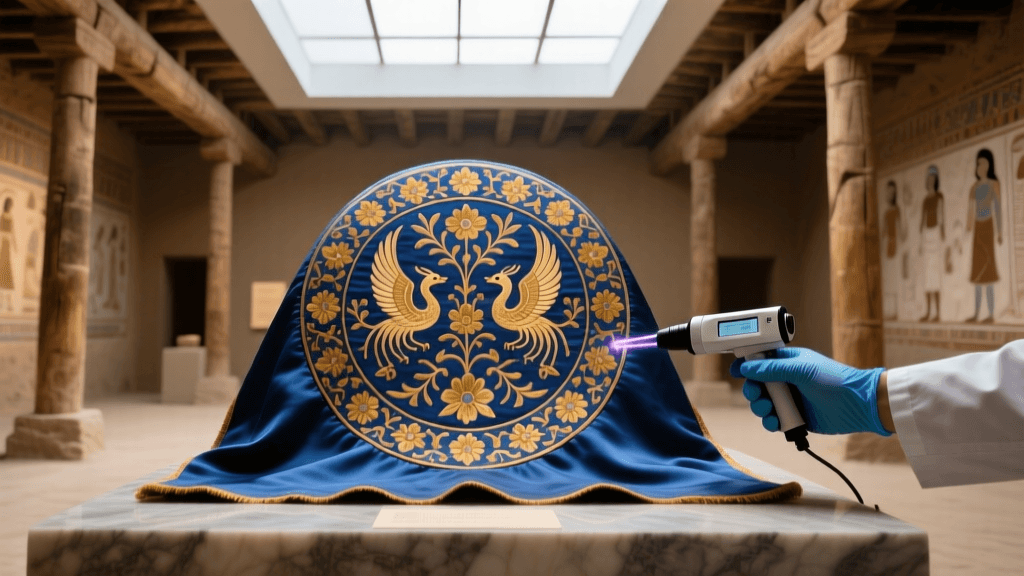
Furthermore, multispectral imaging is being used to read faded dye patterns invisible to the naked eye. A silk fragment that appears uniformly brown to the human eye can be scanned under specific ultraviolet and infrared wavelengths to reveal intricate floral patterns and geometric borders, completely rewriting our understanding of the garment's original aesthetic.
Actionable Advice for Researchers and Enthusiasts
If you are a textile student, historical costumer, or researcher looking to leverage these 2026 advancements, you must utilize the digital archives that have been democratized for global access. The International Dunhuang Project is an essential resource. This collaborative initiative has digitized tens of thousands of manuscripts, paintings, and textiles from the Dunhuang caves and surrounding Silk Road sites. The 2026 interface update includes a dedicated 'Textile and Weave' filter, allowing users to search specifically by loom type, thread count, and dye material.
Additionally, familiarize yourself with the broader historical frameworks provided by the UNESCO Silk Roads Programme. Their 2026 knowledge bank offers peer-reviewed papers on the socio-economic impact of textile exchanges, providing the necessary cultural context to understand why a specific weave or motif was traded across thousands of miles. When studying these garments, always look beyond the aesthetic; consider the tensile strength of the silk, the portability of the loom, and the cultural diplomacy embedded in every woven pearl roundel and confronting lion. The Silk Road was not just a route on a map—it was a living, breathing tapestry of human ingenuity, and the 2026 discoveries are proving that its story is still being unraveled.